

What are the benefits of using powder coating on aluminium sections?
Powder coating aluminium sections provides a tough, uniform finish that improves resistance to corrosion, abrasion and everyday weathering. It also offers a consistent colour and surface appearance, making sections more durable and suitable for demanding industrial, construction and architectural applications.
Powder coating aluminium sections offers a controlled way to apply a decorative and protective finish without using liquid paint solvents. The powder is electrostatically applied to the prepared aluminium and then cured, forming a continuous coating that can improve appearance, handling properties and long-term service performance when the section is correctly pre-treated and the coating is properly specified.
Key benefits include:
- Broad design flexibility: Powder coatings are available in a wide range of colours, gloss levels and surface effects. This allows aluminium sections to be coordinated with a project’s visual specification, whether they are used in architectural framing, manufactured components, shopfitting or fabricated assemblies.
- Uniform coverage of repeat components: A controlled application and curing process can produce a consistent finish across a batch of sections. This is particularly useful where multiple lengths or components need to match after installation or assembly.
- Reduced use of solvents: Powder coating is a dry finishing process, so it does not require the solvent content associated with many conventional liquid paints. This can help reduce solvent emissions during application and supports a cleaner finishing method when suitable powder products and process controls are used.
- Efficient material use: Unattached powder can potentially be collected and managed within the finishing process, subject to the equipment and coating system in use. This may reduce material waste compared with some wet-paint applications, although colour changes, contamination and recovery arrangements affect the result.
- Low routine maintenance: A correctly specified finish gives aluminium sections a surface that can generally be cleaned using appropriate mild cleaning methods. Regular inspection and cleaning help remove deposits that could otherwise affect the appearance or the coating over time.
- Improved suitability for manufactured assemblies: Coating sections before assembly can provide a defined finish for exposed faces and help integrate aluminium components into a wider product or building system. The specification should account for areas that will later be cut, drilled, joined or concealed, since these may need additional protection or touch-up treatment.
- Compatibility with different performance requirements: Powder systems can be selected according to the intended environment and use. Factors such as exterior exposure, chemical contact, handling, cleaning requirements and the desired appearance should be considered before the coating is chosen rather than treating every aluminium section in the same way.
The benefit of powder coating depends heavily on preparation. Aluminium sections should be clean, free from oils and suitable for the selected pre-treatment. Surface contamination, unsuitable alloys, sharp edges, trapped moisture or poor masking can affect adhesion and the final appearance. Correct curing is equally important: insufficient or excessive curing can alter the coating’s performance and visual properties.
Powder coating is therefore most effective when the section design, alloy, pre-treatment, powder type, colour, coating specification and intended environment are considered together. For a B2B project, it is also sensible to confirm the required finish, acceptable cosmetic tolerances, batch quantities and any areas that must remain uncoated before production begins.
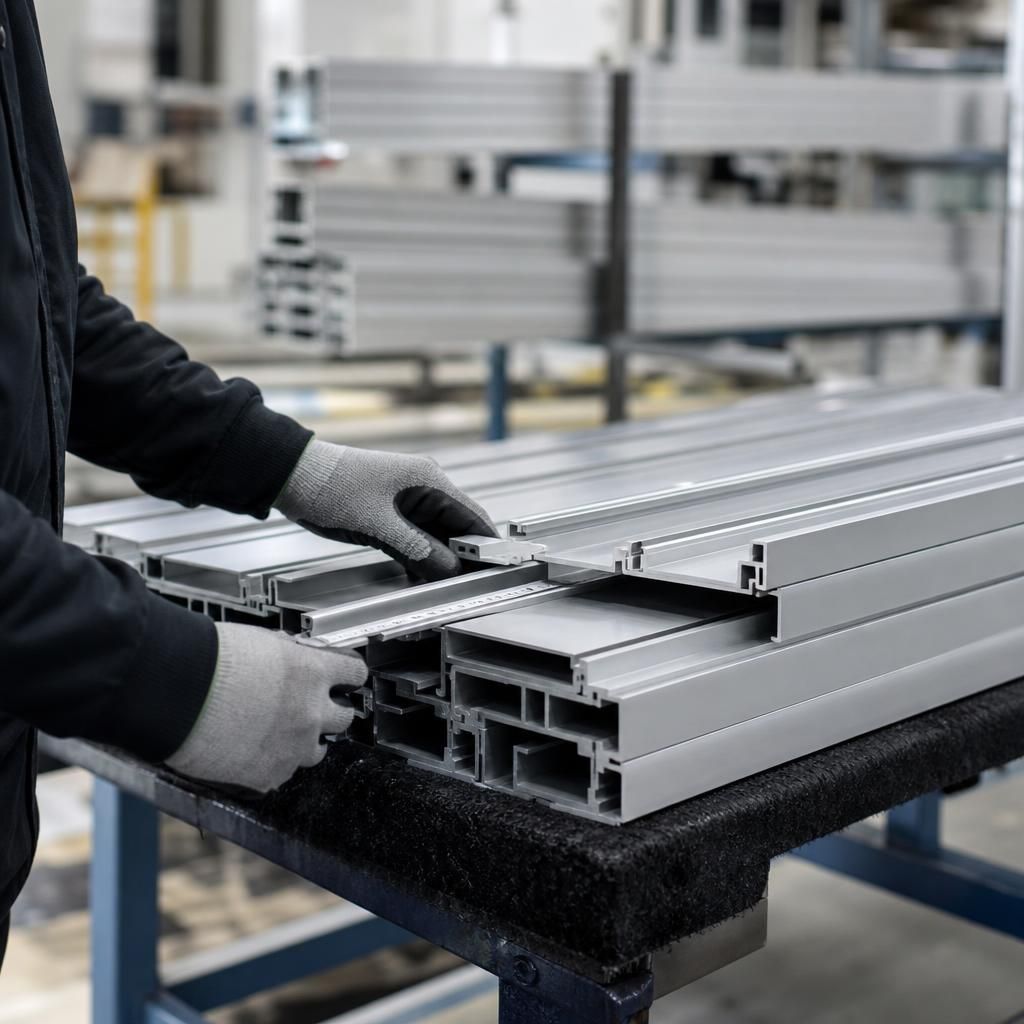
Powder coating can help aluminium sections retain predictable dimensions and interface conditions when the coating specification is considered during design. The cured layer adds a controlled film to the surface, so clearances, slots, channels, threaded areas and mating faces should be checked before production. Masking or defined uncoated zones may be required where electrical contact, bonding or close mechanical tolerances are important.
This planning benefit is particularly relevant to fabricated frames, profiles and assemblies made from multiple sections. Agreeing coating limits and tolerance requirements in advance helps prevent the finish from interfering with joints or moving parts, while still providing the required appearance and surface protection on exposed areas.
Discuss your aluminium section coating requirements
Discuss your aluminium section coating requirements with our team, including the intended application, finish specification, section dimensions and any masking or uncoated areas. We can help identify the information needed to assess your project and prepare a suitable quotation.