

What materials can be powder coated at your aluminium section powder coating plant?
Our aluminium section powder coating plant is suitable for aluminium sections and other metal components that can withstand the preparation and curing process. The appropriate coating system depends on the metal substrate, component dimensions, intended use and required finish, with specialist options available for applications requiring protective or nylon coatings.
Powder coating is suitable for a range of conductive metal substrates, with aluminium sections being the primary material for this type of plant. The most appropriate coating route depends on the alloy, surface condition, geometry, previous treatment and the component’s service environment. Aluminium is commonly processed alongside steel and other compatible metal parts, provided each substrate receives suitable preparation and curing controls.
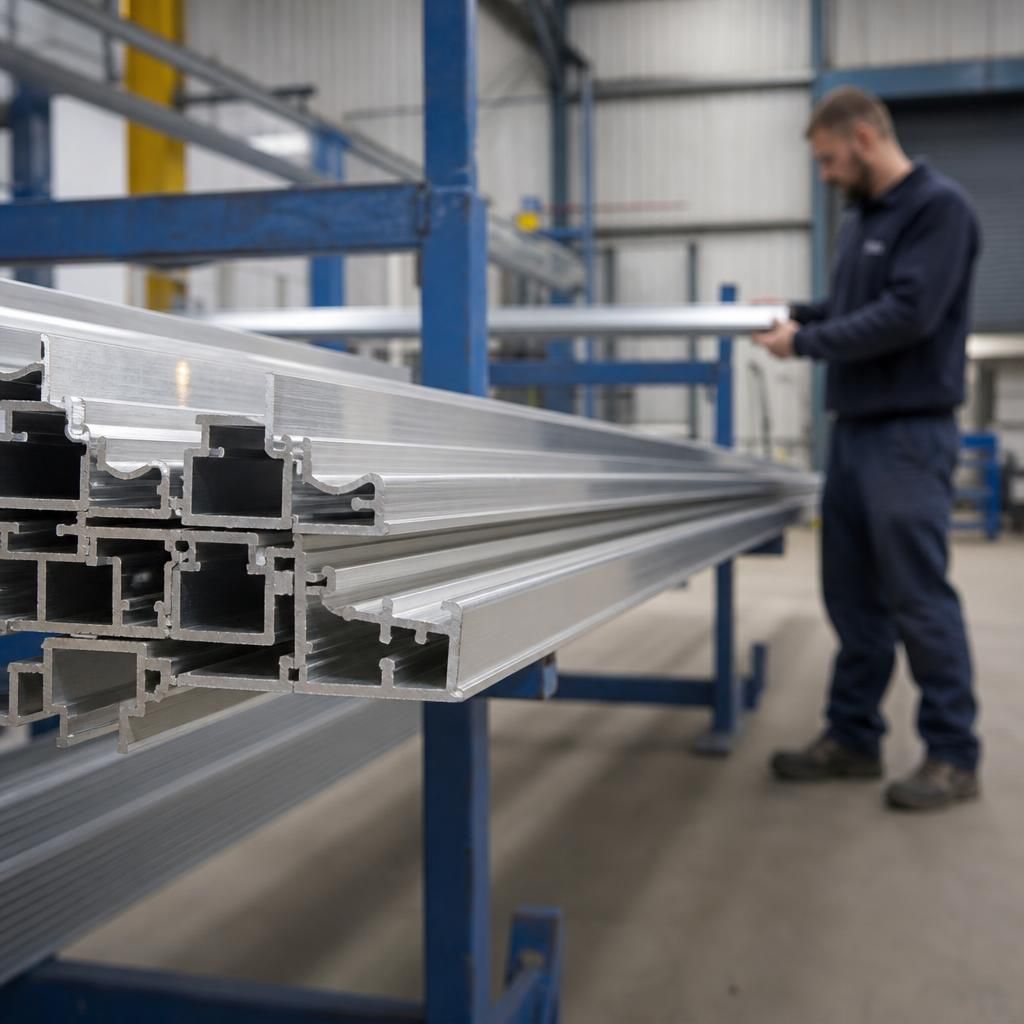
Aluminium sections and extrusions
Aluminium is well suited to powder coating because it is conductive, lightweight and available in a wide range of extruded profiles. Suitable examples include channels, angles, box sections, rails, frames, trims and fabricated assemblies. Both plain mill-finished aluminium and previously anodised or otherwise treated sections may be considered, although an existing finish must be assessed before preparation. The coating specification should take account of the aluminium alloy, extrusion marks, welds, sharp edges, recesses and any holes that require masking.
Aluminium sections are often selected for architectural components, transport-related parts, fabricated assemblies, enclosures and general industrial applications. The required pretreatment and powder chemistry will vary according to whether the finished part is intended for interior use, external exposure, impact resistance, chemical contact or regular handling.
Mild and carbon steel
Mild steel and other carbon-steel components can generally be powder coated where their size and construction are compatible with the preparation and curing equipment. Typical examples include brackets, frames, guards, panels, housings, fabricated supports and machine components. Steel requires careful cleaning and the removal of mill scale, oil, rust, weld residues and other contaminants. Any corrosion left beneath the coating can affect adhesion and may allow deterioration to continue under the finish.
Steel also needs an appropriate corrosion-protection system. This may involve a conversion treatment, primer or a protective powder system selected for the intended environment. Hollow sections require particular attention because trapped moisture, fabrication residue and unvented cavities can create coating defects or safety issues during heating. Drainage and venting should therefore be considered during component design.
Galvanised and zinc-coated steel
Galvanised steel and other zinc-coated metals can be powder coated, but they need a substrate-specific preparation method. The surface may contain passivation layers, oils, zinc salts or residues that interfere with adhesion. Excessively smooth galvanised surfaces may also require controlled preparation to provide a suitable key without removing unnecessary protective material.
Venting is especially important for galvanised or zinc-coated hollow fabrications. Heating can release gases from the substrate or from concealed areas, potentially causing pinholes, bubbling or other surface imperfections. The condition of the galvanising, the age of the material and the design of the fabrication should be reviewed before the coating system is chosen.
Stainless steel and other specialist metals
Stainless steel can be powder coated, although its naturally resistant and relatively low-energy surface requires thorough preparation for reliable adhesion. Degreasing alone is not normally sufficient. The surface treatment must be compatible with the grade, existing finish and intended use, particularly where the component will experience handling, abrasion, moisture or chemical exposure.
Other conductive metals may also be considered on an individual basis. Cast components, for example, can present pores, moulding residues and outgassing risks. Copper, brass and zinc-based castings can be technically coat-able, but their surface chemistry, thermal behaviour and appearance requirements need assessment before production. Small differences in alloy composition or previous treatment can affect the result, so a representative sample or trial may be appropriate for less familiar substrates.
Materials that need additional assessment
Powder coating is not normally applied directly to timber, plastic, rubber, glass or other non-conductive materials using a conventional metal-coating process. Some heat-resistant specialist materials may accept a powder finish through an alternative method, but they should not be assumed suitable. Components containing seals, bearings, adhesives, plastics or electronic parts also need review because the curing temperature can damage heat-sensitive elements.
Previously painted, oily, heavily corroded or contaminated metal may require stripping or additional preparation before it can be coated. Welded assemblies should be checked for spatter, sharp edges and residues, while threaded areas, mating faces, earth points and precision interfaces may need masking. The presence of dissimilar metals within one assembly can also influence pretreatment and corrosion behaviour.
How material choice affects the coating specification
The substrate is only one part of the selection process. The coating decision should also consider:
- the alloy or grade and its existing surface treatment;
- the component’s dimensions, weight, profile and wall thickness;
- the required appearance, texture, colour and gloss level;
- exposure to weather, moisture, chemicals, abrasion or impact;
- areas that must remain uncoated for assembly, electrical contact or dimensional reasons;
- the number of parts being processed and whether consistent coverage is required across a batch; and
- whether a standard, protective or nylon-based coating system is appropriate.
For aluminium sections, the most reliable results come from confirming the material grade, identifying any existing finish and communicating the end-use conditions before processing. Drawings, photographs, sample parts and masking requirements can help establish whether the substrate and design are suitable for the proposed powder coating system.
Aluminium composite or bonded sections require separate assessment from solid aluminium extrusions. Although the outer face may be metallic, the core, adhesive layers or concealed inserts may not tolerate the preparation and curing cycle used for powder coating. The coating specification must therefore consider the complete construction of the component, not just its visible surface.
Where only exposed aluminium is intended to receive the finish, edges, joints and interfaces may need careful masking to prevent powder entering areas that must remain accessible or dimensionally unchanged. Drawings or a representative sample can help establish whether a composite section is suitable for processing and which surfaces should be coated.