

How does the process of nylon coating differ from traditional galvanised steel powder coating?
Nylon coating typically involves thorough preparation of the metal followed by applying a thermoplastic nylon layer, often by fluidised-bed dipping or electrostatic spray, without the curing reaction used by thermoset powder coatings. Traditional powder coating on galvanised steel requires careful removal of contaminants, control of outgassing and a heat-cured powder finish, so the preparation and application stages differ as well as the coating material.
The main difference is that nylon coating is built by fusing a preformed thermoplastic polymer to the prepared metal, whereas powder coating over galvanised steel creates a chemically cross-linked thermoset film. This affects the surface preparation, heating cycle, coating build, inspection requirements and the way the finished component should be used.
1. The substrate requires a different preparation approach
Galvanised steel already has a zinc layer, so the preparation must preserve that protection while creating a sound surface for the powder coating to adhere to. Oils, storage residues, white rust and other contaminants need to be removed. The surface may also require controlled abrasion or chemical preparation, depending on the condition of the zinc and the specification for the finished part. Excessively aggressive treatment can reduce the value of the galvanised layer.
Nylon coating is applied directly to a suitably prepared metal surface or to a specified intermediate system. The preparation is selected according to the base metal, the required adhesion and the nylon process being used. Cleaning and surface profiling are particularly important because the polymer must make reliable contact with the substrate as it forms its film. Any remaining grease, oxide or loose material can cause poor adhesion, voids or localised defects.
2. The heating requirements are not the same
With nylon, the metal and polymer are brought together so that the nylon particles melt and flow into a continuous coating. This can involve preheating the component before fluidised-bed dipping, or applying nylon electrostatically and then heating it to fuse the deposited powder. The process is controlled around the melting and flow behaviour of the selected nylon.
Powder coating on galvanised steel normally involves depositing the powder and then placing the part through a controlled curing cycle. The powder must reach the required metal temperature for long enough to complete its cross-linking reaction. The galvanised substrate can influence how heat moves through the part, and trapped air or moisture in the zinc layer can contribute to outgassing. The coater therefore needs to consider the steel thickness, component geometry and the condition of the galvanising when setting the process.
3. Film formation and coating build differ
A nylon coating can be applied as a relatively substantial, continuous thermoplastic layer. Its final build is influenced by the temperature of the part, the time in the fluidised bed or the electrostatic deposition settings, and the number of passes or coating stages. Corners, recesses, drilled holes and edges need particular attention because the polymer may flow differently in these areas.
A conventional powder finish on galvanised steel is generally controlled as a thin, even film suitable for the component and its end use. Excessive thickness can affect assembly tolerances, hole sizes, threaded areas and the appearance of edges. Both processes therefore require masking or suitable allowances where mating surfaces, threads or close-fitting parts must remain within specification.
4. The performance mechanism is different
Nylon provides a tough polymer barrier with useful resistance to abrasion, impact and contact with many industrial materials. Its suitability still depends on the particular nylon formulation, operating temperature, chemicals present and exposure conditions. It should not be treated as universally resistant to every solvent, acid, alkali or process fluid.
In a galvanised-and-powder-coated system, the powder film provides the visible barrier and the zinc layer beneath it provides additional sacrificial protection if the steel is exposed at a small damaged area. The performance of this duplex system depends on adhesion between the layers and on preventing moisture from travelling beneath a damaged or poorly bonded film. The two systems should therefore be assessed against the actual corrosion, wear, temperature and chemical demands rather than compared only by appearance.
5. Inspection focuses on different risks
For nylon, inspection commonly concentrates on continuity, adhesion, coating build, coverage around edges and recesses, surface inclusions and evidence of incomplete fusion. Parts may also need dimensional checks where the coating is applied to close-tolerance components. A visual inspection alone may not identify every problem in a thick or geometrically complex coating.
For powder coating over galvanised steel, checks also need to consider the condition of the zinc surface, signs of outgassing such as pinholes or bubbling, curing and adhesion between the coating layers. The galvanised finish should not be assumed to compensate for poor powder-coating preparation, and the powder coating should not be regarded as a substitute for an intact zinc layer.
6. The choice depends on the component and service conditions
- Nylon can be appropriate where a tough, insulating and abrasion-resistant polymer surface is required, particularly on parts that benefit from a heavier protective layer.
- A galvanised steel powder-coating system can be appropriate where the zinc substrate protection and a hard, decorative or colour-stable thermoset finish are required together.
- Complex assemblies should be reviewed for masking, drainage, trapped moisture, heating limitations and access to all surfaces before either process is specified.
- Moving parts, threaded connections and close-fitting interfaces need coating allowances because either finish can alter the original dimensions.
- The specification should identify the base metal, surface preparation, coating material, expected service environment, acceptable film build and inspection method.
In practice, nylon coating is not simply a different powder colour or a direct replacement for powder coating on galvanised steel. It is a separate coating route with different thermal behaviour, film characteristics and quality-control priorities. Selecting between them requires matching the process to the substrate and to the component’s exposure to wear, corrosion, chemicals, heat and mechanical contact.
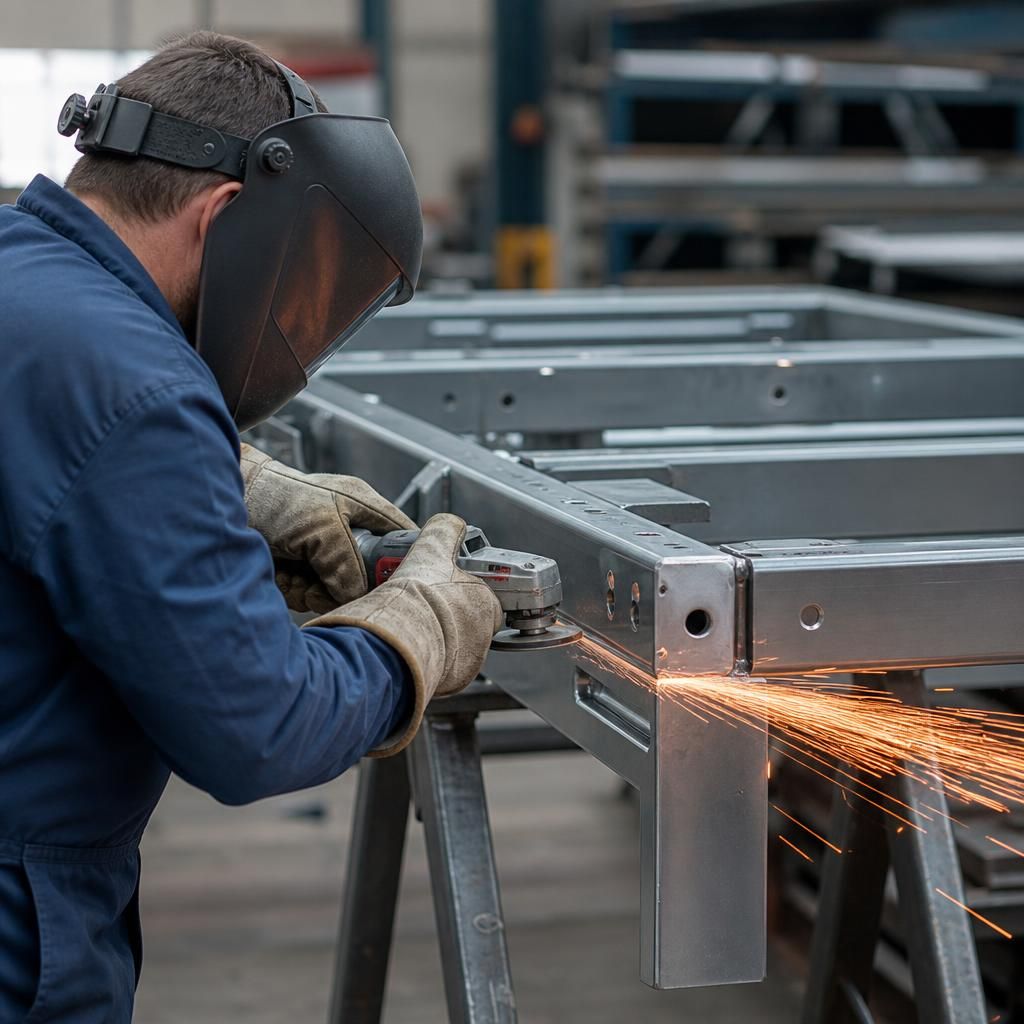
One practical difference appears when a coated component is altered after processing. Cutting, drilling or welding can interrupt a nylon layer and expose the underlying metal, so these operations should normally be completed before coating wherever the design allows. Any unavoidable exposed area requires a repair method compatible with the nylon system rather than an assumed paint touch-up.
With galvanised steel carrying a powder finish, later fabrication can also remove the powder film and disturb the zinc protection at the worked area. The repair specification must therefore address both layers and the condition of the exposed steel. Planning these operations before coating helps avoid local repairs that do not match the original protection or the component’s dimensional requirements.
Discuss your nylon coating requirements with a specialist
Discuss your nylon coating requirements with a specialist, including the component material, dimensions, operating environment and required finish. This information will help establish whether nylon is suitable and identify the appropriate preparation, application and inspection requirements.