

How does batch size affect aluminium powder coating prices?
Batch size affects aluminium powder coating prices because preparation, loading, masking and colour-change costs are spread across the parts being processed. Larger, consistent batches often reduce the average price per component, while small or mixed batches may carry a higher unit cost because setup and handling take a greater share of the work.
Batch size affects aluminium powder coating prices mainly through the way production costs are allocated across the work. A larger batch of compatible parts can usually achieve a lower average price per item, whereas a small, irregular or mixed batch may have a higher unit price even when the coating process itself is straightforward. The total invoice will still depend on the size, shape, condition and specification of the aluminium components.
Coaters may assess a batch using different pricing units, depending on the parts involved. Quotes can be based on the number of components, the surface area to be coated, the weight of the metal, or the amount of production capacity the order occupies. This means that adding more items does not always produce the same reduction in unit price. For example, a batch of compact, regularly shaped components may be processed efficiently, while a smaller number of large panels or unusually shaped fabrications may require more space and individual handling.
The consistency of the batch is often as important as its size. Aluminium components that share the same colour, finish, coating specification and process requirements are easier to group into one production run. A large order containing several specifications may therefore be priced differently from a smaller order made up of identical parts. Separating the work into multiple requirements can reduce the practical benefit of the overall quantity because each group must be assessed and processed on its own terms.
- Uniform batches: Identical or closely related components allow the coater to plan the work more efficiently and provide a clearer unit price.
- Mixed batches: Different sizes, shapes, finishes or coating specifications can require separate handling and may reduce the cost advantage of combining everything into one order.
- Large fabrications: A high item count does not necessarily mean a low price if each component occupies substantial space or needs careful positioning.
- Repeat orders: Regular production of the same aluminium components can make costs more predictable because the specification and handling requirements are already established.
Batch size also affects how efficiently parts can be arranged during coating. A suitable quantity of similarly shaped components may allow available rack space and equipment capacity to be used more effectively. Conversely, a very small order can leave unused capacity, while an oversized or awkward batch may need to be divided into several runs. Neither situation should be judged by item count alone: the dimensions, profile, weight and geometry of the parts determine how much usable capacity the batch occupies.
Minimum charges can also influence the price of a small order. Even where there are only a few aluminium parts, a coating quotation may need to cover order administration, inspection, production planning and the use of equipment. These costs are spread across fewer components, so the total price per item can be higher. This does not necessarily mean that the coating rate for the aluminium is higher; it reflects the smaller quantity over which the overall work is distributed.
For larger batches, the key question is whether every part can be processed under the same conditions. If the answer is yes, a lower average cost is more likely. If parts vary substantially, the quotation may need to account for separate specifications, different rack arrangements, additional inspection requirements or distinct acceptance criteria. A large order should therefore be described in detail rather than presented only as a total quantity.
Businesses comparing quotations should provide a batch schedule showing the number of parts, their dimensions, material condition, required colour and finish, and whether the items are identical or mixed. Drawings or photographs can be useful for unusual profiles and fabricated sections. It is also worth stating whether the order is a one-off production batch or part of a repeat programme, as this helps the coater assess the most suitable basis for pricing.
The most useful comparison is normally the total cost and the effective cost per coated component, not simply the quoted rate for one item. Ask whether the price assumes one consistent specification, whether different components have been grouped together, and which additional requirements have been included. This avoids comparing a broad batch estimate with a price based on only the simplest items.
For Midlands manufacturers, fabricators and other businesses sending aluminium parts for coating, collection and delivery arrangements can also be considered alongside the batch plan. Coordinating compatible work into a clearly defined consignment may make the quotation easier to assess, although transport requirements remain separate from the coating rate unless specifically included in the agreed price.
In practical terms, a larger batch is most likely to reduce the average aluminium powder coating price when it consists of repeatable parts with one clearly defined specification. Small batches can still be economical when the components are uncomplicated and well documented, while large mixed orders may not deliver the same unit-cost reduction. The fairest quotation comes from matching the quantity with the actual production requirements of the parts.
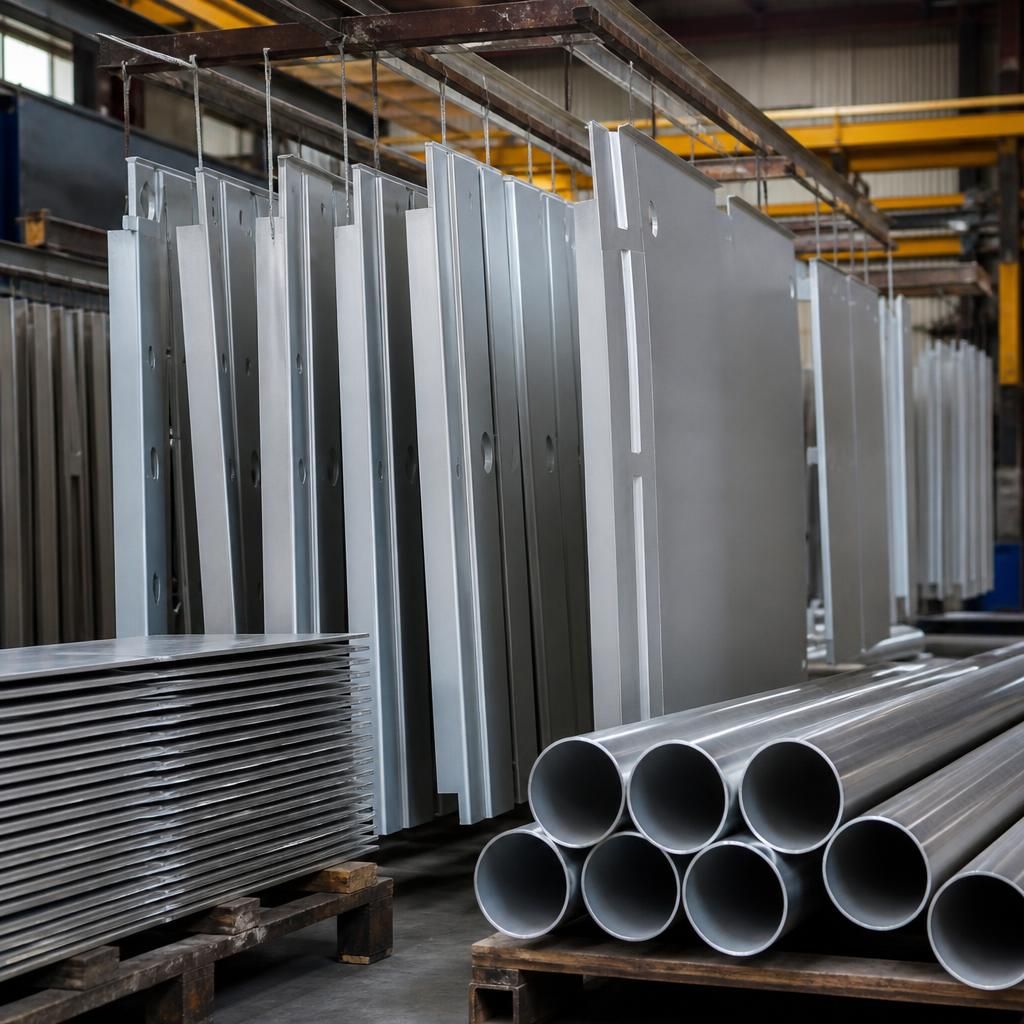
Batch size can affect aluminium powder coating prices when the parts have different thicknesses or thermal characteristics. Thin sections and heavier aluminium fabrications may not reach the required curing conditions in the same way, so combining them in one order does not always mean they can be processed in one efficient cycle. If separate curing arrangements or production runs are needed, the average cost per component may remain higher than the item count suggests.
When requesting a quotation, identify significant differences in section thickness, mass and construction within the batch. This allows the coater to assess whether the parts are genuinely suitable for a shared process plan, rather than assuming that a larger quantity will automatically produce a lower unit price.