

How does your aluminium powder coating process ensure uniform coverage and adhesion?
Our aluminium powder coating process combines thorough surface preparation with controlled powder application and curing to promote even coverage across each component. Attention to cleanliness, coating consistency and cure conditions helps the finish adhere securely and perform reliably in service.
Uniform coverage and adhesion on aluminium depend on controlling the entire coating system, from component design and fixturing through to powder deposition, curing and inspection. Aluminium is electrically conductive but has a naturally occurring oxide layer, so consistent results require the coating process to account for the alloy, profile, geometry and intended service conditions of each component.
Component assessment and fixturing
Before coating, the component is assessed for features that can affect powder distribution. Deep recesses, internal corners, sharp edges, perforations and overlapping sections may receive a different electrical field from broad, exposed faces. Identifying these areas allows the part to be positioned and suspended so that the spray equipment can reach the required surfaces without creating avoidable shadowing.
Racking also provides a reliable electrical path for electrostatic application. Contact points are selected where practical to reduce uncoated areas, while the arrangement of parts helps prevent components from obstructing one another. For batch work, consistent loading and repeatable spacing make it easier to maintain similar deposition conditions from one run to the next.
Managing electrostatic powder application
During spraying, charged powder particles are attracted to the earthed aluminium component. The application settings must be matched to the part rather than treated as a fixed setting for every job. Gun distance, powder flow, air movement and charging conditions all influence the amount and distribution of powder on the surface.
Excessive charge can contribute to back-ionisation or uneven build, particularly in corners and enclosed profiles. Conversely, insufficient deposition can leave thin areas or require additional passes. Operators therefore adjust the application approach for the component’s shape, using suitable spray angles and movement to reach faces, edges and recesses while avoiding excessive powder accumulation.
Powder condition is also relevant to uniformity. Material is handled and stored to help maintain consistent flow through the application equipment. Controlling contamination and avoiding uncontrolled variation in the powder feed supports a more even film across the batch.
Supporting adhesion on aluminium
Adhesion is determined by the bond between the coating system and the aluminium substrate, not simply by the visible appearance of the finish. The selected pre-treatment and powder chemistry must be compatible with the aluminium grade, the required corrosion protection and the conditions the finished component will encounter.
Particularly important considerations include:
- the aluminium alloy and its surface condition;
- the presence of machining residue, handling contamination or previous treatment;
- the required coating thickness and finish;
- exposure to moisture, chemicals, abrasion or temperature changes; and
- the time between preparation, coating and curing.
Where aluminium components include different sections or assembled features, these factors are reviewed together because a coating that performs well on an exposed flat face may behave differently around joints, edges or recessed areas.
Verifying the cured finish
The curing stage converts the deposited powder into a continuous film with its intended mechanical and protective properties. Aluminium can heat differently from heavier steel parts, so cure assessment needs to consider the component’s mass, section thickness and loading arrangement rather than relying only on the oven air temperature. The process is checked against the requirements of the chosen powder system, with attention to the metal temperature and time at temperature.
Inspection then provides evidence that the coating has been applied consistently. Depending on the specification, checks may include visual examination, coating thickness measurement, assessment of coverage around edges and recesses, and adhesion testing. Any variation is considered alongside the part geometry and process records so that adjustments can be made for subsequent batches.
This combination of suitable fixturing, controlled electrostatic deposition, material compatibility, validated curing and job-specific inspection gives aluminium components a more consistent coating system. It is particularly useful for manufacturers and fabricators requiring repeatable results across individual parts or larger production batches, with the inspection requirements agreed to suit the component and its application.
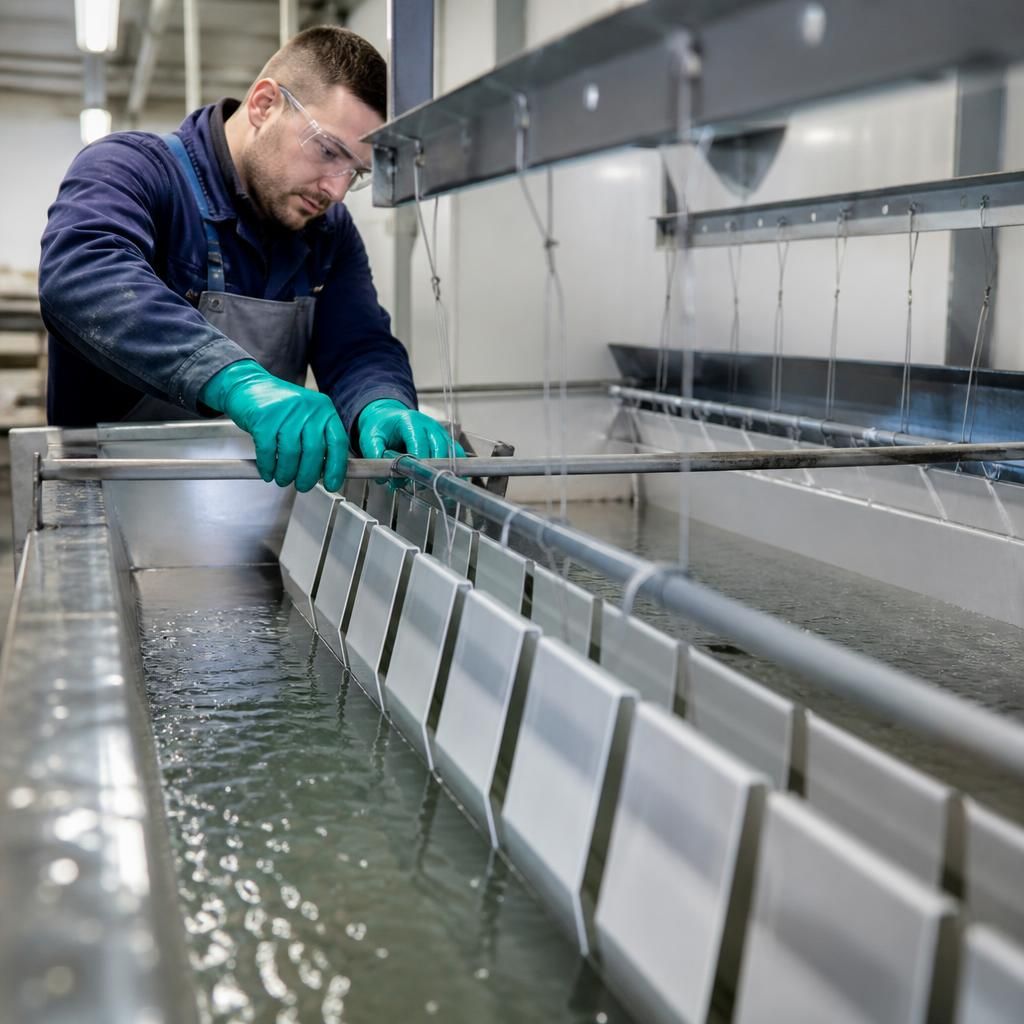
On aluminium, adhesion is established largely during surface preparation, before powder is applied. The component must be cleaned to remove oil, machining residue, dust and handling contamination, then treated using a preparation system compatible with the alloy and the required service conditions. This creates a stable surface for the coating to bond to rather than relying on powder adhering to an uncontrolled oxide or residue layer.
Rinsing and drying are also important parts of this stage. Residues from cleaning or treatment can interfere with bonding, while moisture left in joints, hollows or profiles can affect the finish during curing. Keeping prepared components protected from further contamination before spraying helps preserve the condition achieved during pretreatment and supports consistent adhesion across the aluminium surface.