

What type of blasting equipment is best for preparing metal surfaces for powder coating?
The best equipment is usually a compressed-air abrasive blasting system selected to suit the component’s size, metal type and existing coating. Blast cabinets work well for smaller parts, while pressure blast pots with suitable nozzles and dust control are more practical for large or irregular fabrications, producing a clean, suitably keyed surface for powder coating.
The best blasting equipment for powder-coating preparation is a controllable abrasive blast system that can deliver a consistent surface profile without distorting or contaminating the metal. Selection should be based on the component’s geometry, substrate, condition, required production volume and the abrasive being used, rather than on equipment size alone.
Key equipment options
- Pressure blast systems: These propel abrasive from a pressurised vessel and provide strong, consistent cutting action. They are suitable where rust, mill scale, firmly bonded old coatings or other difficult contamination must be removed from substantial metalwork.
- Suction or siphon systems: These draw abrasive into the air stream rather than using a pressurised pot. They can offer useful control for lighter cleaning and finishing work, particularly where aggressive removal is not required.
- Automated blast machines: Tumble, conveyor or roller-based systems can improve repeatability for batches of similar components. Their value comes from controlled part movement, fixed blast coverage and repeatable settings, provided the components can be loaded without shielding critical surfaces.
- Wet-blasting equipment: This combines abrasive with water to reduce airborne dust and provide a less aggressive cleaning action. It is not automatically suitable before powder coating, because the metal must be thoroughly rinsed, dried and protected from flash rust before coating.
Air supply and blast control
A suitable compressor is as important as the blast machine itself. It must maintain the air volume required by the chosen nozzle and operating pressure without excessive fluctuation. An undersized compressor can cause inconsistent cleaning, while contaminated or wet compressed air can leave oil or moisture on the substrate. Effective systems therefore include an aftercooler or moisture separator, suitable filtration and a drainable air receiver where required.
Blast pressure, abrasive flow and nozzle distance should be adjustable. Fixed, uncontrolled settings increase the risk of over-blasting thin sections, rounding sharp edges or producing an uneven profile. A deadman control is also preferable because it stops abrasive flow when the operator releases the control, helping to prevent uncontrolled blasting during interruptions or repositioning.
Nozzles and blast pattern
Nozzle selection affects both productivity and the finish produced. Nozzle diameter influences abrasive flow and air demand; nozzle material affects service life, particularly when hard abrasive is used. A worn nozzle can enlarge the blast pattern and alter the working pressure, making surface preparation less consistent. Nozzles should therefore be checked regularly and replaced when wear affects control or coverage.
Different nozzle shapes and extensions can help reach corners, recesses and internal areas, but no equipment can compensate for poor access or inadequate part presentation. Components should be positioned so that the blast stream reaches all coating surfaces without excessive shadowing. Critical faces, threads, machined fits and masking points may need controlled blasting or separate protection.
Dust extraction and abrasive management
For enclosed equipment, a correctly sized extraction system is essential. It should maintain visibility inside the cabinet, remove fine dust and prevent contaminated air from escaping into the working environment. Poor extraction can obscure the operator’s view and allow spent abrasive, coating debris and metal dust to settle back onto the component.
Reclaim systems can be useful for compatible, reusable abrasives, but the abrasive must be screened and monitored for breakdown and contamination. Spent abrasive mixed with removed paint, rust or grease should not be allowed to circulate indefinitely. Where a single-use abrasive is selected, collection and disposal arrangements should be considered when choosing the equipment.
Matching the system to the metal
Equipment must be capable of using an abrasive appropriate to the substrate. Steel fabrications may tolerate a more aggressive cleaning action than thin sheet, aluminium or softer alloys. Delicate components require controlled pressure, a suitable abrasive grade and careful nozzle handling to avoid distortion or an unnecessarily deep profile. On galvanised or previously treated metal, the preparation method should remove contamination without stripping more of the protective layer than intended.
The objective is not to make every surface as rough as possible. The equipment should produce a clean, uniform surface with a profile compatible with the powder-coating system. Excessive roughness can increase powder consumption and leave peaks insufficiently covered, while inadequate roughness may reduce mechanical adhesion. Surface profile comparators or other appropriate inspection tools can help verify that the chosen settings are producing the intended result.
Practical selection checklist
- Confirm the largest and smallest components the equipment must accommodate.
- Assess whether the work involves light contamination, corrosion, mill scale or old coating removal.
- Check the compressor’s sustained air delivery against the nozzle and pressure requirements.
- Provide effective moisture separation, air filtration and abrasive flow control.
- Choose a cabinet, enclosure or automated layout that gives full access to the surfaces being prepared.
- Specify dust extraction and abrasive recovery according to the abrasive type and contamination level.
- Allow for inspection of nozzle wear, hoses, seals, filters and pressure controls.
- Test the process on representative components before committing to a full batch.
For mixed industrial work, a versatile pressure-controlled system with appropriate nozzles, filtration, extraction and inspection facilities is generally the most adaptable arrangement. For repeated batches, automation may provide greater consistency, whereas unusual shapes or large fabrications require flexible access and careful manual control. In every case, the equipment is only suitable when it can prepare the specific metal surface without leaving moisture, oil, abrasive residue or an unsuitable profile before powder coating begins.
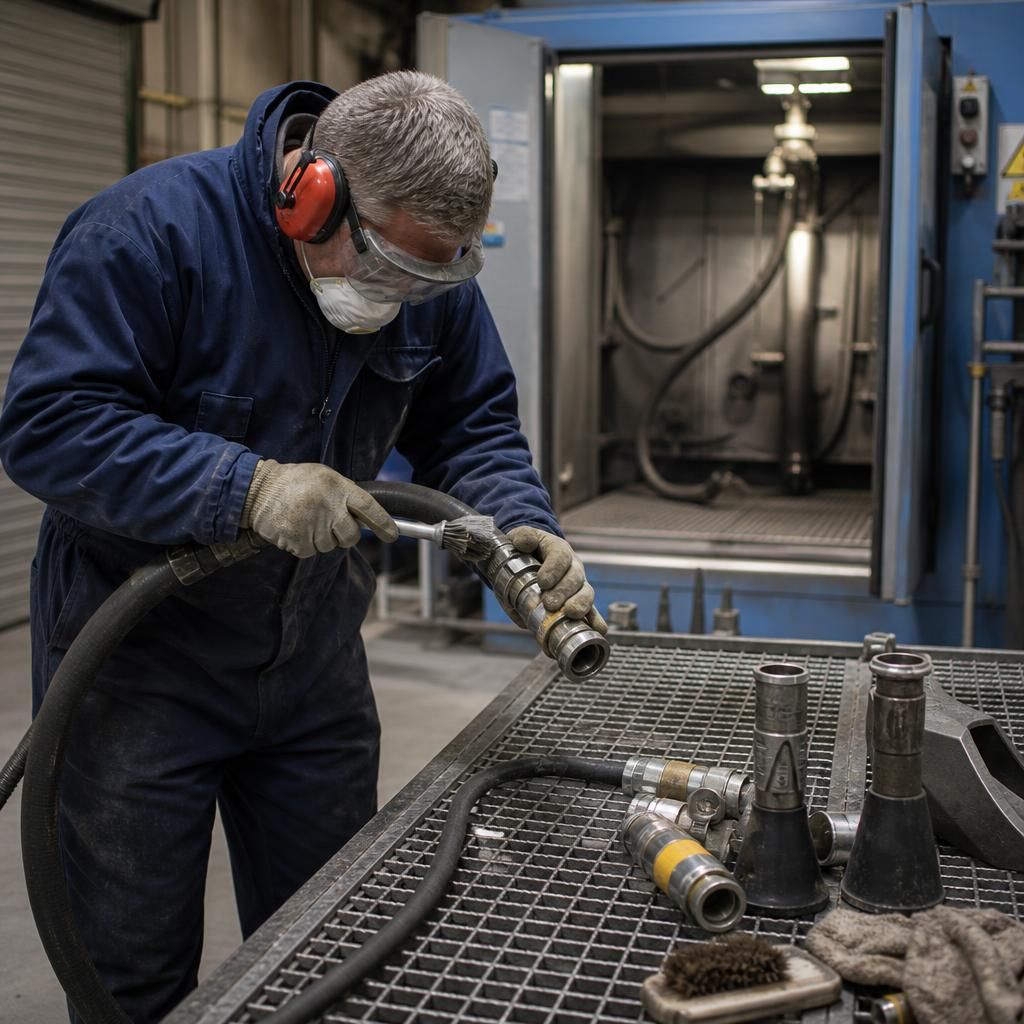
Equipment used for powder-coating preparation should also allow effective cleaning between jobs. Residues from removed paint, oil, rust or a different abrasive can contaminate a prepared surface and contribute to coating defects. Blast cabinets, hoses, nozzles and reclaim systems should be accessible for inspection and cleaning, while abrasive that has become contaminated should be removed rather than repeatedly circulated. Where different substrates or abrasive grades are processed, separate circuits or carefully controlled changeover procedures can help prevent cross-contamination.
Discuss the Right Blasting Equipment for Your Metalwork
If you are unsure which blasting arrangement suits your components, discuss the metal type, dimensions, condition and production requirements with the powder-coating.co.uk team. This will help identify a practical preparation approach before coating work begins.