

How do two-coat and thermoset coating systems enhance the longevity and aesthetics of metal components?
A two-coat system combines a preparatory basecoat, which improves adhesion and corrosion protection, with a thermoset topcoat that cures into a hard, chemically resistant finish. Together, these layers help metal components withstand abrasion and environmental exposure while providing a more consistent, durable appearance.
Two-coat and thermoset coating systems extend the useful life of metal components by separating corrosion protection from the final decorative finish. This allows each layer to be selected for a specific function, while the thermoset topcoat provides a stable surface that retains its colour, texture and protective properties during service.
The longevity benefit comes from the combined performance of the coating layers rather than thickness alone. A correctly specified system can:
- reduce the risk of moisture and corrosive agents reaching the metal;
- provide a more consistent barrier over the full component, including formed areas and exposed edges;
- resist wear caused by handling, contact and repeated use; and
- maintain the integrity of the surface when exposed to oils, cleaning agents or other chemicals appropriate to the specification.
A thermoset coating changes chemically during curing. Its resin and curing agent form a cross-linked structure, so the finished film does not simply soften and flow again when heated. This gives the topcoat a firm, stable surface with useful resistance to abrasion, impact and chemical contact. The exact performance still depends on the resin type, film build, curing conditions and the environment in which the component will be used.
The visual improvement is equally important for manufactured parts. A thermoset topcoat can provide a controlled colour, gloss level and surface texture across a batch. This makes components easier to match with surrounding equipment and helps maintain a consistent appearance where parts are supplied to customers or installed as visible elements of a structure. Texture can also help disguise minor visual variation that would be more noticeable on a smooth, high-gloss finish, although it cannot compensate for poor preparation or substrate defects.
Using separate coats also gives greater scope to specify the finish according to the component’s service conditions. A base layer may be chosen for the required substrate protection, while the topcoat can be selected for its appearance and resistance to the particular combination of sunlight, moisture, abrasion and chemicals present in use. This is more adaptable than expecting one coating to provide every required property to the same degree.
For the system to deliver these benefits, application control is essential. Contamination, inadequate preparation, uneven coverage or incorrect curing can create weak points that affect both appearance and service life. Coating thickness should be appropriate for the product specification, and the finished component should be checked for defects such as pinholes, runs, exposed areas, poor edge coverage and inconsistent colour. Where parts are assembled after coating, contact points and areas subject to friction should also be considered during the design and specification stages.
Two-coat thermoset systems are therefore particularly useful where a metal component must remain presentable as well as functional. They support a finish that is easier to specify and reproduce while providing a protective surface suited to the component’s operating environment. The correct system should be chosen from the substrate, exposure conditions, handling requirements and desired appearance, rather than from colour or coating type alone.
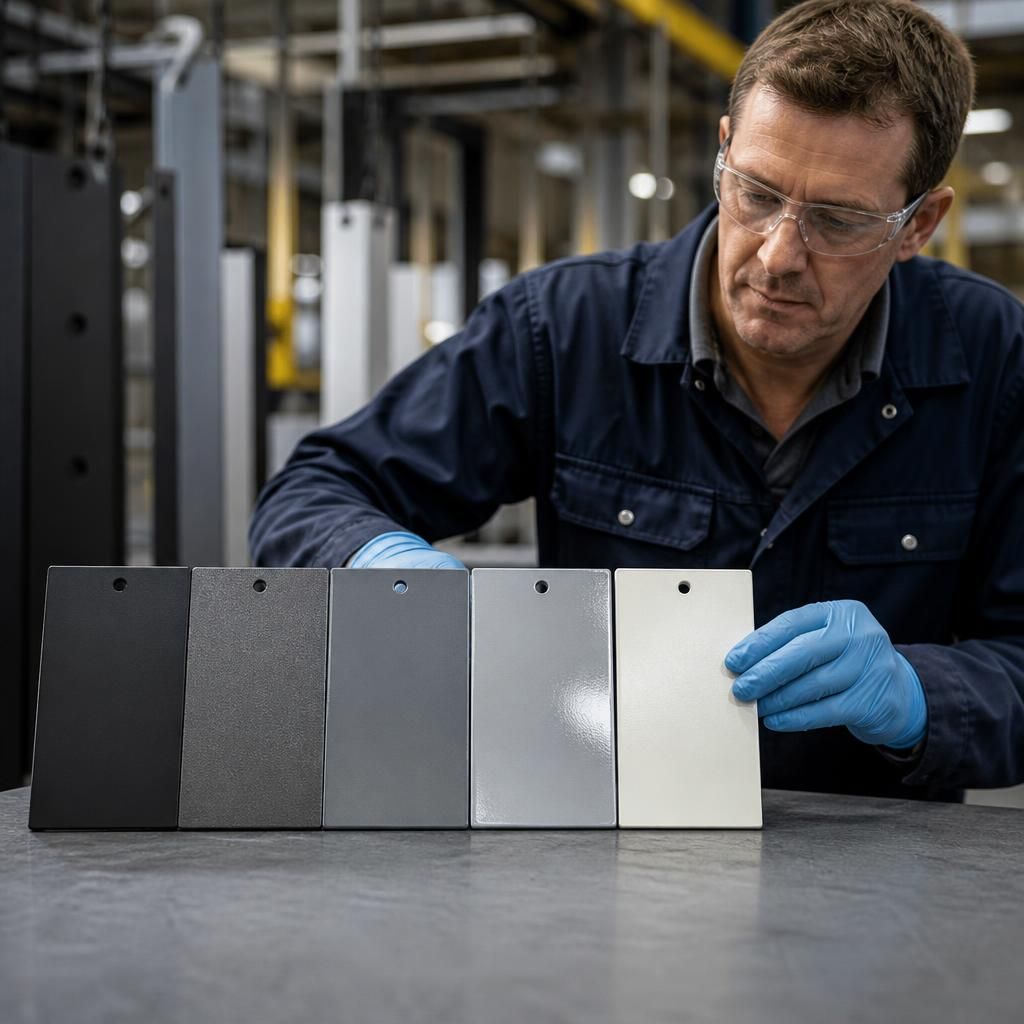
For batch-produced components, a representative test panel or sample part can help confirm that the specified two-coat system delivers the intended appearance before full production begins. Colour, gloss, texture and the visual effect of the substrate can be assessed together, rather than selecting the topcoat in isolation.
This check can also identify compatibility issues between the basecoat and thermoset topcoat, such as lifting, uneven texture or inadequate adhesion, before they affect a larger batch. Agreeing the appearance and performance criteria in advance gives the coating applicator and manufacturer a clear reference for assessing finished parts and supports a more consistent result across repeat orders.