

How does the powder coating repair process ensure the durability and longevity of metal components?
The powder coating repair process extends the life of metal components by removing damaged material, preparing the exposed surface, and applying a compatible replacement coating that restores protection against corrosion, wear and environmental exposure. Controlled curing and thorough inspection help the repaired coating bond effectively and provide a consistent, durable finish.
Powder coating repair ensures durability by restoring a continuous protective barrier, controlling the causes of failure and confirming that the repaired area is suitable for the component’s working environment. A durable repair must do more than conceal visible damage: it must prevent moisture and contaminants reaching the substrate, provide a stable transition between old and new coating, and withstand the mechanical, chemical and weathering conditions the component will encounter.
Stopping local damage from becoming wider corrosion
A chip, scratch or impact mark creates a route through which water, salts and industrial contaminants can reach the metal beneath. If corrosion begins at this point, it may spread under the surrounding coating, causing lifting, blistering or flaking beyond the original defect. Repair therefore limits the exposed area and reinstates protection before the failure becomes more extensive. This is particularly important on fabricated parts with joints, corners, folds and other locations where moisture can collect.
The repair assessment should establish whether the defect is limited to the coating or whether the substrate has also deteriorated. Surface rust, pitting, distortion, contamination and loss of section can affect the long-term result. Where the underlying metal is compromised, coating work alone cannot restore its structural condition. Identifying that distinction helps determine whether a local repair is appropriate or whether a wider treatment is needed.
Creating a sound boundary between existing and replacement coating
The edge of a repair is a potential weak point. A sharp, loose or poorly bonded coating edge can lift when exposed to impact, vibration, water or temperature changes. A properly prepared transition reduces this risk by removing unstable material and creating a gradual, firmly bonded boundary. The replacement powder must also be suitable for the existing finish and for the substrate, so that differences in adhesion, flexibility and chemical resistance do not cause premature separation.
Compatibility matters especially where the original coating remains over most of the component. The repair should be assessed for colour, texture, gloss and coating type, but visual matching is not enough. A finish that looks similar may respond differently to heat, cleaning agents or abrasion. Considering the original coating system and the service conditions helps prevent a repair from becoming the weakest part of the component.
Protecting vulnerable features and interfaces
Edges, apertures, fastener areas, welds and contact points often receive more wear than broad, flat faces. They may also be harder to coat consistently because of their geometry. Effective repair work takes account of these features rather than treating every defect as a flat surface. Particular attention to recesses and drainage paths helps reduce the chance of trapped moisture, while careful treatment around interfaces helps maintain protection where separate parts meet.
For components exposed to repeated handling or mechanical contact, the repair specification should reflect the source of the damage. An impact-related defect may indicate a need to review handling, packaging or adjacent clearances. Abrasion may require attention to contact surfaces, and chemical attack may indicate that the coating is unsuitable for a particular cleaning product or process. Addressing the cause as well as the visible defect gives the repaired area a better prospect of lasting.
Matching the coating to the operating environment
Durability depends on the relationship between the coating and its surroundings. Outdoor components may face rain, ultraviolet exposure, condensation, temperature variation and airborne pollutants. Industrial parts may encounter oils, solvents, detergents, abrasion or process chemicals. Components used in construction, manufacturing and automotive applications can also experience handling damage, vibration and repeated cleaning.
These conditions influence the appropriate powder formulation, surface preparation requirements and repair method. A coating selected for general indoor use may not provide the same resistance in a corrosive or chemically demanding setting. The expected environment should therefore be established before the repair is specified, rather than choosing a replacement finish based solely on appearance.
Using process control to support long-term performance
Consistent results depend on controlling the factors that affect coating formation. The surface must be sufficiently clean and stable for the new material to adhere. Application must provide even coverage without creating thin areas, excessive build-up, runs or defects around complex geometry. The component must then receive the correct heat treatment for the chosen powder and the part itself, since insufficient or excessive curing can affect the coating’s final properties.
Good process control also reduces variation between repaired components in a batch. This is important where parts are assembled together or where a repaired item must match adjacent coated components. Records of the agreed specification, preparation method and inspection findings can support traceability and help identify recurring sources of failure.
Verifying the repair before return to service
Inspection should consider more than colour and general appearance. Useful checks may include:
- continuity of the repaired protective layer;
- secure bonding at the transition between existing and replacement coating;
- coverage of edges, recesses and other vulnerable geometry;
- absence of visible contamination, pinholes, blistering, lifting or unacceptable texture;
- consistency with the agreed finish and component specification; and
- evidence that the coating has been processed in accordance with the selected system’s requirements.
Inspection findings should be considered alongside the component’s intended use. A visually acceptable repair may still require further investigation if the substrate has deep corrosion, if the defect is recurring, or if the part will face conditions beyond the coating system’s capability. Conversely, a correctly specified and properly controlled repair can restore the protective function of the coating without treating cosmetic appearance as the only measure of success.
In practice, longevity comes from combining accurate fault assessment, a compatible repair specification, careful treatment of vulnerable areas, controlled application and evidence-based inspection. This approach helps preserve the metal beneath the coating and reduces the likelihood that a small coating failure will develop into a larger maintenance or replacement issue.
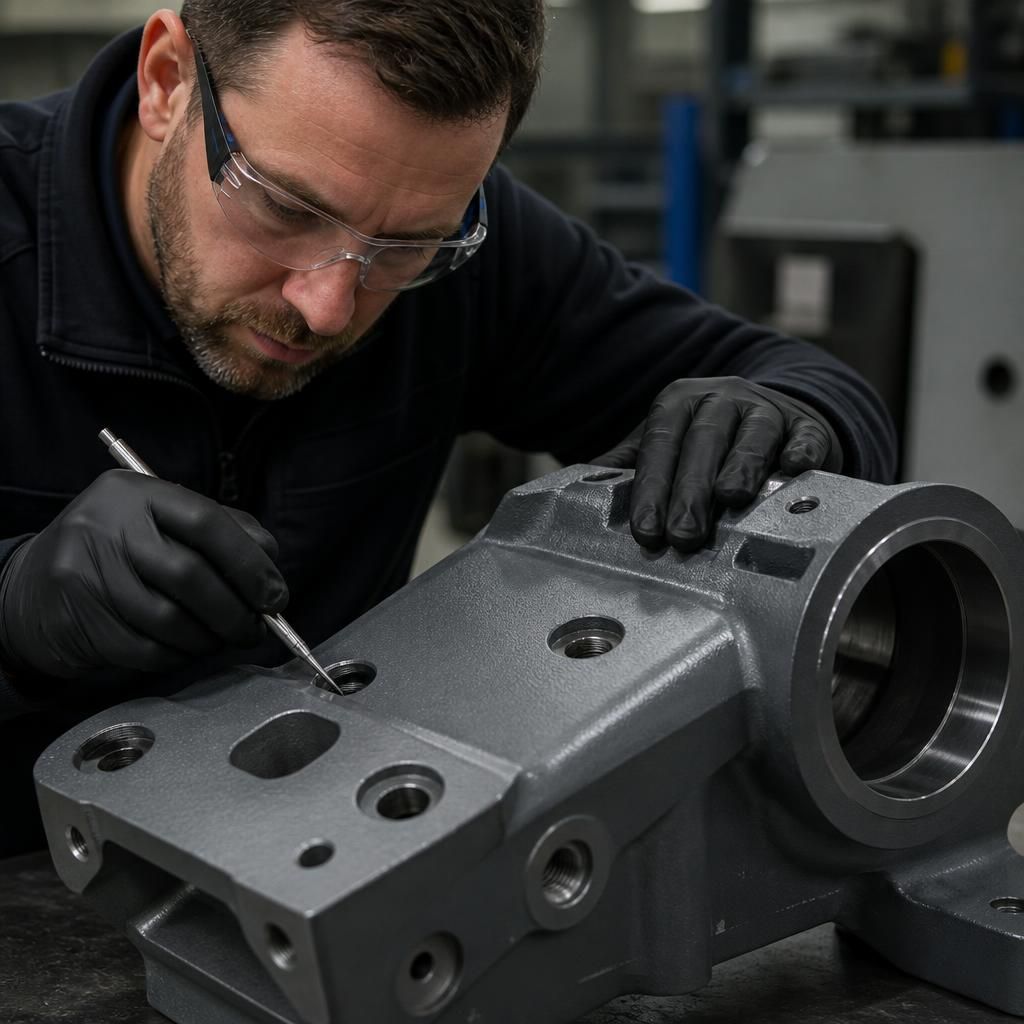
Durability also depends on preserving the component’s fit and function during repair. Coating build-up on threaded holes, bearing seats, mating faces or moving interfaces can create assembly stress, restrict movement or cause fresh damage when parts are installed. A controlled repair specification identifies these functional areas in advance and keeps them free from unwanted coating or within the required tolerance. This prevents mechanical problems from undermining an otherwise sound protective finish and helps the repaired component remain serviceable in its intended application.