

How does the surface preparation process impact the effectiveness of a zinc powder coat primer on mill scale?
Surface preparation directly affects how well a zinc powder coat primer adheres to mill scale and protects the underlying steel. Removing loose scale, rust, oil and other contaminants, while creating a suitable clean profile, helps the primer form a continuous, durable barrier rather than bonding to weak or contaminated material.
Surface preparation determines whether a zinc powder coat primer can develop reliable adhesion and corrosion protection over mill scale. Mill scale is not a uniform coating: it may be tightly attached in some areas, fractured in others, and underlain by steel with different levels of oxidation. If the prepared surface varies across the component, the primer can cure over areas with different adhesion and electrical protection, increasing the risk of blistering, flaking or corrosion developing beneath the coating.
The condition of the mill scale affects the preparation method required. Thin, firmly bonded scale may respond to controlled abrasive preparation, whereas cracked, lifting or heavily oxidised scale provides an unstable foundation and normally needs more intensive treatment. The objective is not simply to make the steel look clean. Preparation must leave a sound, consistent substrate that the primer can wet and grip without relying on weak layers of scale.
- Adhesion: Abrasive preparation can create a controlled surface texture for the powder primer to anchor to. An excessively smooth area may reduce mechanical key, while an irregular or overly aggressive profile can make coverage difficult on peaks and edges.
- Corrosion protection: Zinc-rich primers depend on close contact with the steel to provide effective barrier and sacrificial protection. Residual oxide layers, embedded abrasive, or corrosion products can interrupt that contact and create localised weak points.
- Coating continuity: Mill scale varies in thickness and hardness. If it remains uneven, the applied powder may bridge depressions or form thinner coverage around high points, producing differences in protection across the same component.
- Appearance and curing: Surface irregularities can remain visible through the primer and subsequent powder coats. Contamination or moisture can also contribute to pinholes, cratering, outgassing and other curing defects.
A practical preparation process begins with an assessment of the steel rather than applying one method to every job. The coater should consider the type and condition of the mill scale, the presence of weld spatter or heat-affected areas, the component’s geometry, and the specified durability of the coating system. Edges, holes, recesses and joints deserve particular attention because they are harder to prepare evenly and are common locations for reduced film thickness or retained contamination.
Where abrasive blasting is selected, the abrasive, pressure, nozzle distance and travel pattern should be controlled to produce a consistent surface without distorting thin sections. Mechanical tools may be suitable for local treatment or smaller areas, but they can polish rather than properly texture some steel surfaces. Chemical preparation can assist with particular contaminants or oxide conditions, although its suitability depends on the substrate and the powder system; residues must not be allowed to remain beneath the primer.
After preparation, inspection is as important as the preparation method itself. The surface should be checked for remaining loose scale, rust staining, dust, oil, moisture and uneven areas. A profile comparison or suitable surface-profile measurement can confirm that the texture is within the coating system’s requirements. Inspection should also identify sharp edges, deep pits and inaccessible areas where the primer may not achieve consistent coverage. Any defect that is corrected after inspection should be cleaned again before coating.
The interval between preparation and priming must be controlled. Clean steel can begin to oxidise when exposed to humid air, and condensation can form when the metal temperature approaches the dew point. Applying powder over a surface that has picked up moisture or flash rust can reduce adhesion and trap corrosion beneath the film. Components should therefore be kept dry and protected from conditions that could contaminate or re-oxidise the prepared surface before the zinc primer is applied.
Preparation also needs to account for the primer’s technical requirements. The powder manufacturer’s instructions should define the acceptable substrate condition, surface profile, pre-treatment compatibility, application thickness and curing schedule. A zinc-rich formulation may behave differently from a conventional powder primer, particularly in relation to film formation, recoat adhesion and the amount of zinc needed within the cured film. If a further powder coat is planned, the compatibility of the primer and topcoat should be confirmed before production.
For industrial batch work, documenting the preparation standard and inspecting representative components helps maintain consistency between parts. Particular attention should be given to fabricated assemblies, where welds, folds and enclosed sections may have different surface conditions from flat plate. When mill scale is unusually variable or the service environment is demanding, a trial component or test panel can help verify adhesion and the complete coating sequence before full-scale application.
In short, effective preparation makes the substrate sufficiently sound, uniform, dry and suitably textured for the zinc powder coat primer to perform as designed. The primer cannot compensate for unstable mill scale, concealed moisture or inconsistent preparation, so the quality of the finished corrosion protection is closely linked to the condition and inspection of the steel before powder application.
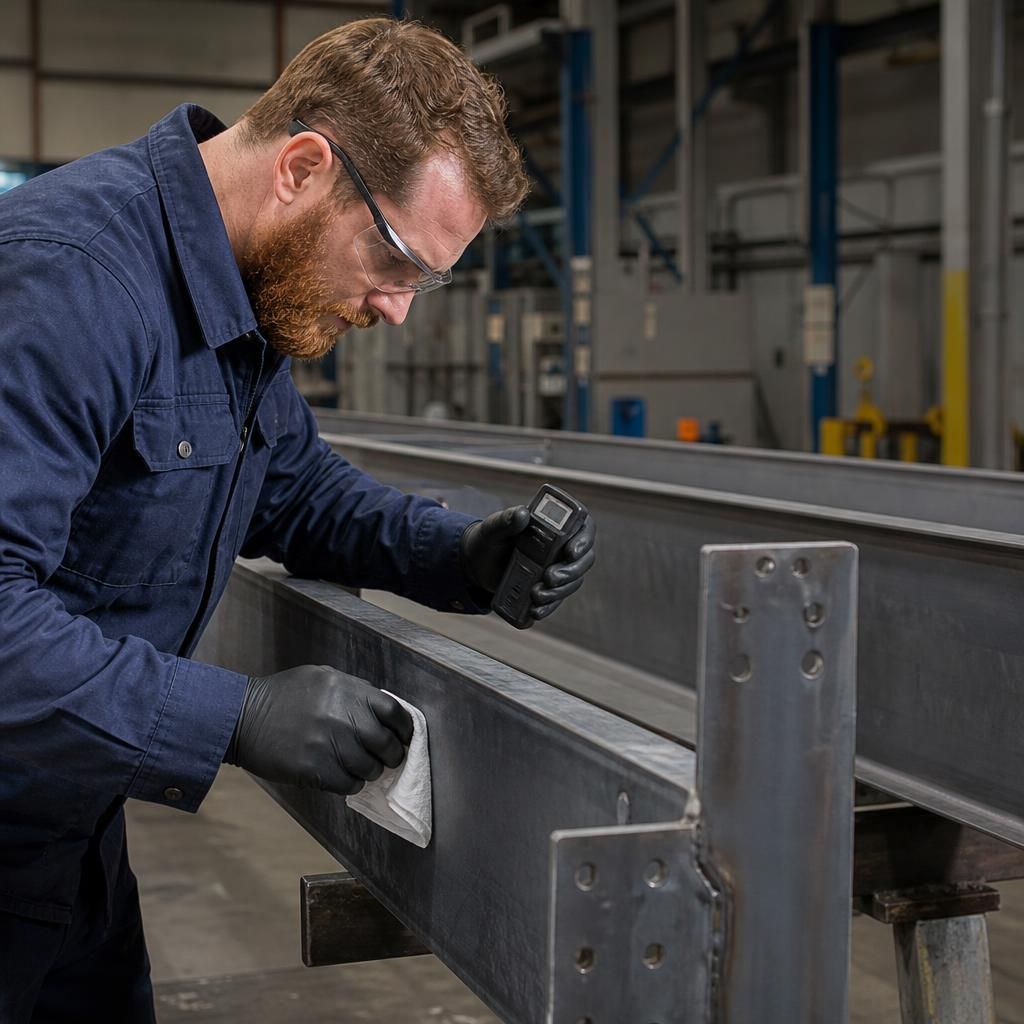
Surface preparation also controls the level of soluble salts left on the steel, which can have a significant effect on a zinc powder coat primer. These residues may be invisible after blasting or cleaning, but they can attract moisture beneath the coating. The resulting damp interface can promote underfilm corrosion, blistering and loss of adhesion, even when the surface appears visually clean.
Where components have been exposed to marine air, road salts, chemical dust or contaminated handling environments, soluble salt contamination should be considered before priming. The required cleaning and verification method should follow the coating specification, with any washing or salt-removal stage followed by thorough drying and inspection. Checking for this less visible form of contamination helps ensure that the primer is applied to chemically clean steel, not merely steel that looks free from mill scale.
Discuss Zinc Primer Preparation for Mill Scale
Discuss your mill scale components and coating specification with the powder-coating.co.uk team to establish a suitable preparation and zinc primer process. Collection and delivery options are available for businesses across the Midlands and surrounding areas.