

How do Nylon & Rilsan coatings compare to traditional wet paint methods for metal protection?
Nylon and Rilsan coatings generally provide a thicker, tougher and more impact-resistant protective layer than traditional wet paint, with strong resistance to abrasion, moisture and many chemicals. Wet paint may suit applications requiring a particular colour, appearance or lower-temperature application, but the better choice depends on the metal substrate, service conditions and required finish.
The principal difference is how the protective film is formed. Nylon and Rilsan coatings are polymer powders that are melted and fused to the prepared metal surface, whereas traditional wet paint is applied as a liquid and forms its film as the carrier evaporates and the resin cures. This affects coating thickness, edge coverage, repair methods, process control and the way each finish should be specified.
Application and film formation
- Nylon and Rilsan: the powder is applied to a heated or suitably prepared component, then melted to create a continuous thermoplastic layer. Depending on the component and specification, application may involve electrostatic spraying, fluidised-bed coating or other controlled methods.
- Wet paint: the liquid coating is normally sprayed, brushed or otherwise deposited in one or more coats. Primers, intermediate coats and topcoats may be used to achieve the required adhesion, appearance and protection.
Powder application can produce a consistent, pre-defined film without the runs, sags or solvent-trapping issues associated with poorly controlled liquid application. Wet paint remains more adaptable where a component needs several distinct coating stages, detailed colour matching or a very specific decorative appearance.
Protection at edges and around complex features
Metal parts rarely have a uniform geometry. Threads, apertures, sharp transitions, welds and recessed areas can all influence the final result. Nylon-based coatings can provide a substantial continuous covering when the part has been correctly prepared and the application parameters are matched to its shape. Their flexibility can also be useful where the finished component is subject to handling or movement.
Wet paint systems rely heavily on correct primer selection, film build and drying between coats. Thin areas, exposed edges and inaccessible recesses may become weak points if the coating is not applied evenly. Conversely, liquid paint can be advantageous for intricate masking arrangements or for components that cannot be placed through a powder-coating process without affecting other surfaces.
Surface preparation and adhesion
Neither system compensates for contamination, corrosion or an unsuitable substrate. Preparation may include degreasing, abrasive blasting, removal of mill scale and rust, and treatment of welds or sharp edges. The required profile and cleanliness depend on the metal, the chosen coating and the conditions the part will encounter.
For nylon and Rilsan coatings, preparation must also support mechanical and, where applicable, chemical adhesion between the polymer and the metal. Wet paint systems may use a compatible primer to improve adhesion and provide an additional barrier. In both cases, poor preparation can lead to blistering, flaking or premature failure regardless of the nominal quality of the coating material.
Temperature and dimensional considerations
Powder-coated components normally pass through a heating stage, so the metal, inserts, seals and assembled parts must tolerate the specified process conditions. Designers should consider changes in clearances, masking requirements and the effect of coating build on threads, bearing seats and close-fitting interfaces.
Wet paint may be selected where the complete assembly, substrate or attached components cannot be exposed to the conditions required for powder fusion. It can also simplify selective coating of a large fixed structure or an item that cannot be placed in an oven. However, the coating specification still needs to account for drying, handling and the possibility of solvent or moisture becoming trapped between coats.
Appearance, colour and finish
Wet paint offers a broad choice of visual effects and can be specified in multi-coat systems, fine colour variations and certain specialist decorative finishes. It is often preferred when appearance must match an existing painted assembly or when the part requires extensive touch-up during manufacture.
Nylon and Rilsan coatings are generally selected primarily for their functional performance, although colour and surface finish can still be specified. The final appearance is influenced by powder selection, substrate preparation, application method, curing or fusion conditions and the geometry of the part. A sample or trial piece can be useful where colour, texture or masking boundaries are important.
Damage, repair and maintenance
A wet paint system is usually easier to repair locally using a compatible primer and touch-up coat, provided the damaged area is properly cleaned and prepared. The repaired section may differ slightly in texture, gloss or colour from the original finish, particularly after weathering.
Damage to a nylon or Rilsan coating should be assessed according to its depth, location and the service conditions. Small defects may be repairable with an approved compatible method, but extensive damage may require removal and recoating to restore a continuous protective layer. Components subject to repeated abrasion, impact or chemical exposure should be inspected at relevant service intervals rather than relying only on the coating’s original specification.
Environmental and process factors
Powder coatings are supplied as solids, so their application does not involve the same liquid carrier management as conventional solvent-based paint. Overspray powder can often be collected and managed within a controlled process, subject to the coating system and equipment used. Wet paint may require ventilation, solvent handling and controls for overspray, drying emissions and the disposal of contaminated materials. Water-based paint reduces some solvent-related concerns but still requires appropriate handling and curing controls.
Which system is more suitable?
- Choose nylon or Rilsan where the part can tolerate the application process and requires a robust, continuous polymer coating for demanding service conditions.
- Consider wet paint where the component is heat-sensitive, needs a highly specific decorative finish, requires extensive colour matching or must be coated in situ.
- For assemblies, check whether seals, bearings, plastics, fasteners and threaded interfaces can remain in place during coating.
- Specify the expected exposure, including moisture, chemicals, impact, movement, outdoor weathering and contact with other materials.
- Compare the complete process rather than just the coating price: preparation, masking, handling, curing, inspection, repair and any future recoating all affect the practical result.
There is no universal replacement for wet paint. Nylon and Rilsan are usually the stronger technical choice when the component and service environment suit a fused polymer coating, while wet paint can remain the more practical option for temperature-sensitive, highly decorative, assembled or site-coated items. The correct decision should be based on the substrate, component design, exposure conditions, required appearance and the applicable coating specification.
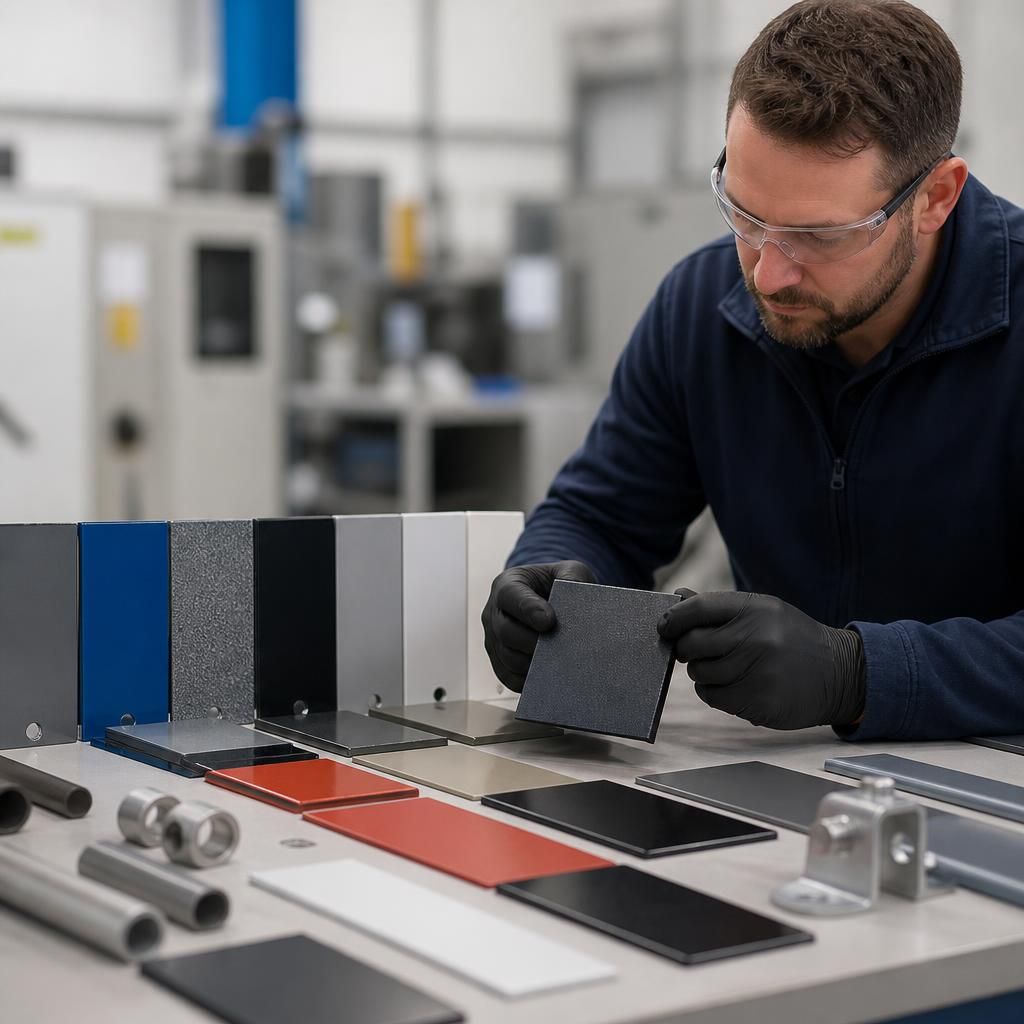
The most reliable way to compare Nylon, Rilsan and wet paint is to assess representative coated samples against the conditions the finished component will encounter. Coating performance depends on the metal substrate, preparation standard, film thickness, geometry and exposure, so the coating name alone does not determine the result.
A practical evaluation can examine adhesion, edge coverage, impact resistance, abrasion, chemical contact and moisture exposure. It should also consider how the coating behaves at joints, around threads and on areas subject to handling. Where the service environment is demanding or the specification is critical, trial panels or sample components can help confirm that the selected system meets the required performance before production parts are processed.
Discuss the Right Coating System for Your Metal Components
Discuss your component, substrate and service conditions with the Powder-coatings.co.uk team to assess whether Nylon, Rilsan or wet paint is the more suitable protection system. Collection and delivery options are available for businesses across the Midlands and surrounding areas.