

How does high temp powder coating differ from regular powder coating in terms of application and durability?
High temperature powder coating uses formulations and curing conditions designed to withstand sustained or repeated heat, whereas regular powder coating is intended for standard operating temperatures. The difference affects application requirements, coating selection and long-term durability: a regular coating may discolour, soften or lose protection when exposed to temperatures beyond its specification, while a correctly selected high temperature system maintains performance in demanding thermal environments.
High temperature powder coating differs from regular powder coating mainly in the powder formulation, the required curing profile and the way the finished film responds to heat over time. Both are applied as dry powder and cured to form a continuous protective layer, but a high temperature system is selected and processed for components exposed to elevated or fluctuating operating temperatures.
The powder formulation is the primary difference. Regular powder coatings are available in chemistries suited to common industrial conditions, including requirements for corrosion resistance, appearance, adhesion and general mechanical protection. High temperature powders use resin systems, pigments and additives chosen to limit degradation when the coating is repeatedly heated. The appropriate formulation depends on the expected service temperature, the duration of exposure and whether the component will experience thermal cycling rather than one steady temperature.
“Regular powder coating” is not a single performance category, so its temperature limit must be confirmed from the relevant technical specification. A coating that performs well on a fabricated frame or enclosure at ambient conditions may not be suitable for an exhaust-related part, heat shield, furnace component or industrial equipment exposed to sustained heat. Conversely, a high temperature coating is not automatically the best choice for every metal part: its suitability also depends on corrosion exposure, ultraviolet light, chemicals, abrasion and the required appearance.
Application uses the same basic powder-coating principle, but process control becomes more important. The component is normally cleaned and prepared, powder is applied electrostatically and the coating is cured in an oven. However, the high temperature product must be applied at the film thickness and cured according to its own technical requirements. Increasing the oven temperature without following the specified cure schedule can damage the coating, affect colour or gloss, or leave the film inadequately cured.
Several application points need particular attention:
- Surface preparation: Oil, grease, oxides, mill scale and other contaminants can compromise adhesion in either system. High temperature service can expose a weak interface quickly because repeated heating and cooling places additional stress on the bond between the coating and the metal.
- Substrate condition: The metal must tolerate the curing cycle without distortion, loss of temper or damage to existing components. Assemblies may need to be dismantled, and materials with different thermal expansion characteristics may require separate consideration.
- Masking and design: Threads, contact points, earth connections, moving interfaces and close-fitting areas may need masking before spraying. Coating build-up in these locations can interfere with assembly or electrical continuity.
- Film thickness: An excessively thick film can affect appearance, edges and dimensional fit, while insufficient coverage may reduce protection. The target should be established for the selected powder rather than treating high temperature coating as a reason to apply more material.
- Cure validation: Oven air temperature is not the same as the temperature reached by the metal. Larger or heavier components heat at a different rate from thin sections, so the cure must be assessed against the part’s actual thermal response.
Durability is measured against the operating environment, not simply by coating hardness. At suitable temperatures, a correctly specified high temperature coating can retain adhesion and protective function through repeated heating and cooling. The performance of a regular coating may decline when its temperature limit is exceeded. Possible signs include discoloration, loss of gloss, softening, embrittlement, blistering, cracking or reduced adhesion. The exact failure mode depends on the coating chemistry, substrate, exposure conditions and the severity of the temperature cycle.
Thermal cycling is especially important. A component that heats and cools frequently may place more stress on the coating than one held at a stable temperature. The coating and metal expand and contract at different rates, and repeated movement can gradually create microcracks or adhesion loss if the system is not suitable for the application. Maximum temperature, normal operating temperature, heating rate, cooling rate and the number and duration of cycles should therefore be considered when selecting the coating.
High temperature resistance also has limits. A powder selected for heat retention may not provide the same balance of flexibility, impact resistance, chemical resistance, exterior durability or colour stability as a standard architectural or industrial formulation. Some high temperature systems are designed primarily for thermal performance, while others are formulated to balance heat resistance with protection in a particular atmosphere. The specification must therefore cover the complete environment, including contact with oils, fuels, cleaning agents, moisture, salts or corrosive gases where relevant.
The practical comparison is therefore as follows:
- Regular powder coating is generally chosen where operating temperatures remain within the coating’s normal service range and the main requirements are conventional protection, appearance and mechanical performance.
- High temperature powder coating is chosen where the coating must tolerate defined elevated temperatures or repeated thermal cycling without unacceptable loss of adhesion or protective performance.
- Both systems require suitable preparation, controlled powder application and correct oven curing.
- High temperature work requires closer matching between the coating specification, the metal component, the cure cycle and the actual service environment.
For an industrial component, the decision should begin with the real operating conditions rather than the name of the coating. Record the expected continuous and peak temperatures, exposure duration, thermal cycling pattern, surrounding atmosphere and other performance requirements. This information can then be matched to a suitable powder and curing process. For batch or specialist work, discussing the component design, preparation requirements and service conditions with a powder-coating specialist helps establish whether a high temperature system is necessary and whether any performance trade-offs need to be allowed for.
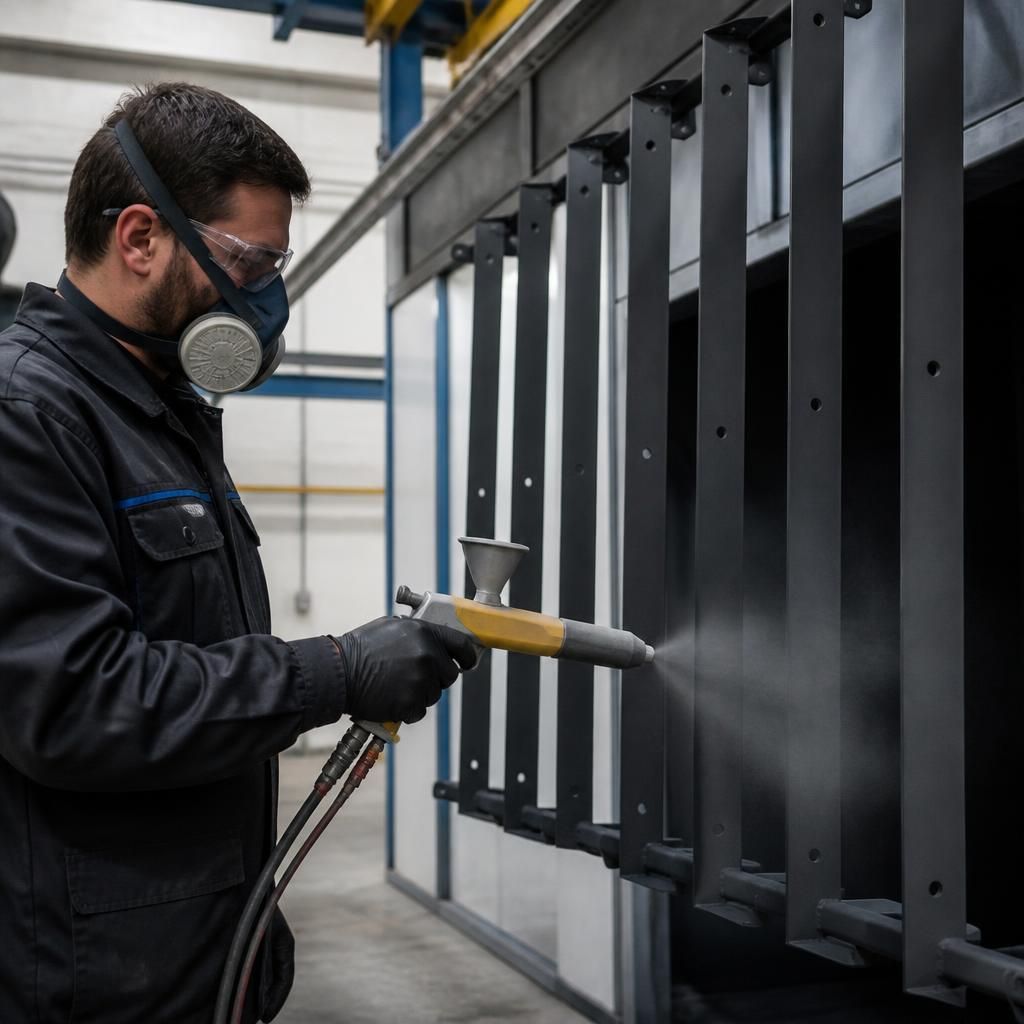
The most useful comparison is the performance requirement being protected. Regular powder coating is generally assessed against everyday mechanical, corrosion and appearance demands, while high temperature powder coating must also retain its specified properties after exposure to heat. A change in colour or gloss may indicate thermal stress, but the coating’s suitability should be judged against the required adhesion and protective function for the component’s operating environment.
Discuss Your High Temp Powder Coating Requirements
If you are unsure which coating system is appropriate, discuss your component, operating conditions and finish requirements with the powder-coating specialist. Providing drawings, batch details and intended use can help establish the relevant coating specification.