

How do high heat and heat-resistant epoxy coatings help in reducing maintenance costs?
High heat and heat-resistant epoxy coatings reduce maintenance costs by protecting metal components from heat-related breakdown, corrosion, chemical attack and surface damage. By helping the coating remain bonded and effective at the component’s operating temperature, they can reduce the frequency of recoating, repairs and premature replacement when the correct specification is selected.
High heat and heat-resistant epoxy coatings help reduce maintenance costs by extending the usable life of metal components and making defects easier to identify and manage before they require major intervention. Their value is not limited to the coating material itself. The total maintenance benefit depends on selecting a specification that matches the component’s temperature, chemical exposure, mechanical duties and operating environment, then applying and inspecting it correctly.
At elevated temperatures, an unsuitable coating may soften, lose adhesion, become brittle or deteriorate more rapidly. Once the coating system is compromised, the underlying metal can require cleaning, preparation, repair or replacement. A correctly specified heat-resistant epoxy is designed to retain its protective properties within its intended service range, helping maintenance teams avoid unnecessary corrective work caused by premature coating failure.
Reducing maintenance cost involves more than lowering the price of individual repairs. A coating that remains serviceable can also reduce:
- the labour required to remove failed coating and prepare the substrate again;
- production disruption while components are taken out of service;
- handling, transport and reinstallation costs for large or difficult-to-access parts;
- the need to hold replacement components or arrange urgent fabrication; and
- the risk that deterioration spreads to connected parts, fixings or supporting structures.
Heat-resistant epoxy coatings can also support more predictable planned maintenance. If the coating remains stable during normal operation, inspections can be scheduled around production requirements rather than being triggered solely by visible deterioration. This allows a business to combine coating inspections with routine equipment checks and address minor defects during planned access periods. Any damage should still be assessed promptly, particularly where the component operates at high temperature or is exposed to corrosive substances.
Surface preparation has a direct effect on the eventual maintenance burden. Contamination, corrosion products, moisture, oil or weak existing material can prevent the new coating from forming a sound bond. If these conditions are not dealt with before application, isolated failures may appear even when the selected epoxy is suitable for the operating temperature. Thorough preparation and appropriate curing therefore help prevent repeat work and the associated labour and downtime.
Application quality is equally important on complex components. Edges, corners, recesses, welds and joints can receive less consistent coverage than broad flat areas. Thin spots may provide less protection, while excessive build-up can affect curing or create local defects. Checking coverage, adhesion and the condition of difficult areas before the component returns to service helps identify problems when they are still manageable. Where a part has a demanding duty, the coating specification should also take account of temperature variation rather than considering only its maximum temperature.
Thermal cycling deserves particular attention. Repeated heating and cooling can cause the metal and coating to expand and contract at different rates. Over time, this may place stress on the coating system, especially where temperature changes are rapid or where the component has sharp transitions and mixed materials. Selecting a system suited to the pattern of heating, cooling and exposure can reduce the likelihood of premature remedial work. Operating conditions should be reviewed if equipment is modified, moved to a different process or exposed to higher temperatures than originally expected.
Cleaning requirements can also influence whole-life cost. A well-applied, suitably specified finish provides a stable surface that can be cleaned using methods appropriate to the coating and the process environment. Maintenance teams should avoid aggressive cleaning chemicals, abrasive methods or sudden temperature changes unless their compatibility with the coating has been established. Using unsuitable cleaning practices can create damage that is then mistaken for a coating specification problem.
A practical maintenance approach should include:
- recording the coating specification, application conditions and intended service environment;
- checking for blistering, cracking, flaking, discolouration, exposed metal and impact damage during planned inspections;
- paying particular attention to edges, welds, joints, fasteners, drainage points and areas where deposits collect;
- investigating any change in operating temperature, chemical exposure or cleaning procedure; and
- repairing local damage using a compatible, properly prepared system rather than coating over contamination or loose material.
The cost advantage is strongest when coating selection and maintenance planning are considered together. A lower-cost coating that needs frequent intervention may be more expensive over its service life than a suitable heat-resistant epoxy system that requires less corrective work. However, no coating removes the need for inspection or guarantees indefinite service. The expected maintenance interval should be based on the actual component duty, substrate condition, application quality and exposure conditions, with the specification reviewed if any of these change.
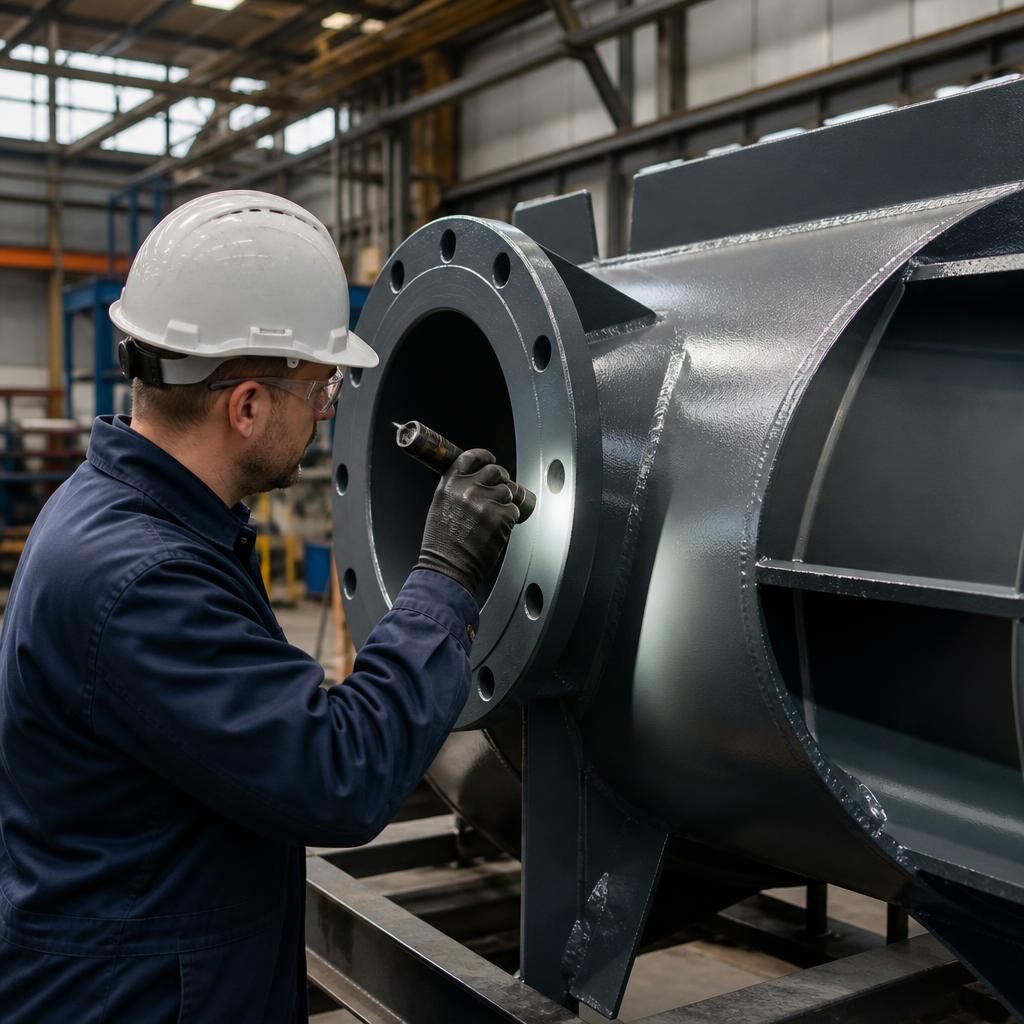
Heat-resistant epoxy coatings reduce maintenance costs most effectively when the underlying component is structurally suitable for continued service. A coating can protect the metal surface from corrosion, chemical attack and heat-related deterioration, but it cannot correct distortion, cracking, fatigue or weakened welds caused by the equipment’s operating conditions.
When maintenance findings are reviewed, the coating condition should therefore be considered alongside the condition of the metal itself. Separating surface deterioration from structural or process-related damage helps teams choose the right response: local coating repair where the substrate remains sound, or more extensive engineering work where the component has been compromised. This avoids using recoating as a substitute for addressing a deeper fault and supports more accurate whole-life maintenance decisions.