

How do powder coating systems enhance environmental sustainability compared to traditional paint systems?
Powder coating systems can improve environmental sustainability by using dry powder rather than solvent-based liquid paint, reducing volatile organic compound emissions during application. Unused overspray can often be collected and reused, which reduces material waste, while durable finishes can reduce the need for frequent recoating and the associated consumption of materials and energy.
Powder coating systems can offer a lower-impact alternative to traditional liquid paint systems because they apply a dry coating material without the solvent emissions associated with many liquid formulations, while enabling more controlled use of coating material. Their environmental advantage is not automatic, however: it depends on the powder formulation, application efficiency, curing method, pre-treatment process and the frequency of rework.
Reduced solvent use and air emissions
Traditional paint systems commonly use liquid carriers to keep resin, pigment and additives in a sprayable form. Where those carriers contain volatile organic compounds (VOCs), they can evaporate during application and drying, contributing to workplace emissions and requiring extraction and air-treatment controls. Powder coating is supplied as a dry material, so it does not need the same solvent carrier. This can reduce solvent-related emissions at the coating stage and simplify the management of air pollutants.
Powder coating still requires suitable ventilation and control of airborne particles. Fine powder must be handled responsibly to protect workers and prevent release into the surrounding environment. The absence of solvent does not mean that every powder formulation has identical environmental characteristics, so technical data and the intended end use should be reviewed before selection.
More efficient use of coating material
A powder coating system can be designed to apply a consistent film thickness through controlled spray settings, part positioning and automated movement. This helps limit excessive application, which is an important source of unnecessary material consumption in manual liquid painting. A stable process also reduces the likelihood of thin areas, runs and other defects that can lead to stripping, reprocessing or replacement of coated components.
Powder systems can also separate application from curing in a repeatable production sequence. Consistent operating parameters make it easier to monitor transfer efficiency, identify process losses and adjust the system before waste becomes significant. The environmental benefit therefore comes not only from the coating material itself, but from controlling the whole application process.
Lower burden from liquid paint handling
Liquid paint systems may require thinners, reducers, cleaning solvents and separate containers for different products. These materials add to storage, handling and disposal requirements, and cleaning spray equipment can create contaminated liquid residues. Powder application generally uses dry equipment-cleaning methods where the system design and coating changeover allow it, reducing reliance on solvent-based cleaning. The exact process depends on the powder type, colour changes, equipment and required finish.
Powder is also supplied and handled as a dry solid rather than as a liquid containing a substantial carrier volume. This can reduce the amount of liquid product movement and the risk of spills involving solvent-containing paint. It does not remove the need for controlled storage, labelled containers or compliant disposal of unusable material.
Energy use requires a balanced comparison
Powder-coated parts normally pass through an oven so that the powder melts, flows and chemically cures. That curing stage consumes energy, and the environmental performance of a system depends on oven insulation, airflow, burner or electrical efficiency, loading patterns and the time and temperature required by the coating specification. An inefficient or poorly loaded oven can reduce the benefit gained elsewhere in the process.
Traditional liquid paint may dry through evaporation, forced air or heat, so its energy demand varies considerably. A fair comparison should therefore assess the complete process rather than assuming that one method always uses less energy. Practical improvements include preventing unnecessary heat loss, matching oven capacity to batch size, maintaining accurate temperature control and avoiding repeated curing caused by defects or handling damage.
Durability and whole-life resource use
The environmental assessment should include the service life of the finished component. A coating that resists corrosion, impact, abrasion or weathering can help protect the underlying metal and reduce the material, preparation work and transport associated with premature refurbishment. This is particularly relevant for fabricated parts, industrial equipment, construction components and automotive applications exposed to demanding conditions.
Powder coating is not suitable for every substrate or operating environment. Parts may need specific pre-treatment, masking or curing conditions, and some components cannot tolerate the required oven temperature. Selecting an unsuitable system can cause adhesion or performance problems, creating rework that offsets the intended environmental benefit. Technical compatibility should therefore be confirmed before production begins.
How to assess the sustainability of a coating system
- Compare the full coating process, including pre-treatment, application, curing, cleaning and waste handling.
- Check the coating specification for solvent content, curing requirements and any restrictions on the finished component.
- Measure material usage, defect rates and rework rather than judging performance solely from the coating price.
- Review oven efficiency, loading and maintenance if curing is a significant part of the energy demand.
- Consider the expected service conditions and the resources needed to maintain or refurbish the coated part.
- Use documented environmental and technical information from the coating supplier and processor when making a comparison.
For industrial users, the most credible approach is to treat powder coating as one part of a wider resource-efficiency assessment. A well-managed system can reduce solvent-related emissions, improve process control and support longer-lasting metal components, while responsible energy management and correct specification are essential to achieving the intended environmental performance.
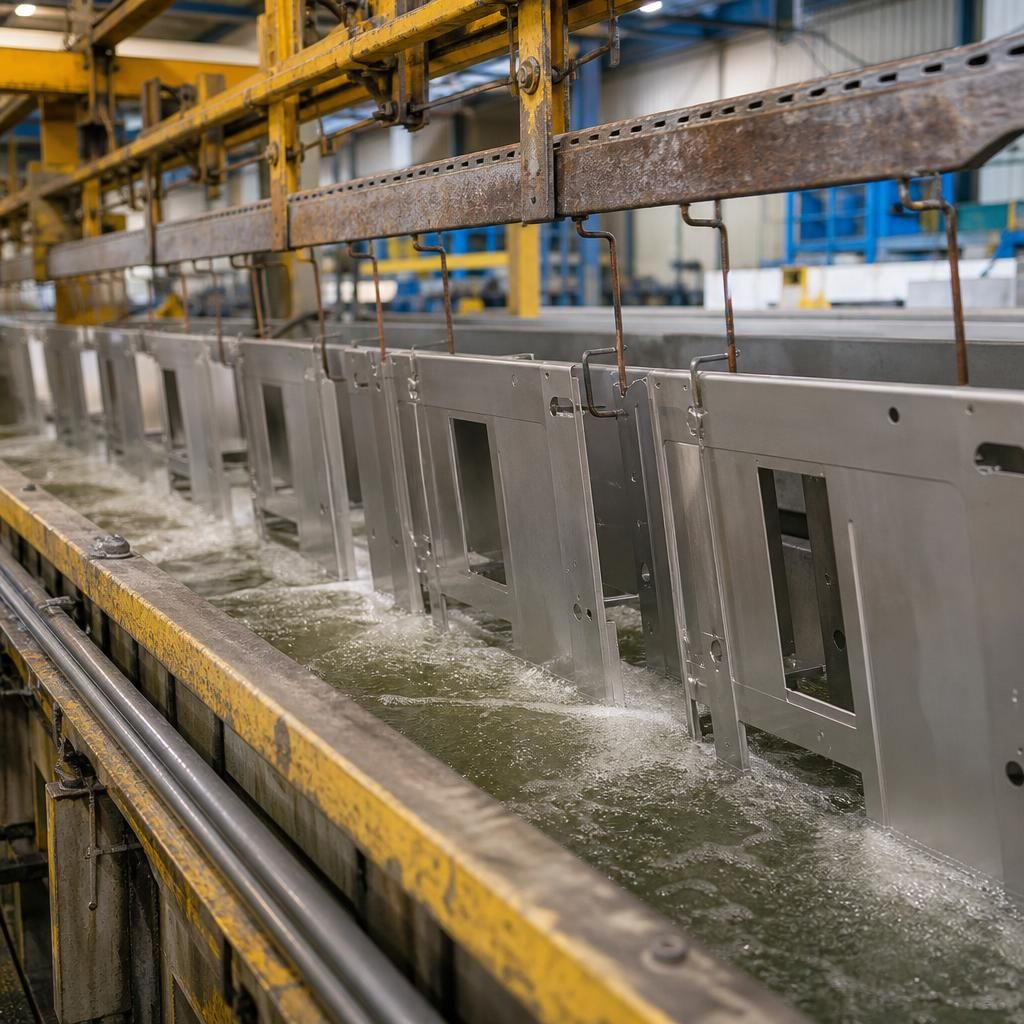
Pre-treatment is an important part of the environmental profile of a powder coating system because it prepares the metal surface for adhesion and corrosion protection before powder is applied. Cleaning agents, conversion coatings and rinse stages can all affect chemical consumption, water use and the handling of process residues.
A more sustainable approach is to specify only the pre-treatment stages required for the substrate and service conditions, maintain process controls to prevent unnecessary chemical replacement, and manage rinse water and residues in accordance with applicable requirements. Reviewing pre-treatment alongside powder application and curing gives a more complete comparison with traditional paint systems, rather than judging sustainability from the coating material alone.
Review Your Powder Coating System’s Environmental Performance
Discuss your component specifications and environmental priorities with a powder coating specialist to assess whether a suitable system and process can meet your requirements. Provide details of the substrate, operating conditions, finish and production volume for an informed coating recommendation.