

How do I select the appropriate RAL colour for my powder coating project?
Select a RAL colour by considering the required appearance, surrounding colour scheme, substrate and the coating’s intended environment. Confirm the colour using a physical powder-coated sample, and specify the required finish—such as gloss level, texture or matt effect—separately, as the same RAL reference can look different across finishes.
The appropriate RAL colour is selected by matching the project’s visual requirements with a clearly defined colour reference that can be specified, checked and reproduced. Start by identifying the RAL collection and exact code required, then confirm how the colour will be assessed in the finished application rather than relying solely on a screen image or catalogue representation.
1. Establish which RAL system is required
“RAL” can refer to more than one colour collection. RAL Classic is commonly used for general industrial colour specifications, while RAL Design and RAL Effect use different identification systems and may be relevant to more specialised design requirements. A code from one collection should not be treated as interchangeable with a similar-looking code from another.
Include the collection name as well as the colour reference in the specification. For example, a request should identify the system and code clearly, rather than relying on a colour name such as “blue” or “dark grey”. This avoids ambiguity when the order is reviewed by a powder supplier or coating company.
2. Define the purpose of the colour
Consider what the colour needs to achieve within the finished product. The priority may be visual consistency across a product range, differentiation between components, alignment with an established corporate identity, or conformity with a recognised colour convention. These objectives can lead to different choices even when several colours appear suitable.
If the coating forms part of equipment, architectural metalwork or a manufactured assembly, record the colour references of adjacent parts. A RAL colour that looks appropriate in isolation may appear noticeably different beside existing painted, coated, plastic or anodised components.
3. Do not select from a monitor alone
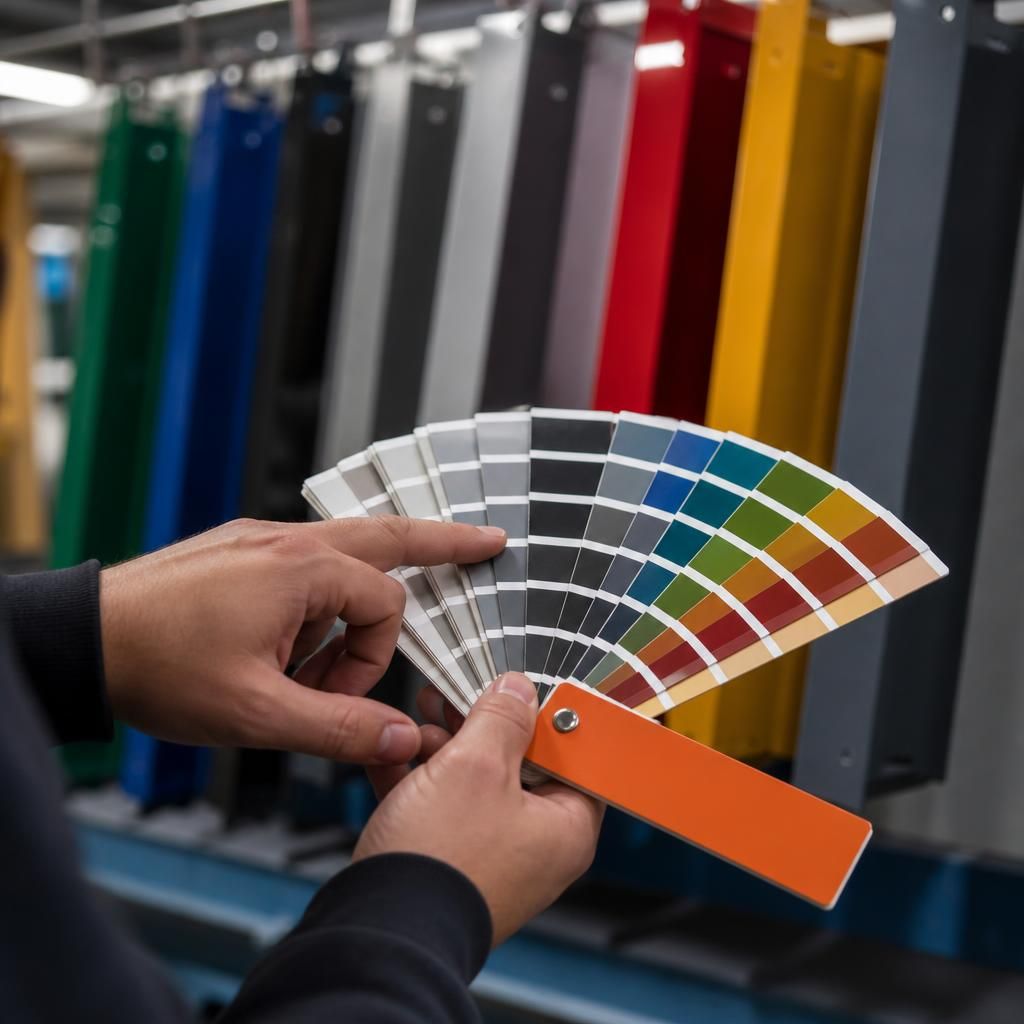
Digital colour displays vary according to screen settings, brightness and calibration. Images on websites and electronic documents are therefore useful for narrowing the options, but they are not a reliable basis for approving a final colour. Printed charts can also differ according to the paper, ink and printing process used.
For a controlled specification, use an approved physical reference and state how the colour is to be assessed. Where colour is commercially important, the parties involved should agree which reference takes precedence if a digital image, printed document and coated article do not appear identical.
4. Check whether the selected code is suitable for powder coating
Not every RAL reference is necessarily available in every powder formulation, product range or coating technology. Availability can also depend on the performance requirements of the project. Ask the coating provider to confirm that the selected code can be supplied for the intended application and that the requested colour is not being substituted with a visually similar alternative.
Where a precise colour is essential, record the powder manufacturer’s product reference alongside the RAL code once the material has been selected. The RAL code identifies the target colour, while the product reference helps identify the specific powder used for production and future repeat work.
5. Consider repeat production and colour control
For batch manufacturing, create a written colour specification that can be used for subsequent orders. It should include the RAL collection, code, approved reference, product reference where known and any agreed colour tolerance or inspection method. This is more dependable than referring to a previous component as “the same colour”, particularly if the original coating material or process has changed.
When parts will be coated in separate batches, ask how colour consistency will be assessed between batches. Components intended to appear together should, where practical, be planned and inspected as a group. Keeping a record of the approved specification also makes future quotations and repeat coating instructions clearer.
6. Treat safety and compliance colours carefully
If the colour has a safety, identification or regulatory function, do not choose it solely on visual preference. Check the applicable industry, site or product requirements and confirm whether the colour must correspond to a particular standard or documented convention. The RAL reference may support identification, but the colour alone does not establish compliance with every requirement.
Where markings, labels or contrasting elements are involved, assess the complete visual arrangement. Background colour, lettering, symbols and lighting conditions can affect whether information remains distinguishable in use.
7. Provide a complete colour brief
A useful brief should state:
- the RAL collection and exact colour code;
- the purpose of the colour and any adjacent colours that must be considered;
- whether the colour must match an existing product, component or documented identity;
- the approved reference to be used for checking;
- any safety, identification or industry requirements; and
- the powder product reference and inspection details once confirmed.
Before placing an order, ask the powder coating specialist to review the specification and identify any conflict between the selected RAL reference and the required coating material. This final check helps ensure that the chosen colour is not only visually appropriate but also clearly defined for manufacture, inspection and future repeat work.
A RAL code identifies the target colour, but it does not indicate how well that colour will perform in its intended environment. For exterior or heavily exposed components, confirm that the selected powder system is suitable for the expected UV exposure, moisture and temperature conditions. The coating specification should therefore record both the RAL reference and the required performance characteristics.
This is particularly important when choosing between similar shades. A colour that appears suitable in a sample may not be the right selection if the finished component will be exposed to weathering or demanding industrial conditions. Ask the powder coating specialist to confirm that the chosen colour is available in a formulation appropriate for the application before final approval.