

What are the most common challenges when applying zinc and fusion bonded coatings, and how can they be overcome?
Common challenges include inadequate surface preparation, uneven coating coverage, trapped air or moisture, and incorrect curing conditions, all of which can reduce adhesion and corrosion protection. They are overcome through suitable cleaning and preparation, controlled application, careful inspection of complex areas, and curing to the specified process requirements.
The main challenges when applying zinc and fusion bonded coatings are selecting a compatible coating system, accommodating the component’s design and dimensional requirements, controlling interfaces between coating layers, and verifying the finished film without damaging it. These issues require a coating specification that defines the substrate, service environment, required thickness, allowable tolerances, repair method and inspection criteria before production begins.
Choosing a suitable system
Zinc-based coatings and fusion bonded coatings do not provide identical protection or behave in the same way. Zinc coatings are commonly selected where sacrificial corrosion protection is required, while fusion bonded epoxy is used as a continuous barrier coating with strong resistance to moisture and many chemicals. A system that is suitable for one exposure may be inappropriate for another, particularly where the component will be buried, immersed, exposed to road salts, subjected to impact or operated at elevated temperatures.
Problems can also arise when the specification uses a general term such as “zinc coating” without identifying the process, coating type or required finish. The applicator should confirm whether the requirement is for a zinc-rich coating, a zinc and organic duplex system, or another zinc-based process. The intended service conditions should then be compared with the coating manufacturer’s technical requirements, including temperature limits, chemical exposure and compatibility with any subsequent topcoat.
Managing component design and tolerances
Coatings add measurable thickness, which can affect threaded holes, bearing faces, sliding fits, locating points and assembled joints. This is particularly important for precision-fabricated parts and components that must fit with other coated or uncoated items. Drawings should identify surfaces that must remain free from coating, permitted build-up and any areas requiring masking.
Masking itself can be difficult on complex components. Threads, drain holes, electrical contact points and machined faces need clear, durable masking methods that withstand the application process without leaving adhesive residue or an unwanted edge. Poorly defined masking limits can lead to rework, while excessive masking can leave vulnerable areas unprotected. Including masking details on the drawing or purchase specification removes uncertainty before the batch is processed.
Dealing with substrate differences
Steel composition, welds, cast surfaces and previous repairs can respond differently to the same coating process. Castings may contain pores or inclusions, and welded assemblies may include changes in profile or metallurgy. These variations can affect appearance, film behaviour and the ability to meet the specified finish. Components should therefore be reviewed before processing, with particular attention to weld spatter, sharp transitions, inaccessible recesses and areas where coating build-up could interfere with assembly.
Some substrates or attached parts may also be sensitive to the heat used during a fusion bonded process. Thin sections, heat-treated components, seals, bearings and non-metallic inserts may distort, lose their properties or require removal before coating. Confirming the maximum permissible process temperature and the component’s heat history is essential. Where the full assembly cannot tolerate the process, coating separate parts before assembly may be a better approach.
Controlling compatibility between zinc and fusion bonded layers
When zinc and fusion bonded coatings are used as a combined system, the interface between them becomes a critical point. The zinc layer must be sufficiently stable and suitably prepared for the bonded coating, while the upper layer must not undermine the protective action of the zinc. Incompatible materials, unsuitable recoat intervals or contamination between stages can cause blistering, delamination or premature failure.
A written sequence should state which layer is applied first, the required condition of that layer before the next stage, and the inspection or testing needed at the interface. The specification should also identify whether the system is intended to provide a decorative finish, barrier protection, sacrificial protection or a combination of these functions. Repairs must use materials that are compatible with the original system rather than an unapproved general-purpose paint.
Maintaining consistency across batches
Large or mixed batches can contain components with different sizes, orientations, masses and surface areas. These differences influence how parts are racked, grounded, heated and handled. If the process is not planned around the batch, components may show variation in appearance or measured film thickness even though they were processed together.
Consistent racking points are important because contact marks can leave small uncoated areas or require subsequent repair. Racking should use locations that are either non-functional or specifically identified for touch-up. Parts should also be supported so that they do not move, rub together or retain process residues during handling.
Inspection and acceptance testing
Visual inspection alone cannot confirm coating performance. Depending on the specification, checks may include dry film thickness measurements, adhesion testing, continuity or holiday detection, impact or flexibility assessment and examination of edges, recesses and masked areas. The selected test must suit the coating type and component; an inappropriate test method can damage a sound finish or produce misleading results.
Inspection records should link results to the relevant batch and component, while any non-conforming areas should be classified before repair. A repair decision should consider the size and location of the defect, the exposure conditions and whether the repaired area will have the same protection as the original coating.
Preventing damage after coating
A correctly applied coating can still be compromised during lifting, stacking, transport or assembly. Metal-to-metal contact, unsuitable slings, dragging across racks and tight packing can chip edges or mark the surface. Components should be allowed to reach the specified handling condition before movement and protected with supports or separators that will not abrade the finish.
Where a coated part is machined, welded or cut after application, the exposed area must be treated using an approved repair procedure. The repair should restore both the protective function and, where relevant, the required thickness and appearance. Defining these controls in advance helps prevent site modifications from becoming unprotected corrosion points.
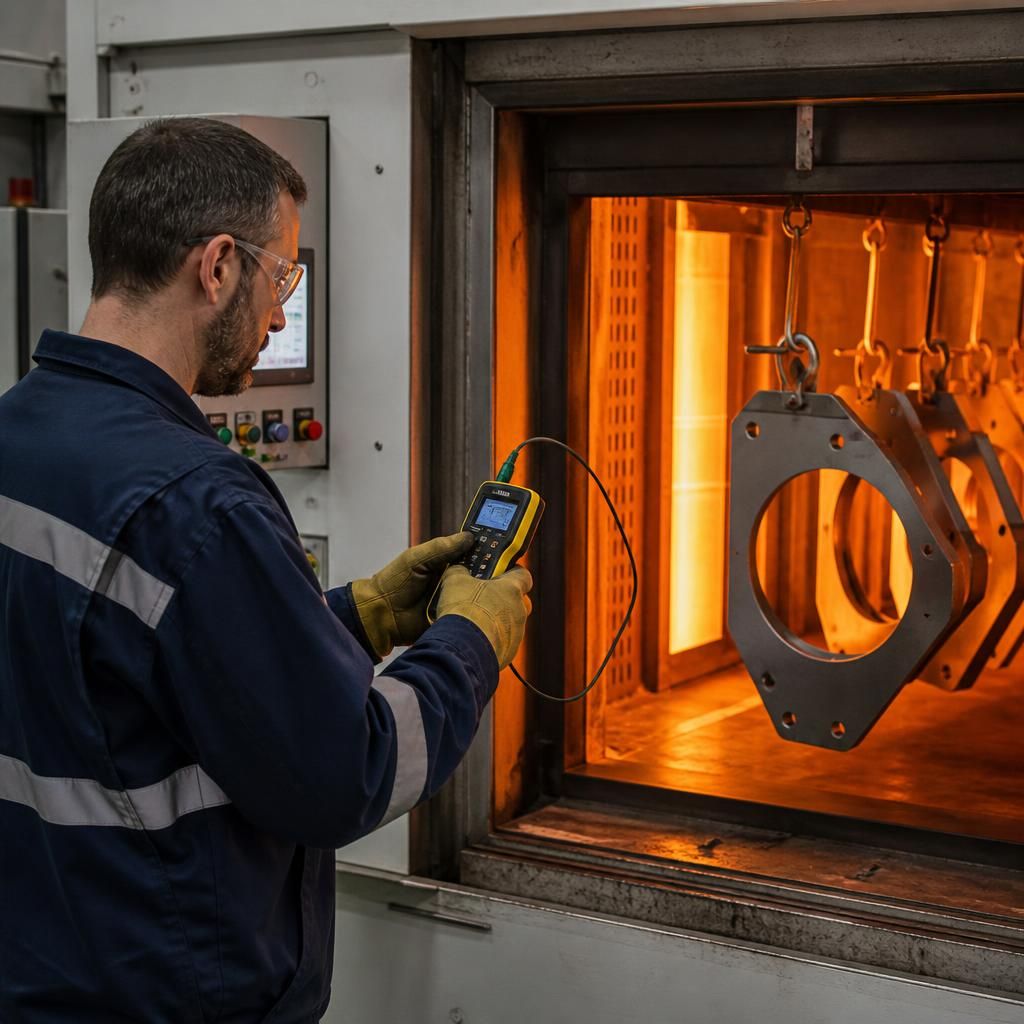
Curing is a critical challenge for fusion bonded coatings because the coating must reach the specified substrate temperature for the required time. An oven reaching its set temperature does not prove that a heavy or complex component has cured correctly; thicker sections may heat more slowly than thin areas.
Under-curing can leave the coating with inadequate chemical resistance, adhesion or hardness, while excessive heat exposure may affect the substrate or alter the finish. The process should therefore be established against the coating manufacturer’s requirements and the component’s material, thickness and mass. Monitoring the component temperature during representative production runs helps confirm that the complete part, rather than just the oven atmosphere, follows the intended cure cycle.
For zinc and fusion bonded systems, cure control should also be considered alongside the condition of the zinc layer and any heat-sensitive features. Recording the relevant process parameters for each batch provides evidence that the coating received the intended treatment and makes it easier to investigate variation in performance or appearance.
Discuss your zinc and fusion bonded coating requirements
Discuss your zinc and fusion bonded coating requirements with our team, including the component design, service environment and required protection. Providing drawings and specification details at the outset helps establish a suitable coating approach and acceptance criteria.