

How do I maintain and care for surfaces coated with epoxy and polyester powder coatings?
Maintain epoxy and polyester powder-coated surfaces by washing them with clean water and a mild, non-abrasive detergent, then rinsing and drying thoroughly. Avoid abrasive cleaners, harsh solvents and aggressive tools, and inspect the coating regularly so chips, scratches or corrosion can be assessed and repaired before they spread.
Maintaining epoxy and polyester powder-coated surfaces involves matching the care regime to the coating type, exposure conditions and use of the metal component. Epoxy coatings generally provide strong adhesion and chemical resistance but are more vulnerable to ultraviolet degradation, while polyester coatings are normally better suited to exterior exposure because they retain their appearance more effectively in sunlight. Neither coating should be treated as maintenance-free: the surrounding environment, mechanical contact and any damage to the film will affect service life.
Consider the coating’s environment. Indoor components protected from sunlight may mainly require control of contamination, moisture and chemical contact. Exterior items are exposed to ultraviolet radiation, rain, condensation, temperature changes and airborne pollutants. Components near roads, industrial processes, marine air or chemical handling areas may need a more carefully defined maintenance plan because deposits can remain on the coating and affect the surface over time.
Epoxy-coated parts should be assessed particularly carefully where they are exposed to direct sunlight. Prolonged ultraviolet exposure can cause fading, loss of gloss or surface chalking, even if the coating remains attached to the metal. Polyester coatings are generally the more appropriate choice where lasting exterior appearance is important, but their performance still depends on correct application, film coverage and the severity of the environment.
Prevent avoidable mechanical damage. Powder coating is a continuous protective film, but it can be marked by impact, sharp edges, repeated rubbing or contact with unprotected metalwork. When handling coated components, use clean lifting equipment and avoid dragging parts across benches, floors or one another. Storage supports should prevent concentrated pressure on visible faces and should not trap water against the coating.
Pay particular attention to contact points, fasteners, hinges, sliding interfaces and areas where components are assembled. Movement can gradually wear through the finish, while overtightened fixings can chip the coating around holes or edges. Where coated parts are installed alongside other materials, check that adjacent surfaces cannot abrade the finish through vibration or thermal movement.
Control moisture and deposits. Water becomes more damaging when it is held against the coating or allowed to collect at joints, folded edges, fixings and horizontal surfaces. During design or installation, components should be positioned so that water can drain rather than remain trapped. Sealed joints, drainage paths and suitable fixing arrangements can reduce the risk of persistent dampness beneath dirt deposits.
Salt, industrial dust, cement residue, oils and other deposits should not be allowed to build up on exposed components. The appropriate cleaning method will depend on the substance involved and the coating specification. If a deposit cannot be removed without strong chemicals or force, identify it before proceeding and confirm that the proposed product is compatible with the coating.
Manage chemical exposure. Epoxy coatings are often selected for their resistance to a range of chemicals, but resistance is not universal. Concentration, temperature, duration of contact and the chemical’s composition all influence the result. Polyester coatings also have defined resistance limits, particularly where strong solvents or aggressive process chemicals are involved.
Keep records of chemicals that may contact the coated surface, including cleaning agents, cutting fluids, hydraulic products, process residues and construction materials. Remove accidental spillages using a method approved for the particular coating rather than assuming that a solvent will be harmless. Signs of incompatibility can include softening, swelling, loss of gloss, staining, blistering or a change in surface texture.
Use a planned condition assessment. A useful maintenance record should identify the component, coating type, exposure conditions and any areas subject to repeated impact, rubbing or chemical contact. Assess changes in colour, gloss, texture and adhesion, as well as damage around edges, holes, joints and fixings. A small local defect may be manageable, whereas widespread loss of adhesion, corrosion staining or blistering may indicate that moisture or contamination has reached beneath the coating.
Document the location and nature of defects so that deterioration can be compared over time. Photographs, coating records and notes about exposure can help distinguish isolated handling damage from a wider preparation, application or environmental problem. Where the coating is part of a safety-critical, hygienic or corrosion-control system, assessments should follow the relevant site procedures and technical specification.
Deal with damage according to its cause. A superficial mark, an exposed metal edge and a coating that is lifting from the substrate are different problems. Touch-up materials may be suitable for limited damage, but they must be compatible with the existing coating and the service environment. The affected area normally needs to be clean, dry and free from unstable material before any repair is considered.
Do not simply cover corrosion, blistering or loose powder coating. The underlying cause should be established first, which may involve trapped moisture, damaged pretreatment, unsuitable chemical exposure, poor drainage or repeated mechanical contact. Larger repairs or areas with active corrosion may require local preparation, recoating or complete removal and reapplication by a suitably competent coating specialist.
Retain the coating specification. Maintenance decisions are more reliable when the coating system is known. Keep details of whether the finish is epoxy, polyester or a specified combination, together with colour, texture, intended environment, preparation requirements and any restrictions supplied with the coating system. This information helps prevent incompatible repair products and inappropriate cleaning or recoating methods from being used later.
For industrial components, the most effective approach is therefore preventive: select the coating for its actual exposure, protect it from unnecessary abrasion, control chemical contact, prevent water retention and respond to defects based on their cause. Epoxy and polyester finishes can both provide durable protection when the coating system remains intact and the maintenance regime reflects the conditions in which the metal component operates.
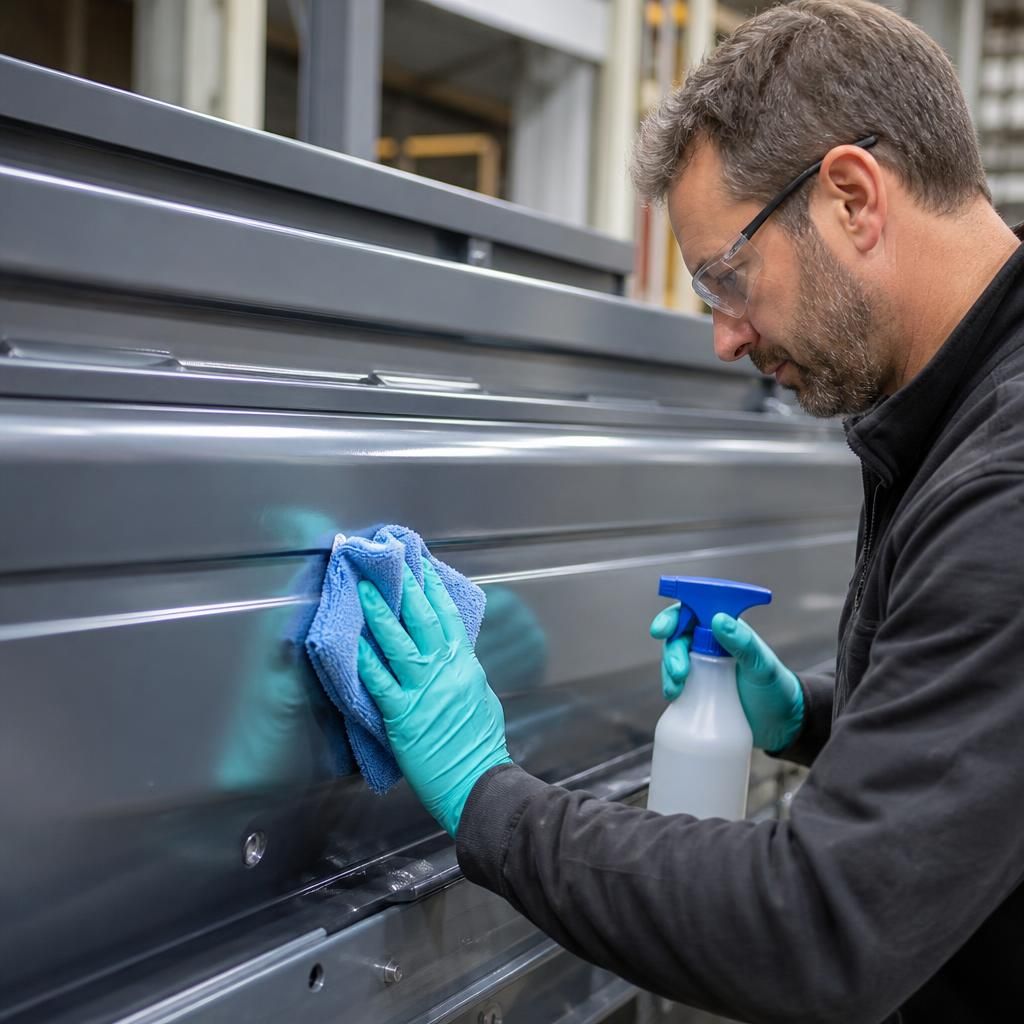
Routine cleaning should remove contaminants without driving grit across the coating. Begin by rinsing away loose dust and particles with clean water, then use a soft cloth or sponge with a diluted, mild detergent. Work in manageable sections with light pressure, paying attention to ledges, joints and recessed areas where deposits can collect. Rinse away all detergent residue and dry the surface with a clean, soft cloth rather than allowing dirty water to dry in place.
Do not use abrasive pads, stiff brushes or high-pressure equipment unless the coating specification confirms that they are suitable. A small test area is sensible when the detergent, cleaning tool or washing method has not previously been used on the finish. Stop if the surface becomes dull, tacky, discoloured or textured, and obtain technical advice before continuing.
Discuss care requirements for epoxy and polyester powder coatings
For guidance on a maintenance regime for epoxy or polyester powder-coated components, discuss the coating specification, service environment and any observed defects with our coating specialists. This can help identify suitable cleaning, inspection and repair requirements for your application.