

How do low cure thermoset powder coatings benefit manufacturers?
Low cure thermoset powder coatings cure at lower oven temperatures than standard formulations, helping manufacturers reduce energy use and support faster production cycles. They can also provide the durable, high-quality finish required for metal components when the coating system is matched to the substrate and application.
Low cure thermoset powder coatings benefit manufacturers by allowing certain metal components to be coated at lower oven temperatures, which can widen the range of parts suitable for powder coating and reduce heat-related production risks. Their main value is not simply the lower curing temperature: the formulation can also affect dimensional accuracy, substrate compatibility, finish consistency and the practical design of the coating process.
Better suited to heat-sensitive components
Some components cannot tolerate the temperatures required by conventional powder systems. Excessive heat can contribute to distortion, loss of dimensional tolerances, changes in the properties of joined materials or damage to heat-sensitive inserts and assemblies. A low cure system may make powder coating more suitable for these parts, provided the substrate, component construction and curing schedule are compatible with the product specification.
This is particularly relevant where a manufacturer is coating fabricated parts with thin sections, close tolerances or mixed-material construction. The complete assembly still needs assessment, because the lowest curing temperature of the powder is only one part of the process. The metal must reach the required part temperature for the specified time, and components such as seals, adhesives, bearings or plastic elements may impose separate limitations.
Greater control over dimensional accuracy
Where a component’s dimensions are critical, limiting unnecessary thermal exposure can help reduce the risk of heat-related movement. This does not remove the need for sound fabrication, preparation and oven control, but it can support more predictable results on appropriately designed parts. Manufacturers should assess tolerances before coating and confirm that the proposed system has been tested on the actual substrate and component geometry.
Efficient integration into manufacturing processes
Low cure formulations can be useful when a powder coating line must accommodate a broader mix of parts or when the existing process has constraints on oven temperature. They may help manufacturers plan coating around assemblies that would otherwise require masking, disassembly or an alternative finishing method. The practical benefit depends on the powder specification, oven performance, part loading and the temperature reached by the component itself, rather than the oven setting alone.
They can also support more consistent production planning where batches contain different sizes or thicknesses. However, coating operators must avoid treating a lower nominal cure temperature as permission to shorten the cure cycle without verification. Under-cured thermoset powder may have inadequate adhesion, hardness, chemical resistance or corrosion protection even if the surface appears acceptable.
Consistent appearance and functional performance
A correctly selected low cure thermoset coating can produce the required appearance and protective properties while accommodating a lower-temperature process. As with other thermoset systems, the final result depends on pretreatment, powder application, film thickness, grounding, oven airflow and the time and temperature experienced by the part. These factors influence colour, gloss, texture, coverage and resistance to service conditions.
Manufacturers should therefore specify the required performance rather than selecting a low cure product solely by its cure temperature. Important considerations include:
- the metal substrate and its surface condition;
- the component’s maximum allowable temperature and dimensional tolerance;
- required corrosion, chemical, abrasion or weather resistance;
- the intended film thickness and appearance;
- the oven’s ability to deliver an even temperature throughout the batch; and
- any masking, assembly or post-coating operations.
Important limitations and checks
Low cure does not mean low performance by definition, but no powder coating is suitable for every application. Formulations can differ in their resistance profile, storage requirements, application window and sensitivity to under-curing or over-baking. A system designed for one substrate or service environment may not be appropriate for another.
Before adopting a low cure thermoset powder coating, manufacturers should obtain the product’s technical data and confirm the required part-temperature cure schedule. A representative trial can assess adhesion, coverage, appearance and the relevant service properties on the actual component. Where parts contain heat-sensitive materials or tight tolerances, testing should include the complete assembly rather than an isolated flat panel.
In practice, the strongest case for a low cure system is where a manufacturer needs the characteristics of a thermoset finish but must limit thermal exposure during processing. Correct formulation selection and process control are essential: the lower cure requirement creates an opportunity, while the coating specification and validated production method determine whether that opportunity translates into a reliable finished component.
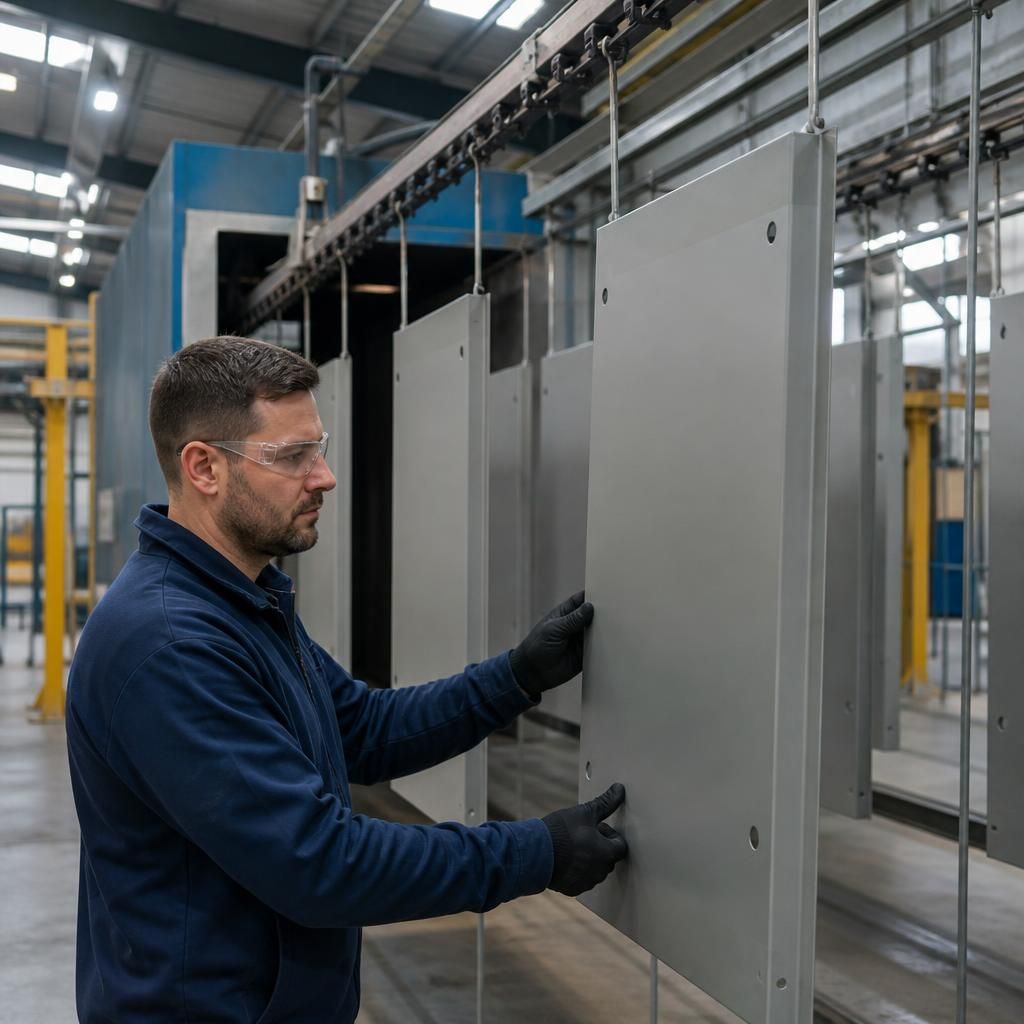
Low cure thermoset powder coatings are formulated so the resin and curing agent crosslink at a lower part temperature than standard systems. Once cured, the powder forms a permanent three-dimensional network rather than softening and flowing again when reheated. This allows manufacturers to reduce thermal exposure during processing while still obtaining the hard, durable finish associated with thermoset powder coating.
The lower cure point comes from the coating chemistry, not simply from changing the oven setting. Manufacturers should therefore use the specified product and verify its complete cure on the finished component. Applying a standard powder at a reduced temperature can leave the coating under-cured, even when the surface looks acceptable.
Discuss low cure thermoset powder coating for your components
Discuss your components with our powder coating specialists to assess whether a low cure thermoset system is suitable for the substrate, assembly and required finish. Share the component details and performance requirements so the coating approach can be considered against your manufacturing process.