

How does the powder coating process ensure durability and longevity in metal finishes?
Powder coating creates a durable metal finish through thorough surface preparation, electrostatic application of dry powder and controlled curing in an oven. The cured coating forms a continuous, strongly bonded layer that helps protect the metal against corrosion, abrasion, impact and everyday wear.
Powder-coated finishes achieve long service life because the powder is converted into a chemically cross-linked film rather than simply dried onto the metal. During curing, the resin and curing agent react to form a tightly connected polymer structure. This gives the finished film resistance to scratching, impact, moisture and many common chemicals, while helping it remain attached to the component during normal use.
Durability depends first on selecting a powder formulation suited to the component’s environment. Different resin systems provide different balances of hardness, flexibility, ultraviolet resistance, chemical resistance and corrosion protection. A coating intended for indoor machinery may have different requirements from one exposed to sunlight, rain, road contaminants or industrial chemicals. Matching the formulation to the service conditions prevents a finish being used beyond its intended performance range.
The cured film also needs the correct thickness. Too little material may leave weak coverage over edges, corners and textured areas, whereas excessive build can affect appearance, curing and flexibility. Consistent application helps create an even protective layer across the full component, including areas where coating access is more difficult. The shape of the part, its hanging position and the presence of recesses or sharp edges therefore influence the final result.
Curing is a critical part of the chemical transformation. The part must reach the required temperature for sufficient time so that the powder fully reacts throughout the film. Under-curing can leave the coating softer, less chemically resistant or more vulnerable to adhesion failure. Excessive heat or an unsuitable curing cycle can affect colour, gloss and the properties of the substrate or coating. Industrial powder coating therefore relies on controlled oven conditions and process checks appropriate to the powder specification and component.
Protection against corrosion is produced by more than the visible colour coat. The coating acts as a barrier that limits the movement of water, oxygen and contaminants towards the metal. Its performance is improved when the coating remains intact and when vulnerable features, such as joints, cut-outs, fastener areas and edges, are considered during component design. If the substrate is exposed by deep impact damage or persistent abrasion, corrosion can begin locally beneath or around the damaged area, so handling and service conditions remain important.
Mechanical longevity is influenced by the balance between hardness and flexibility. A very hard film can resist marking, but it must also accommodate minor movement, vibration and thermal expansion without cracking. The appropriate specification depends on whether the component is mainly exposed to handling, sliding contact, impact, outdoor weathering or chemical contact. Specialist finishes, including protective and nylon-based coatings, may be considered where a standard decorative finish does not provide the required combination of wear resistance and surface performance.
Quality control helps ensure that the coating’s intended properties are achieved consistently. Relevant checks may include:
- confirming that the specified powder is suitable for the component and its operating environment;
- checking the cured film for even coverage, defects and visible damage;
- assessing film build where a defined coating thickness is required;
- checking adhesion and cure characteristics as appropriate to the specification; and
- reviewing handling, packaging and transport arrangements so that the finished surface is not damaged before installation.
Long-term performance is also affected by what happens after coating. Components should be stored and transported in a way that avoids rubbing, trapped moisture and contact with incompatible materials. Once installed, routine cleaning with suitable methods removes deposits that could otherwise retain moisture or chemicals against the surface. Abrasive tools and harsh cleaning agents can gradually reduce the finish, even where the original coating was correctly specified and applied.
For industrial work, the most reliable approach is to define the required service conditions before processing begins. The coating specification should consider the metal substrate, component geometry, expected exposure, likely types of wear, appearance requirements and any contact with chemicals or elevated temperatures. This allows the powder type, application method and curing requirements to be assessed as one system, which is what enables a finish to remain protective and serviceable over its working life.
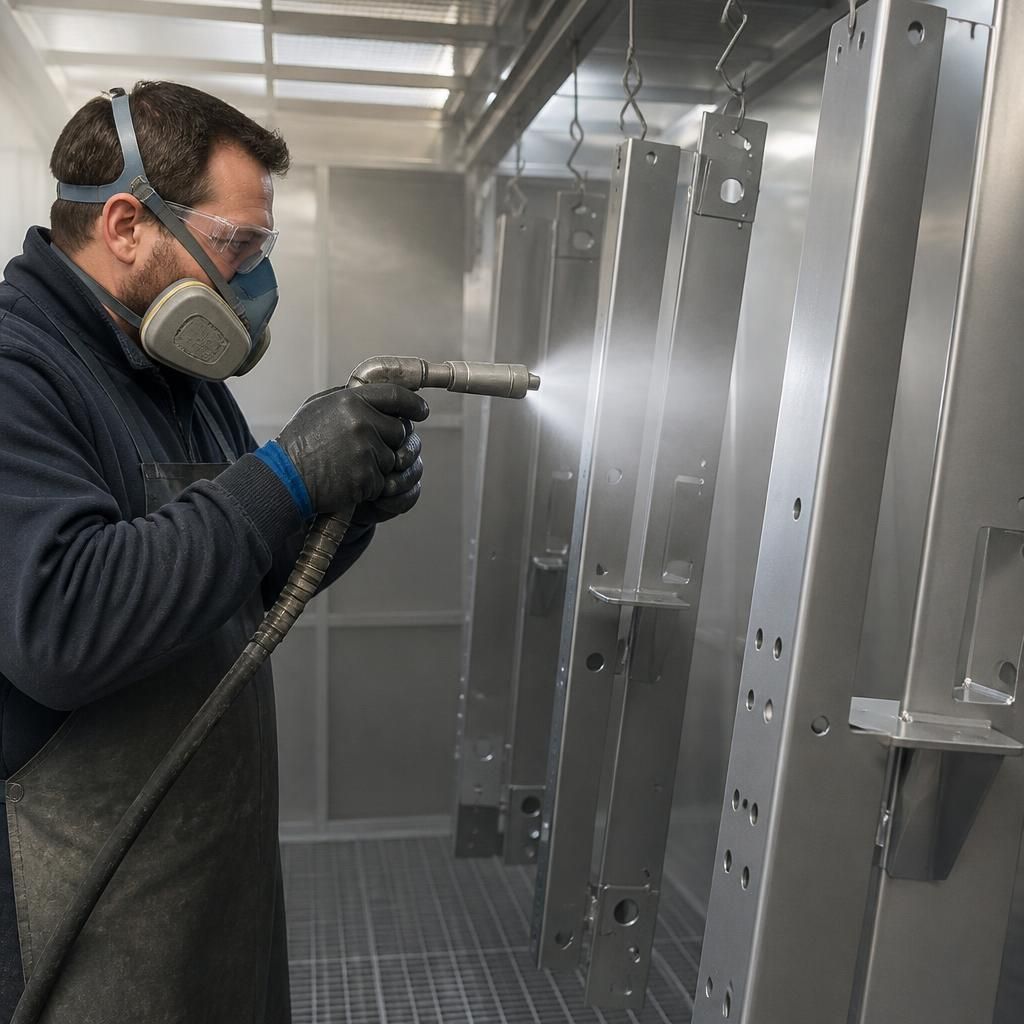
Surface preparation provides the foundation for a durable powder-coated finish. Before powder is applied, the metal must be free from oil, grease, dirt, rust, scale and other contaminants that could prevent the coating from bonding correctly. Preparation may involve cleaning, abrasive treatment or a suitable chemical pre-treatment, depending on the substrate and the required level of protection.
Correctly prepared metal gives the powder a clean, stable surface to adhere to and helps reduce defects such as flaking, blistering and premature corrosion. The component must also be properly dried before application, as trapped moisture or cleaning residues can interfere with the coating during curing. This preparation stage is therefore an essential part of the process, rather than a cosmetic step carried out before the visible finish is added.