

How do nylon and protective coatings enhance the resistance of metal components to chemical exposure?
Nylon and protective coatings enhance chemical resistance by forming a durable barrier between the metal and corrosive liquids, vapours or residues, reducing direct contact and limiting penetration to the substrate. Their effectiveness depends on the coating formulation, thickness, cure and compatibility with the specific chemicals, temperatures and exposure conditions involved.
Nylon and other protective coatings improve the chemical resistance of metal components by providing a chemically compatible surface that is less likely to corrode, swell, soften or degrade than the exposed metal beneath it. Nylon is particularly useful where chemical exposure is combined with abrasion or repeated handling, while other protective coating systems can be selected for specific acids, alkalis, solvents, oils, salts or process chemicals.
Nylon coatings: Nylon forms a tough, continuous finish with good resistance to many oils, greases, fuels, dilute acids, alkalis and salts. Its toughness helps the coating withstand knocks, rubbing and contact with moving parts, reducing the likelihood that mechanical damage will expose the substrate. A nylon finish can also provide a relatively low-friction surface, which is useful on components that slide, rotate or come into repeated contact with other materials.
Nylon is not chemically resistant to every substance. Certain strong acids, concentrated alkalis, aggressive solvents and elevated temperatures can cause swelling, softening, embrittlement or loss of adhesion. Moisture absorption can also affect some nylon formulations and may alter dimensional or mechanical performance. For this reason, the grade of nylon, the expected operating temperature and the exact chemical exposure should be assessed rather than treating nylon as a universal chemical-proof finish.
Other protective coatings: The term protective coating covers several different systems, each with its own chemical-resistance profile. Epoxy-based coatings are often chosen for resistance to moisture, oils, salts and many industrial chemicals. Polyurethane systems can combine chemical resistance with flexibility and resistance to weathering. More specialised formulations may be appropriate where components encounter concentrated chemicals, continuous immersion, high temperatures or particularly aggressive solvents. The correct choice depends on the chemistry of the coating and the exposure, not simply on whether the finish is described as protective.
Effective chemical protection depends on the coating remaining intact and properly bonded. Chemical attack can occur in several ways:
- Permeation: a chemical gradually passes through the coating and reaches the metal surface.
- Swelling or softening: the coating absorbs the chemical and loses hardness or dimensional stability.
- Crazing and cracking: repeated exposure, temperature changes or mechanical stress create small defects through which chemicals can travel.
- Blistering or delamination: moisture, contamination or chemical pressure causes the finish to lift away from the substrate.
- Under-film corrosion: once the metal is reached, corrosion can spread beneath the coating and reduce adhesion over a wider area.
A sound specification therefore starts with the actual service conditions. The assessment should record the chemicals involved, their concentration, temperature, frequency of contact and whether exposure is by splash, vapour, intermittent contact or continuous immersion. The presence of cleaning agents, disinfectants, hydraulic fluids or process residues should also be included, as secondary chemicals can be more aggressive than the main substance handled by the equipment.
Surface preparation is equally important. Oil, grease, rust, mill scale, moisture and other contaminants can prevent proper adhesion, leaving channels through which chemicals can reach the metal. Cleaning, preparation of the surface profile, suitable pretreatment and control of contamination all contribute to the coating’s ability to withstand exposure. Edges, corners, welds, recesses and fixing points require particular attention because thin or uneven coverage at these locations can become an early route for corrosion.
Coating thickness and curing must match the selected system. A finish that is too thin may provide insufficient coverage, while excessive thickness can create stresses, trapped contaminants or curing problems. Incomplete curing may leave the coating more vulnerable to solvents and process chemicals than the fully cured material described in its technical data. Application conditions, substrate temperature and the prescribed curing cycle should therefore be controlled and recorded where the component’s duty is critical.
When comparing nylon with another protective coating, the decision should consider chemical resistance alongside abrasion, impact, flexibility, temperature, electrical requirements and the possibility of future cleaning. A coating that resists the primary chemical may still be unsuitable if it cracks under movement or cannot withstand the cleaning method used by the operator. Compatibility data from the coating manufacturer, technical safety information for the chemicals and, for demanding applications, a representative test panel provide a more reliable basis for selection than a general resistance list.
For industrial metal components, the practical objective is to match the coating system and preparation method to the complete exposure profile. Nylon can be a strong option where toughness, wear resistance and resistance to common industrial contaminants are required. A different protective formulation may be more suitable for prolonged immersion, high temperature or a highly concentrated chemical. A coating specialist can use the component material, geometry and operating conditions to determine whether nylon or another protective system offers the appropriate level of chemical protection.
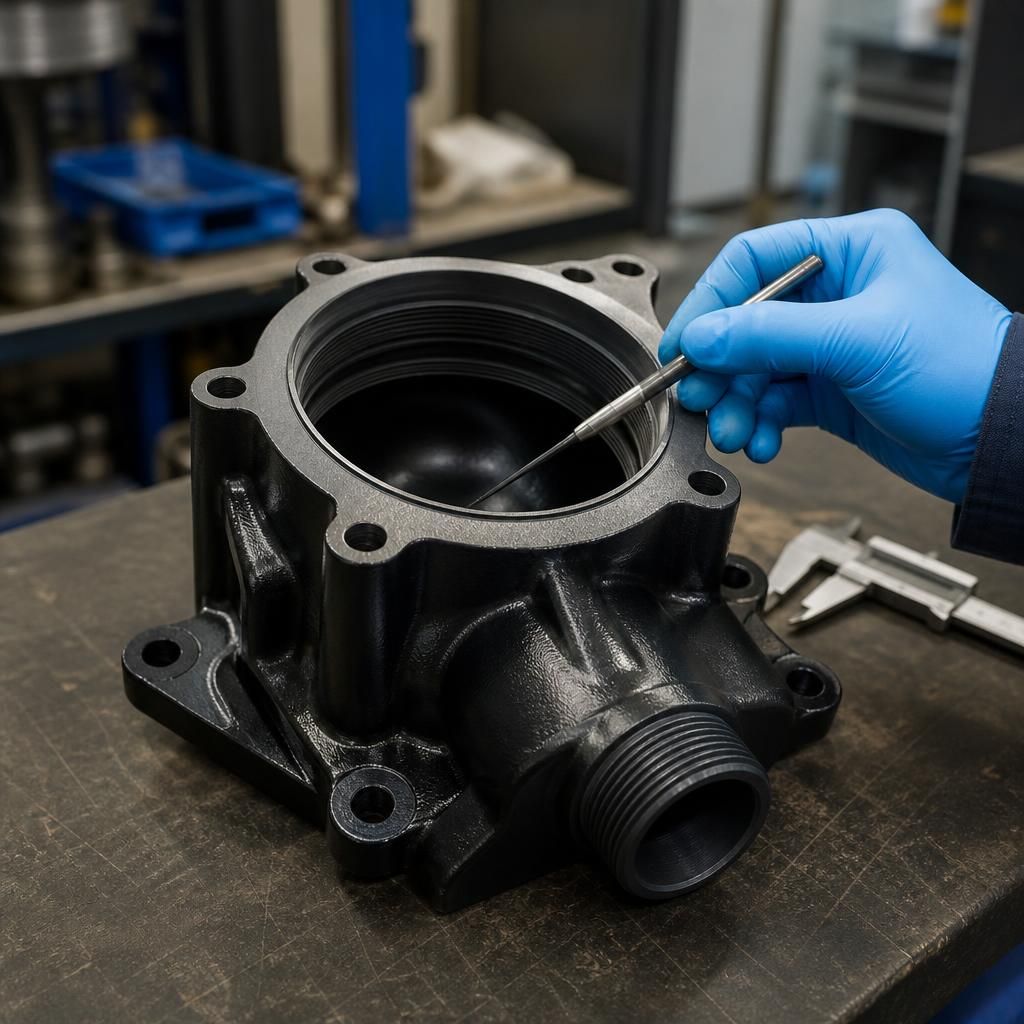
Chemical resistance in a coated component is not limited to whether the finish avoids visible damage. The coating must also preserve the component’s dimensions, surface friction, insulation properties and fit within the wider assembly while it is exposed to chemicals.
This makes coating design important around threads, mating faces, seals, sliding surfaces and electrical contact points. These areas may require controlled coating coverage or masking so that the protective finish isolates the surrounding metal without affecting assembly tolerances or operation. When correctly specified, the coating protects the working surface as well as the underlying substrate.
Discuss Nylon and Protective Coatings for Chemical Resistance
Discuss your component’s chemical exposure, operating conditions and required finish with a coating specialist to identify a suitable nylon or protective coating system. Sharing details such as the chemicals involved, concentration, temperature and contact method will help inform the assessment.