

How does the powder coating process improve the longevity and appearance of metal components?
Powder coating improves metal component longevity by creating a tough, cured protective layer that resists corrosion, abrasion and everyday wear. It also provides a consistent, even finish with durable colour and sheen, improving the component’s appearance while protecting the underlying metal.
Powder coating improves the longevity and appearance of metal components by bonding a formulated powder to a prepared surface and transforming it into a continuous, engineered finish during curing. The result is more than a layer of colour: the coating forms a controlled barrier between the metal and its service environment, while allowing the required gloss, texture and colour to be specified for the application.
How the process supports longer service life
- Strong adhesion: Effective preparation removes contamination, oxidation and residues that could prevent the coating from bonding properly. A sound bond reduces the risk of lifting, flaking and under-film deterioration.
- Continuous coverage: Powder can form an even film over suitably prepared profiles, including broad faces, formed sections and edges. Consistent coverage limits exposed areas where moisture or contaminants could reach the substrate.
- Controlled curing: Heat causes the powder particles to flow, merge and chemically cross-link. Correct curing develops the intended hardness, flexibility and resistance properties; insufficient or excessive curing can compromise performance.
- Resistance matched to use: Powder formulations can be selected according to the component’s environment and duties. Factors such as outdoor exposure, handling, cleaning chemicals, impact and friction influence the most suitable coating system.
- Protection of the substrate: By separating the metal from moisture and other environmental contaminants, the finish helps reduce the conditions that lead to oxidation and corrosion. The level of protection still depends on the metal, preparation standard, coating specification and service environment.
Why the finish remains visually consistent
Powder application allows the coating thickness and spray coverage to be managed across a production batch. Once cured, the particles form a smooth or textured surface rather than remaining as loose material. This gives the finished component a defined appearance, with the selected colour, gloss level and texture reproduced across compatible parts.
The process can also improve visual quality by covering minor surface irregularities that have been properly prepared beforehand. It does not, however, conceal significant dents, weld defects, sharp contamination or poor fabrication. Preparation remains essential because the cured finish follows the underlying shape of the component.
Factors that determine the result
- Substrate condition: Rust, mill scale, oil, grease, dust and previous coatings must be addressed before application. The correct preparation method depends on the metal and its existing condition.
- Component design: Deep recesses, narrow gaps, sharp edges and enclosed sections can affect powder access, film build and curing. These features should be considered when specifying the coating.
- Powder selection: The coating must suit the expected exposure and functional requirements. A finish intended for internal components may not be appropriate for prolonged external exposure or aggressive industrial conditions.
- Application control: Gun settings, earthing, part positioning and film build affect coverage and appearance. Poor control can produce thin areas, uneven texture, colour variation or visible defects.
- Oven conditions: The component must reach the required metal temperature for the powder’s specified curing schedule. Oven air temperature alone does not confirm that the whole part has cured correctly.
Maintenance also affects long-term appearance. Removing dirt and deposits with suitable cleaning methods helps preserve the finish, while harsh chemicals, prolonged contamination and mechanical damage can shorten its useful life. Any chips or areas of exposed metal should be assessed promptly, particularly where the component operates in a damp, corrosive or high-wear environment.
For manufacturers and fabricators, the practical benefit is a repeatable finish that combines protection with a specified appearance across individual parts or production batches. Powder-coating projects should therefore be assessed by considering the metal, component geometry, operating environment, required appearance and curing specification together. A Midlands-based specialist such as Powder-coatings.co.uk can advise on suitable industrial, protective or specialist coating options and arrange collection and delivery for businesses across the Midlands and surrounding areas.
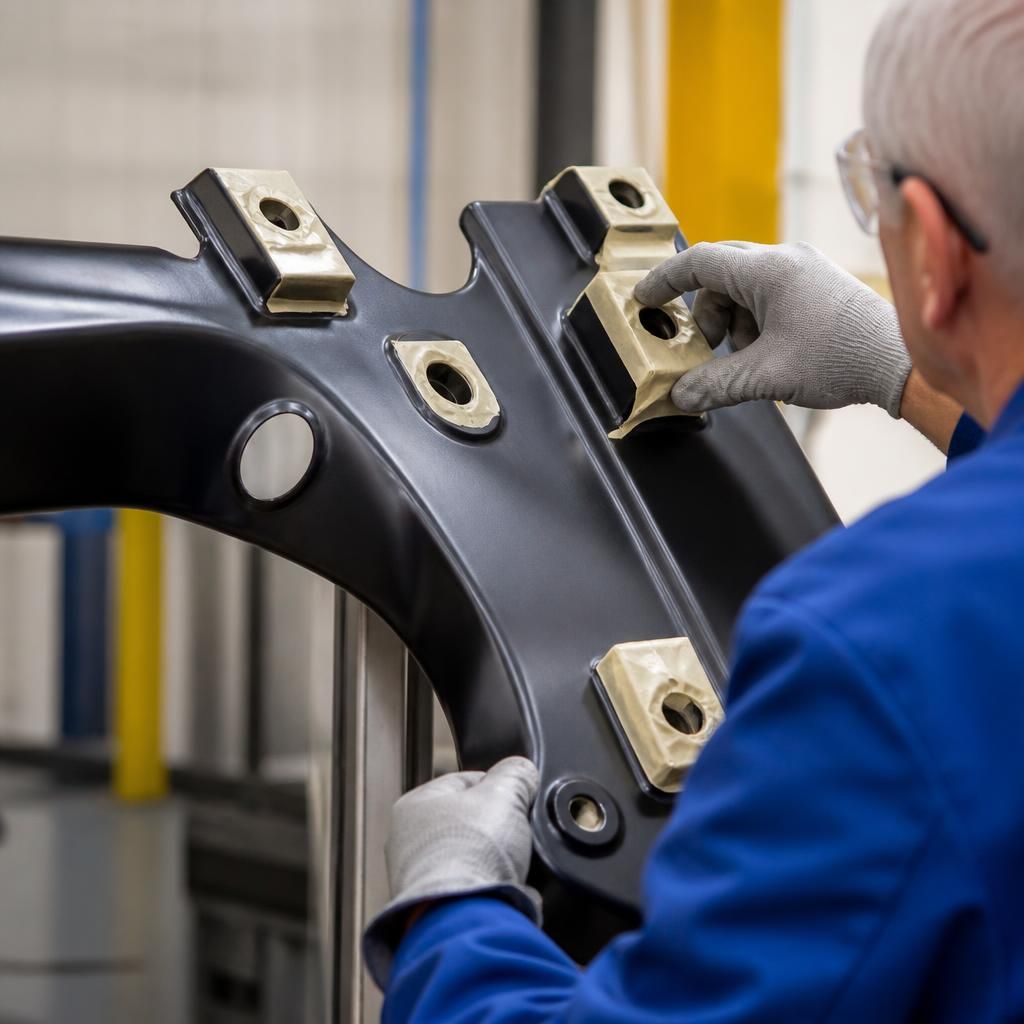
A powder-coated component can retain its function as well as its appearance when coating thickness is considered alongside its dimensional requirements. The cured film adds material to the surface, so close-fitting parts, threaded holes, bearing seats, hinges and other contact points may require suitable masking or specification before coating.
Protecting these areas from unnecessary build-up helps preserve accurate fit and movement. It also reduces the risk of coating being scraped away during assembly, which could expose the metal and create a visible defect. Correctly defined contact and masking points therefore support both the component’s working life and the neat appearance of the finished assembly.