

What are the key stages in the powder coating manufacturing process?
The key stages in the powder coating manufacturing process are metal inspection and preparation, pre-treatment, electrostatic powder application, oven curing, and final quality inspection. Each stage contributes to consistent coverage, adhesion and the durability of the finished coating.
The powder coating manufacturing process is a controlled production sequence that converts a prepared metal component into a specified finished product. Its quality depends not only on applying powder, but also on accurate job assessment, suitable component handling, controlled film formation, correct heat exposure and documented inspection.
1. Review the component and coating specification
Before production begins, the component is assessed against the requirements for its end use. Important considerations include the substrate, dimensions, geometry, expected exposure to moisture or chemicals, required colour and finish, target film thickness, and any areas that must remain uncoated. The specification should also identify whether the finish is intended for appearance, corrosion protection, electrical insulation, abrasion resistance or a combination of these functions.
Complex fabrications require particular attention. Enclosed sections, sharp corners, narrow gaps and deep recesses can affect powder deposition and heat transfer. Drainage and vent holes may be necessary where components have been cleaned or where trapped air could interfere with processing. Weld spatter, burrs and sharp edges can remain visible through the finished coating, so these defects need to be addressed before the component enters production.
2. Plan masking, racking and handling
Parts are positioned on suitable racks or fixtures so that the coating equipment can reach the required surfaces. The contact points must provide a reliable electrical earth while leaving as little visible marking as possible. Poor racking can create uncoated areas, shadowing or excessive powder build-up.
Masking is used to protect threads, bearing seats, electrical contact points, machined faces and other areas where coating would affect assembly or performance. Plugs, caps, tapes and purpose-made fixtures may be selected according to the component shape and the temperature used during curing. Masking must be secure enough to remain in place during handling, but removable without damaging the coating.
3. Establish a consistent surface condition
Surface preparation is not a single action. It creates the physical and chemical condition needed for the coating to bond with the metal. Oil, grease, dirt, mill scale, corrosion and previous finishes must be removed using methods appropriate to the substrate and the part’s condition. The resulting surface should be clean, dry and free from residues that could cause pinholes, blistering, poor adhesion or uneven appearance.
The treatment selected depends on the metal and the required level of protection. Steel, galvanised metal and aluminium can react differently to cleaning and conversion processes, so the preparation sequence should be matched to the substrate rather than applied as a universal formula. Components should also be protected from contamination between preparation and coating.
4. Control powder deposition
During application, the powder is carried towards the component and attracted to its electrically grounded surface. The operator or automated equipment controls factors such as gun distance, powder output, voltage, air movement, spray pattern and the number of passes. These settings influence transfer efficiency, coverage and the amount of powder deposited on edges, corners and recessed areas.
Application technique must account for the component’s geometry. Edges may receive more powder than broad flat faces, while recessed sections may be affected by electrostatic shielding. Applying excessive powder can lead to runs, uneven texture or other surface defects after heating. Applying too little can reduce protection and leave the finish visually inconsistent. Colour changes and different powder types also require effective equipment cleaning to prevent contamination.
5. Convert the powder into a continuous film
Once the powder has been applied, the component is exposed to a controlled oven cycle. Heat first causes the particles to melt and flow, after which the coating develops its final properties through curing. The relevant measurement is the temperature reached by the metal and the time it remains at the required condition, not simply the temperature displayed for the oven air.
Component thickness, mass, rack position and material all affect heat-up time. A thin panel and a heavy fabrication may therefore require different monitoring even when they pass through the same oven. The selected powder manufacturer’s technical data should determine the appropriate cure requirements. Under-curing can leave the coating with inadequate performance, while excessive heat exposure can affect colour, gloss or the coating’s physical characteristics.
6. Inspect the finished coating
After cooling, the component is examined against the agreed specification. Visual checks look for complete coverage, consistent colour and texture, contamination, pinholes, runs, impact marks and visible defects around welds or masked areas. Where required, dry-film thickness can be measured at representative locations, taking account of the component’s shape and the limitations of the measuring method.
Additional checks may include adhesion, hardness, solvent resistance or other performance tests specified for the application. Inspection is most useful when it is linked to clear acceptance criteria rather than relying solely on visual judgement. If a defect is found, the cause should be considered before reworking the part; correcting the symptom without addressing preparation, application or curing conditions can result in repeated defects.
7. Complete, protect and record the batch
The final stage includes removing masking, checking contact points and ensuring that the parts are handled without scratching or marking the newly cured surface. Components should be separated or packed in a way that prevents abrasion during storage and transport. For repeat or safety-critical work, records may include the powder identification, batch details, preparation method, application settings, cure information, inspection results and any approved deviations.
For manufacturers and fabricators, this control throughout the process is important because coating quality is cumulative. A sound finish cannot compensate for poor preparation, incorrect masking or inadequate curing. Clear specifications, suitable process settings and consistent inspection provide the basis for repeatable results across individual parts and production batches.
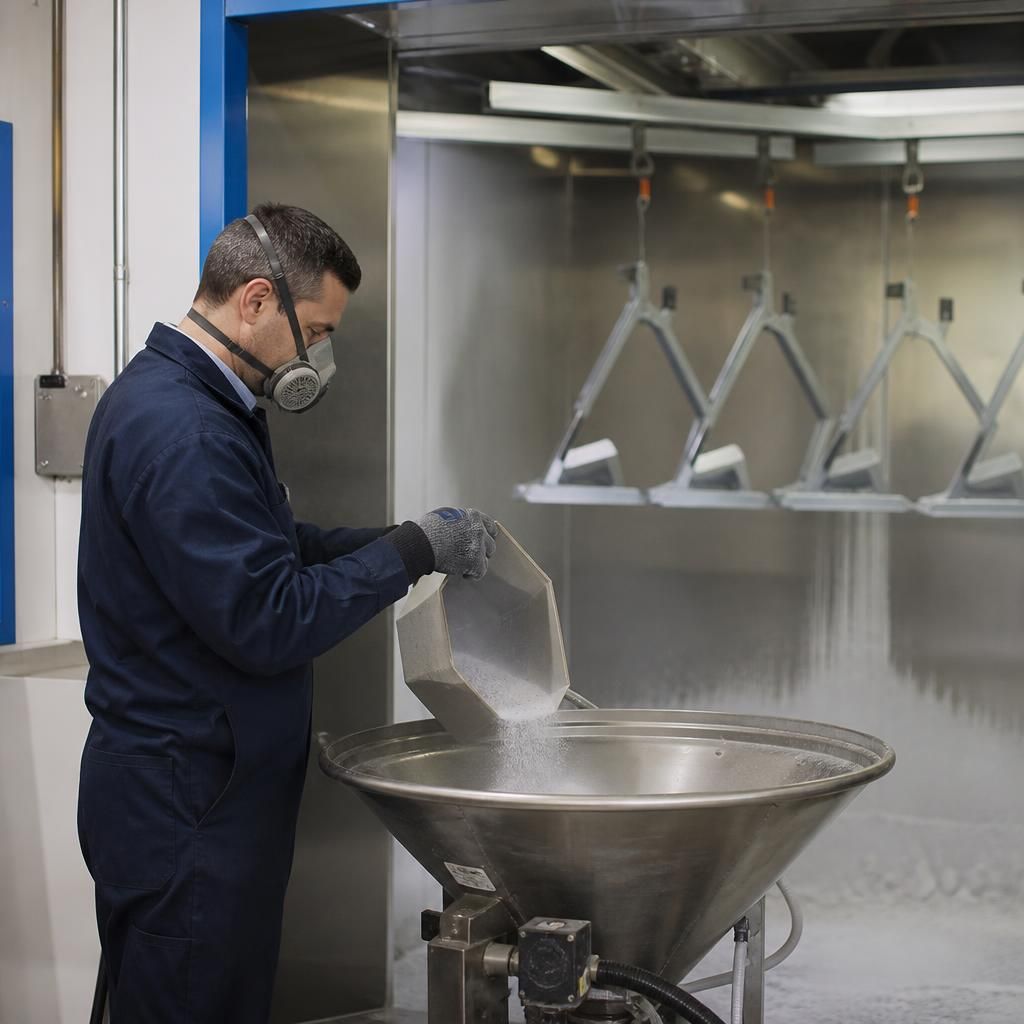
Powder handling is an important control point between application and curing. Overspray collected by the booth may be reclaimed where the equipment and coating specification allow it, but recovered powder must be managed carefully. Different colours, finishes or formulations should not be mixed, as contamination can affect the appearance and performance of the applied film.
For repeat production, powder should be identified and stored in a way that preserves its condition before use. This supports consistent application and helps operators trace any variation back to the material, equipment or process stage involved.