

What cleaning solutions are recommended for optimal nylon powder coating preparation?
Recommended solutions include a metal-compatible alkaline aqueous degreaser for removing oil, grease and handling residues, with a suitable solvent cleaner reserved for localised contamination where appropriate. Rinse thoroughly with clean water and dry the metal completely so no cleaner residue, moisture or loosened contamination remains before nylon powder coating.
The preferred cleaning chemistry for nylon powder coating preparation is normally a metal-compatible alkaline aqueous degreaser, selected for the type and level of contamination present. A suitable solvent cleaner can be used for isolated residues that an aqueous cleaner cannot readily dissolve, while acidic cleaners and aggressive solvents should be reserved for specific, confirmed needs rather than used as general-purpose preparation products.
Alkaline aqueous degreasers are effective against machining oils, grease, waxes, fingerprints and general workshop soil. They are particularly suitable where parts can be processed through a controlled wash stage, because the solution can contact recessed areas and complex profiles more consistently than manual wiping alone. The product should be intended for the particular substrate, whether mild steel, galvanised steel, aluminium or another metal, and used at the concentration and temperature specified by its technical information.
There is no single degreaser that is ideal for every metal. A cleaner that is acceptable for steel may stain, dull or attack aluminium, zinc-rich surfaces or other sensitive substrates. Check the cleaner’s compatibility before treating the full batch, especially where components combine different metals or include machined faces, threaded sections and previously treated areas. A small test area can help identify staining, smearing or a visible film before production preparation begins.
Solvent cleaners are most useful for localised contamination, such as a heavy oil mark, adhesive trace or handling residue on an otherwise clean component. The solvent must evaporate without leaving an oily additive or surfactant film. Wiping technique also matters: use clean, suitable wipes and change them as they become contaminated, otherwise dissolved oil can simply be spread across the surface. Solvent use should follow the product’s safety data, particularly where ventilation, ignition control, protective equipment or waste handling is relevant.
Acidic cleaners or descaling products may have a role where the metal carries mineral scale, oxide deposits or corrosion products that an alkaline degreaser cannot remove. They are not a substitute for routine degreasing. If used, the treatment must be matched to the substrate and followed by the specified neutralisation or rinsing process, because residual acidity, salts or etching products can interfere with the subsequent preparation stages and nylon coating adhesion.
Products that are usually unsuitable include household detergents, silicone-containing cleaners, furniture polishes, wax removers with unknown additives and unverified reclaimed solvents. These can contain fragrances, oils, corrosion inhibitors or other residues that are difficult to detect visually. Chlorinated or highly aggressive solvents also require particular caution because they may damage non-metallic components, create unacceptable vapours or leave the substrate unsuitable for the next preparation stage.
- Identify the contamination before choosing the chemistry: alkaline cleaners suit most oily workshop residues, whereas a compatible solvent may be more appropriate for a small, stubborn mark.
- Confirm compatibility with the base metal, existing treatment and any assembled components.
- Follow the supplier’s instructions for dilution, contact time and application method rather than increasing strength on the assumption that it will improve cleaning.
- Prevent recontamination by using clean handling equipment and avoiding bare-hand contact after preparation.
- Inspect the surface under suitable lighting for smears, water-break irregularities, staining, powdery deposits or other evidence of incomplete cleaning.
The correct solution is only one part of preparation quality. Cleaning should remove contaminants without etching the metal unpredictably or depositing a film that conceals the true surface condition. Where the component has embedded contamination, corrosion or a difficult geometry, the cleaning stage may need to be combined with an appropriate mechanical or chemical preparation method rather than relying on a stronger degreaser.
For production work, keep the chosen cleaner, dilution, process conditions and inspection method consistent across the batch. If a new substrate, oil type or cleaner is introduced, validate the process on representative parts before coating the full order. This approach makes it easier to distinguish poor cleaning from problems caused by abrasion, masking, handling or the coating application itself.
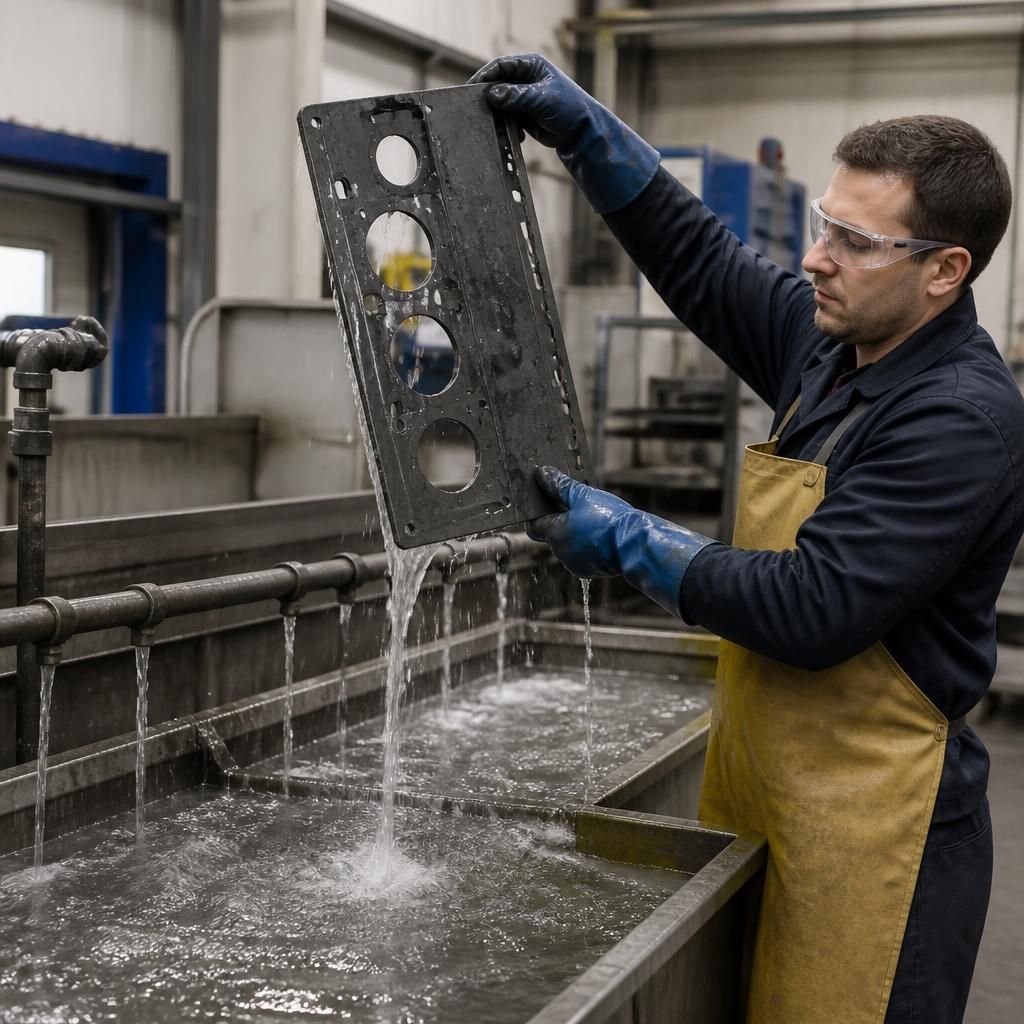
Rinse-water quality is an important part of nylon powder coating preparation because minerals and cleaner salts can remain on the metal after washing. Where local water leaves visible spotting or deposits, a cleaner final rinse using low-mineral or deionised water can reduce the risk of residue being carried into the coating process. The choice should suit the substrate and the cleaning system already in use.
After rinsing, dry parts fully before any further preparation or coating. Pay particular attention to joints, holes, recesses and folded sections where water can collect unnoticed. Compressed air used for drying should itself be clean and free from oil or moisture. A controlled rinse-and-dry stage helps ensure that the prepared surface reflects the condition of the metal rather than remnants of the cleaning process.