

What factors should be considered when choosing a mini powder coating machine for specific industry applications?
Choosing a mini powder coating machine depends on the metal parts being coated, required finish quality, powder compatibility, component size, production volume and available curing facilities. Also assess application control, cleaning and colour-change requirements, electrical and extraction needs, operator safety, equipment footprint, maintenance access and total cost of ownership for the specific industry.
The right mini powder coating machine is determined by the process requirements of the intended application, not simply by its physical size or advertised output. Selection should begin with the specification that the finished component must meet, then work backwards through process control, repeatability, integration, operator capability and future use. A machine suitable for samples or repairs may be unsuitable for production parts, even where both applications use the same powder.
Start with the industry specification
Different industries assess coated components in different ways. An automotive supplier may need a repeatable appearance and documented process for visible trim or brackets. A fabricator may prioritise robust protection on frames, fittings or enclosures. Construction components can be judged against project specifications for adhesion, durability and resistance to the intended environment. A manufacturer producing technical parts may need controlled, repeatable results across batches rather than simply an acceptable visual finish.
Before selecting equipment, identify the acceptance criteria in the customer drawing, coating specification or contract. These may include coating thickness, adhesion, gloss, colour tolerance, impact resistance, corrosion performance, edge coverage or resistance to particular chemicals. The machine must provide sufficient control and consistency for these tests. A unit that produces an attractive finish but cannot support the required process repeatability is not appropriate for a specification-led application.
Match the machine to the type of work
Mini systems are commonly considered for several distinct roles:
- Development and sample work: useful where coatings, colours or process settings need to be evaluated before larger-scale production. Easy adjustment and reliable recording of settings may matter more than maximum throughput.
- Repair and rework: a suitable machine can support localised or replacement work, provided the process can achieve the same technical requirements as the original coating. The compatibility of the repair process with the existing coating system should be assessed.
- Small-batch manufacture: repeatability between separate jobs becomes important, particularly where parts are supplied to several customers or are assembled into a larger product.
- Specialist coating work: nylon and other protective coatings can impose different handling and process requirements from standard decorative powders. The equipment should be assessed against the complete specialist process rather than its general suitability for powder application.
These roles can require different priorities. A development unit may need flexibility and straightforward adjustment, while a production-focused machine may need recipe control, consistent application and clear process records.
Consider part geometry and application access
Overall dimensions are only one part of suitability. Deep recesses, internal corners, narrow channels, perforations and Faraday-cage areas can make electrostatic application more difficult. Long or irregular components may also require a different gun arrangement, operator technique or racking method from flat panels.
Assess representative parts rather than relying on a simple maximum size description. The trial should include the most difficult geometry, the most demanding surface areas and any areas that must remain free from coating. Check whether the machine allows the operator to reach those areas consistently and whether fixtures can hold parts in a repeatable orientation without obstructing the spray pattern.
Assess process repeatability and control
For industrial applications, the key question is whether the same settings can produce the same result on different days and between different operators. Useful features may include stable powder delivery, adjustable electrostatic parameters, controllable air settings, clear displays and the ability to save or record approved recipes. These features are particularly relevant where several products use similar colours or where a customer requires evidence that the process is controlled.
Do not assess controls in isolation. Consider how easily an operator can identify the selected recipe, recognise an incorrect setting and return to an approved configuration. A system with many adjustments is not automatically better if the controls are difficult to understand or do not support disciplined production procedures.
Check integration with the wider production process
A mini coating machine should fit the way parts move through the business. Consider how components arrive from fabrication, how coated items are transferred to curing, and how finished parts are inspected, packed or assembled. The machine may be technically suitable but operationally unsuitable if it creates awkward handling, additional transfers or inconsistent positioning.
For repeat production, examine whether the equipment can work with existing fixtures, conveyors, racks, extraction arrangements and inspection procedures. For a workshop handling varied jobs, flexibility and rapid reconfiguration may be more valuable than a highly specialised layout. The selection should also allow sensible separation between uncoated parts, coated parts and finished goods to avoid mix-ups or damage.
Evaluate quality assurance and traceability
Industries supplying safety-related, visible or contract-specified components may need more than a visual inspection. Consider whether the process can support records for powder identification, batch references, approved settings, operator checks and inspection results. Where a coating defect is later identified, traceable information makes it easier to investigate whether the cause was material, preparation, application, curing or handling.
The equipment should therefore be compatible with the business’s quality procedures. It does not need to create every record automatically, but its controls and operating information should make consistent documentation practical. This is especially important where parts are supplied as subcomponents and the coating forms part of a customer’s wider quality system.
Allow for operator capability and training
Application technique has a significant effect on powder distribution and final consistency. When comparing machines, consider how much specialist knowledge is needed to set up, adjust and verify the process. Clear controls, accessible operating instructions and sensible adjustment ranges can reduce avoidable variation, but they do not replace training in gun movement, grounding, part presentation and defect recognition.
Ask what training is provided by the equipment supplier and what technical support is available for commissioning, process trials and troubleshooting. The practical test is whether the people who will use the machine can understand its settings and follow the required process without relying on one experienced individual.
Review future requirements without oversizing the purchase
A machine should suit the work that is realistically expected, while leaving room for likely changes in product range and customer requirements. Consider whether the business may introduce additional powders, more complex geometries, tighter documentation or a greater proportion of repeat work. A unit selected solely for a current trial may become restrictive if it cannot accommodate those developments.
At the same time, buying features that have no relevance to the application can increase complexity and make operation harder. Compare optional equipment against specific future needs, such as a new part family or a revised customer specification, rather than treating every available feature as essential.
Use practical trials before final selection
The most reliable comparison is a controlled trial using representative components and the intended powder system. Record the settings, coating results, defects, operator adjustments and inspection findings. Include difficult areas of the part and repeat the process sufficiently to assess consistency, not just the appearance of one successful sample.
For a Midlands manufacturer, fabricator, construction supplier or automotive business, this approach provides a clearer basis for choosing a mini powder coating machine than a general product description. It shows whether the equipment can support the actual specification, geometry, quality system and production method that the application requires.
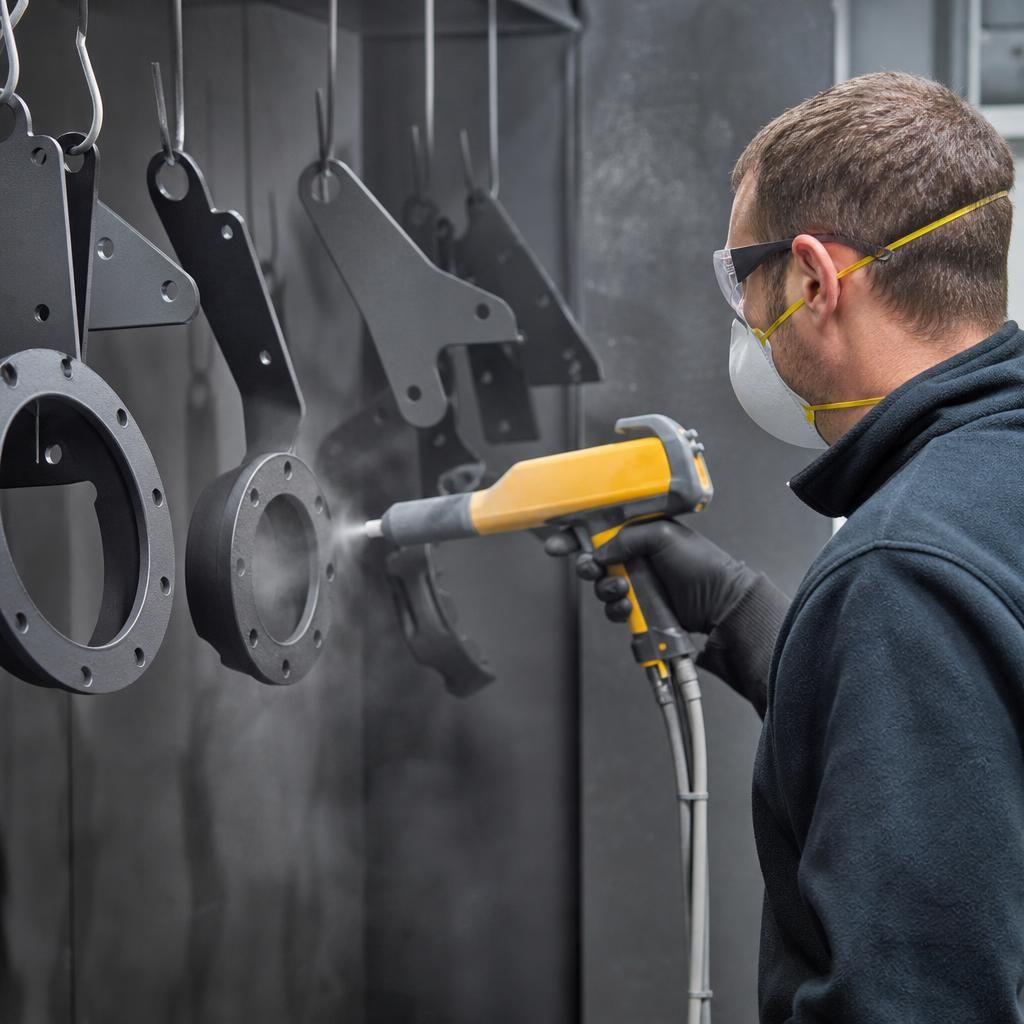
Substrate and surface-preparation requirements should be considered when choosing a mini powder coating machine, because the applicator cannot correct contamination, poor adhesion or an unsuitable pre-treatment process. Identify whether the equipment will be used for steel, aluminium, galvanised components or mixed metal parts, then confirm that the intended powder system is appropriate for each surface.
Consider how parts will be cleaned, dried, masked and presented to the machine. Residual oils, moisture, chemical deposits or handling contamination can affect the finished coating, while inadequately dried parts may introduce defects during curing. Galvanised or previously coated components may also need specific preparation before powder is applied.
A practical evaluation should include representative parts in their normal prepared condition, rather than clean test panels alone. Check adhesion and appearance after the full preparation and application sequence, and establish whether separate preparation methods, fixtures or cleaning procedures are needed for different materials. This helps ensure the selected machine supports the complete coating process used in the intended industry application.