

What are the maintenance requirements for small powder coating machines?
Maintenance for small powder coating machines typically involves regular cleaning to prevent powder build-up, inspection of guns, hoses, filters and seals, and checks on compressed-air and electrical connections. Follow the manufacturer’s servicing schedule, replace worn components promptly and record maintenance work to support consistent application and reliable operation.
Maintenance for a small powder coating machine is a planned combination of cleaning, condition checks, performance verification and safe servicing. The aim is to keep powder delivery, electrostatic charging, air supply and curing conditions stable, because small changes in any of these areas can produce uneven coverage, poor transfer efficiency or inconsistent finish quality.
Establish a maintenance schedule based on usage. A machine used intermittently may need a different routine from one used for frequent production batches. Separate tasks into checks before use, routine tasks after a coating run, and periodic servicing. The equipment manual should take precedence, particularly for service intervals, approved replacement parts and procedures involving electrical, pneumatic or high-temperature components.
Control powder condition and storage. Powder should be kept sealed, dry and protected from contamination. Moisture, heat and mixed materials can affect fluidisation, charging behaviour and the final finish. Keep new and reclaimed powder clearly identified, and avoid returning contaminated or visibly degraded material to usable stock. Any powder feed container, hopper or fluidising arrangement should be checked for bridging or compacted material before operation, as restricted movement can make the coating appear to be a machine fault.
Verify electrostatic performance. The machine should be checked against the operating values specified by its manufacturer rather than adjusted by guesswork. Unstable voltage or current readings, intermittent charging, arcing or a noticeable change in powder attraction can indicate a fault requiring investigation. The workpiece and hanging arrangement must also provide a clean, dependable earth path. Paint build-up on hooks, racks or contact points can interrupt grounding, so these contact surfaces need to be kept conductive and replaced or refurbished when they no longer make reliable contact.
Check powder delivery and fluidisation. Powder should leave the gun in a controlled, consistent cloud rather than pulsing, surging or falling out of suspension. Examine the powder path for restrictions and confirm that fluidising air is behaving consistently. A change in powder output may result from compacted powder, an obstruction, incorrect air adjustment or wear in a feed component. Correcting the cause is preferable to compensating by continually changing gun settings, since excessive adjustment can mask a developing fault.
Maintain the curing system where one is part of the installation. A coating can look acceptable while remaining under-cured or becoming brittle through excessive heat. Check that the oven reaches and holds the required temperature, and verify the temperature at the workpiece rather than relying solely on the controller display. Temperature-measuring equipment should be checked or calibrated in line with the manufacturer’s guidance. Door seals, insulation, heating elements, fans and ventilation paths should be assessed for deterioration, while any unusual temperature variation should be investigated before further production.
Check mechanical condition and adjustment. On compact systems, loose fasteners, damaged brackets, worn wheels, restricted moving parts or misaligned supports can affect how components are presented to the spray pattern. Inspect workpiece racks, hooks and fixtures for distortion and excessive coating build-up. Fixtures should hold parts securely without shielding areas that require coverage, and their condition should be reviewed whenever a change in component size or shape produces a different finish.
Use a controlled restart after servicing. Before returning the machine to production, confirm that access panels and guards are correctly fitted, connections are secure and no tools or foreign material remain inside the equipment. Run a controlled test using a suitable sample or test panel. Review the powder pattern, coverage, cure and appearance before coating a full batch. This provides a practical check that maintenance has corrected the issue without introducing a new setting or assembly problem.
Record faults and recurring adjustments. A useful maintenance record should identify the date, operating hours or production use where relevant, work carried out, parts changed, settings checked and any abnormal symptoms. Repeated problems such as poor transfer, uneven film build or curing variation can then be linked to a particular component or operating condition. This information also helps a qualified service engineer diagnose faults more efficiently and supports decisions about replacing a component before an unplanned stoppage.
Work involving live electrical parts, pressurised systems, heating equipment or internal repairs should be carried out by a suitably competent person, with the machine isolated according to the manufacturer’s safety procedure. When maintenance is consistent and documented, small powder coating machines are easier to set up accurately and less likely to develop faults that compromise batch-to-batch finish quality.
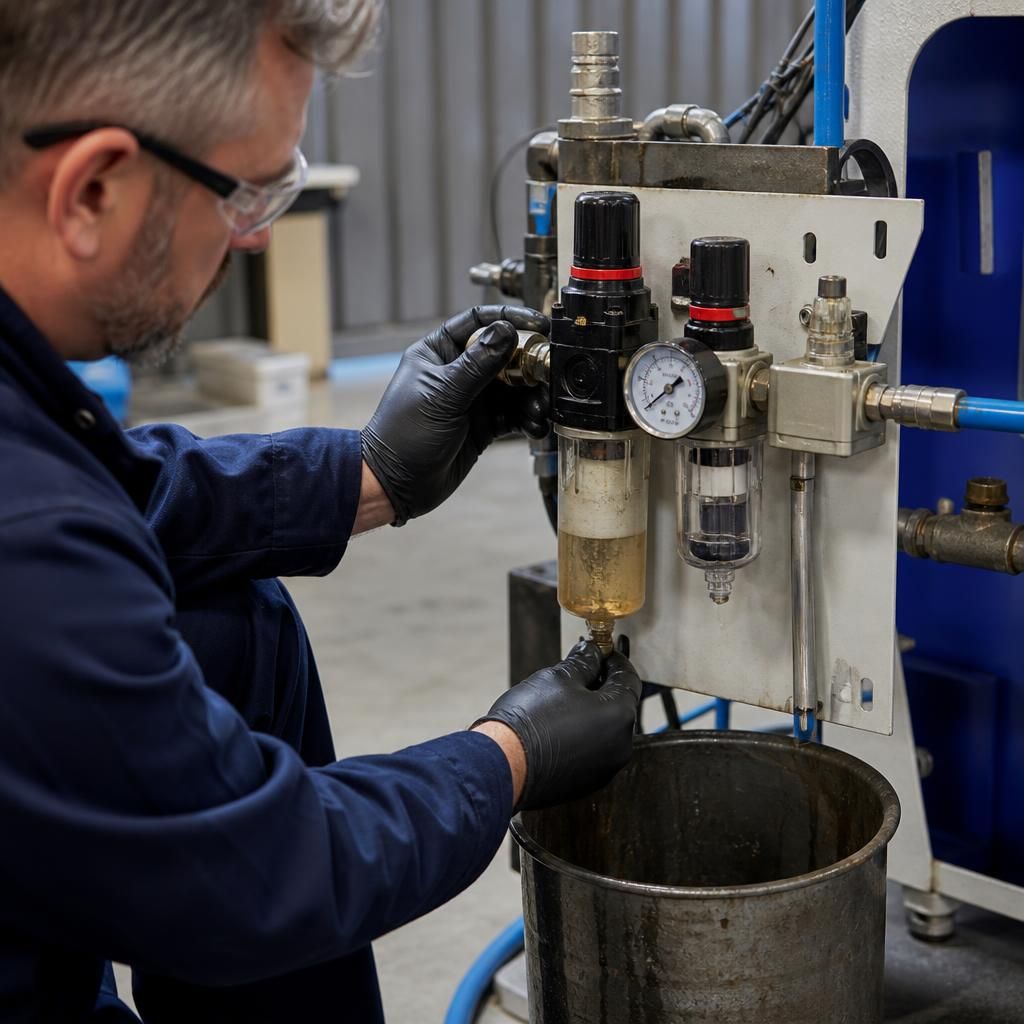
Compressed-air quality is a specific maintenance requirement for small powder coating machines. Moisture, oil or pressure fluctuations in the air supply can affect powder fluidisation, spray consistency and the finish on coated parts, even when the gun and powder path appear clean.
Check the machine’s air-treatment equipment, regulators and moisture separators in accordance with the manufacturer’s instructions. Drain receivers or moisture traps where applicable, inspect air lines for damage and investigate changes in pressure rather than compensating through gun adjustments. Any air filter or separator should be replaced at the specified condition or service interval, using a compatible part. Keeping the air supply clean and stable helps the machine apply powder more consistently and makes developing faults easier to identify.
Discuss maintenance requirements for your small powder coating machine
Discuss your small powder coating machine and coating requirements with Powder-coatings.co.uk if maintenance issues are affecting your production process. The team can help you consider whether your components are better suited to a professional powder coating service.