

What methods are most effective for removing stubborn contaminants during the powder coating degreasing process?
The most effective approach combines a suitable alkaline or solvent degreaser with controlled agitation, spraying or immersion to dissolve oils, grease and other tenacious residues. Where contaminants are strongly bonded, a compatible mechanical treatment or pre-cleaning stage may be needed, followed by thorough rinsing and drying before powder coating.
The most effective method for removing stubborn contaminants is a staged cleaning process matched to the contaminant, the metal substrate and the required coating specification. Heavy oil and grease usually respond to a heated alkaline cleaner, while silicone, waxes, adhesive residues and some cutting fluids may require a compatible solvent or a dedicated emulsifying formulation. No single degreaser is effective against every residue, so identifying the contaminant before treatment is an important first step.
Identify the residue before choosing the cleaner. A component may carry several contaminants from machining, fabrication, storage and handling. Petroleum-based oils, drawing compounds and grease behave differently from silicone-based release agents, polishing compounds, adhesive residues or protective waxes. Material safety information, production records and a small controlled cleaning trial can help establish whether the residue is water-soluble, solvent-soluble, alkaline-reactive or mechanically bonded.
Use alkaline cleaning for heavy organic contamination. Aqueous alkaline degreasers are commonly used for machining oils, grease and workshop soils. They work by breaking down or dispersing the contamination so it can be removed from the surface. Concentration, temperature, contact time and solution condition must be controlled: an under-strength or contaminated bath may leave a film, whereas an unsuitable formulation can attack sensitive metals or interfere with later pre-treatment. Aluminium, zinc-coated components and mixed-metal assemblies require particular care because strongly alkaline products may affect their surfaces.
Use solvents selectively for residues that resist aqueous cleaning. Solvent cleaning can be useful for silicone, wax, adhesive traces and water-insoluble oils that remain after an aqueous stage. The solvent must be compatible with the substrate and subsequent coating process. It should also be applied in a way that does not simply spread the contaminant across the component. Wipes, immersion, controlled spraying or vapour-based equipment may be appropriate depending on the part geometry and the nature of the residue. Used wipes and spent solvent require controlled handling to prevent recontamination and environmental harm.
Combine chemistry with physical action where deposits are bonded. Agitation, spray impact, brushing and ultrasonic cleaning can help a detergent reach recesses, holes and joints where a static solution cannot remove contamination effectively. Ultrasonic energy is particularly useful for small or intricate components, although it cannot compensate for an unsuitable cleaning chemistry or an overloaded bath. Brushing should use tools that will not introduce incompatible fibres, metallic particles or other residues.
Steam cleaning and pressure washing can be useful pre-cleaning methods for thick grease, loose dirt and processing debris. They are generally most effective when followed by a suitable chemical clean rather than treated as the complete degreasing process. Pressure must be controlled so that contaminants are not driven into seams, threaded holes or enclosed sections. Components must then be dried thoroughly, since trapped moisture can dilute later treatment stages and contribute to flash corrosion on susceptible steel.
Remove scale, corrosion products and embedded residues separately. Degreasing is intended primarily to remove organic contamination. Mill scale, oxidation, weld discolouration, abrasive dust and firmly embedded particles may need a separate surface-preparation method, such as an appropriate chemical treatment, abrasive preparation or blasting process. Cleaning oily components before abrasive preparation is important because grease can interfere with the abrasive action and spread over newly exposed metal. Conversely, abrasive treatment should be followed by a process that removes loose dust before coating.
Pay attention to component design. Stubborn contamination often persists because the cleaning method does not reach folds, lap joints, blind holes, weld crevices or the underside of brackets. Components should be positioned so that cleaner can drain freely, and enclosed sections should be assessed for retained liquid or trapped process chemicals. Where a part cannot be reliably cleaned because of its geometry, design changes, additional drainage holes or a different preparation sequence may be needed before it enters production.
For batch work, solution management is as important as the initial choice of product. Cleaner becomes less effective as oil loading, particulate matter and dissolved metal build up. Filtration, skimming, bath replenishment and scheduled replacement help maintain consistent cleaning conditions. Spray nozzles, pumps and tanks should also be checked for blockages or accumulated sludge, as equipment contamination can transfer residue back onto otherwise clean components.
Rinsing and drying determine whether cleaning has actually succeeded. Residual degreaser, dissolved soil and salts can remain on the surface if rinsing is inadequate. Clean water, suitable rinse stages and effective drainage reduce the risk of carrying chemistry into subsequent pre-treatment. Drying should remove moisture from joints, recesses and holes without depositing airborne dust or handling contamination. Components should be handled with clean equipment after cleaning, since bare hands, dirty gloves and oily racks can reintroduce contamination.
Verification should be built into the process rather than relying only on visual inspection. A surface may appear clean while still carrying a thin organic film. Water-break observation can indicate whether water spreads evenly or retreats from areas that remain contaminated, although it is not a complete chemical analysis. Wipe tests, contact-angle methods, cleanliness testing or coating adhesion checks may be appropriate where the specification or risk level demands stronger evidence. Any test should be applied consistently and interpreted alongside the coating system’s requirements.
The practical selection is therefore a balance between contaminant type, substrate sensitivity, component geometry, production volume and the required evidence of cleanliness. A controlled sequence may involve initial removal of bulk soil, targeted chemical treatment, physical assistance for inaccessible areas, rinsing, drying and verification. Testing the proposed sequence on representative parts is preferable to applying an aggressive cleaner across an entire batch, particularly where components contain different metals, delicate machined surfaces or previously applied protective treatments.
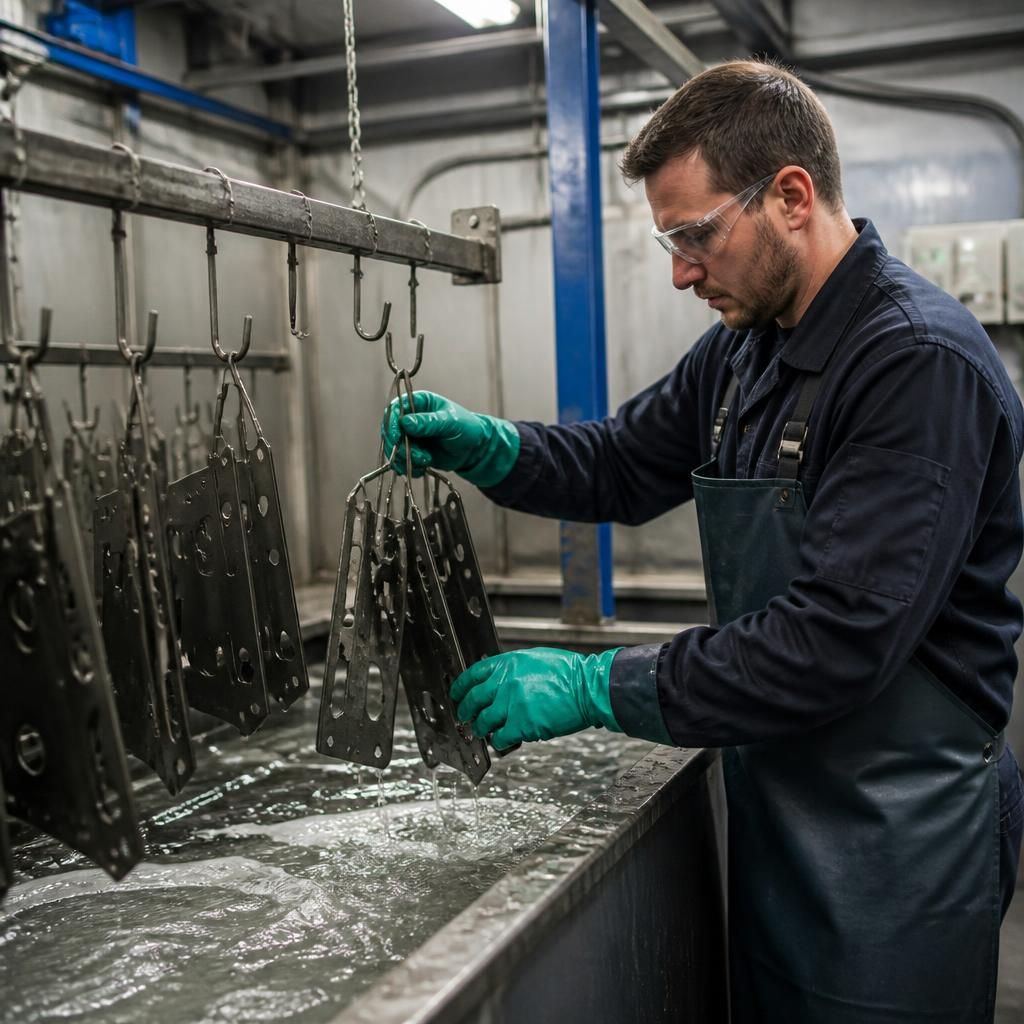
Mixed contamination often requires a deliberate order of treatment rather than a stronger single degreaser. For example, a solvent stage may first dissolve silicone, wax or adhesive residue, while a subsequent aqueous wash removes the remaining soluble soil and any cleaner film. The sequence should be selected so that the first treatment does not fix, spread or chemically alter the second contaminant.
Between stages, the component should be assessed for residue transfer and compatibility with the next cleaner. Particular attention is needed around joints, threaded areas and absorbent deposits, where dissolved contamination can collect and reappear during coating. This staged approach is most effective when each treatment has a defined purpose and the final surface is suitable for the planned pre-treatment and powder coating system.