

What are the advantages of using epoxy primer on stainless steel before powder coating?
Applying an epoxy primer to stainless steel before powder coating can improve the bond between the metal and powder coat, while adding an extra barrier against moisture, chemicals and corrosion. It can also help produce a tougher, more durable coating system when the primer is correctly selected, prepared and cured for the stainless-steel substrate.
Using an epoxy primer beneath a powder coat on stainless steel can improve the consistency and reliability of the complete coating system, particularly where the component has complex geometry, welded areas or demanding service conditions. Its main advantage is not simply adding another layer, but creating a controlled foundation for the powder topcoat and allowing the coating specification to address the particular characteristics of stainless steel.
Key advantages include:
- More even coverage on difficult areas: Primer can help establish a continuous coating system around edges, corners, welds, recesses and other areas where powder may form a thinner or less uniform film. These locations are often more vulnerable to coating defects than broad, flat faces.
- Improved appearance: A suitably chosen, well-applied primer can produce a more consistent base colour and surface profile beneath the powder coat. This may help reduce visible variation caused by differences in the stainless surface, weld zones or localised preparation.
- Better control of the coating specification: A primer and powder topcoat can be selected as a complete system rather than relying on one layer to perform every function. This is useful when the finished component must withstand a combination of humidity, cleaning chemicals, handling or industrial contamination.
- Additional protection at vulnerable details: Welds, ground areas, sharp transitions and fabricated joints can behave differently from the surrounding stainless steel. Primer provides an opportunity to treat these details consistently before the decorative or functional powder layer is applied.
- Early inspection of the substrate: Applying primer as a separate stage allows the coated part to be examined before the final powder finish is added. Surface contamination, uneven preparation, pinholes or other defects can then be identified and corrected without having to assess the finished coating alone.
- Greater flexibility for fabricated components: Stainless parts are often assembled from sections with different surface textures and levels of mechanical working. A suitable primer can make the overall coating approach more consistent across these areas, provided the preparation and curing requirements are followed.
The benefit depends heavily on preparation. Stainless steel has a relatively stable passive surface, so light abrasion or another approved preparation method may be needed to create a suitable surface profile. Oil, polishing compound, handling residues, weld discolouration and embedded iron particles must also be removed. If these contaminants remain, the primer may adhere to the contamination rather than to the stainless steel itself.
Primer selection is equally important. The product must be compatible with stainless steel, the intended powder coating and the curing schedule. The primer manufacturer’s requirements should be checked for application thickness, flash-off or recoat interval, oven temperature and maximum time before the powder topcoat is applied. An unsuitable combination can lead to softening, blistering, cratering, loss of appearance or failure between coating layers.
Epoxy primer should not be treated as a universal solution. Many epoxy products have limited resistance to prolonged ultraviolet exposure when left as the final finish, which is why they are generally used beneath a suitable topcoat in external applications. The completed system must also be assessed against the actual environment, including temperature changes, abrasion, cleaning regimes and contact with process chemicals.
For industrial stainless-steel components, the practical advantage is therefore greater control: the surface can be prepared and checked in stages, difficult areas can receive more consistent treatment, and the primer and powder coat can be specified as compatible layers. The result depends on the stainless grade, component design, surface condition, preparation method, primer, powder formulation and curing process rather than on the use of epoxy primer alone.
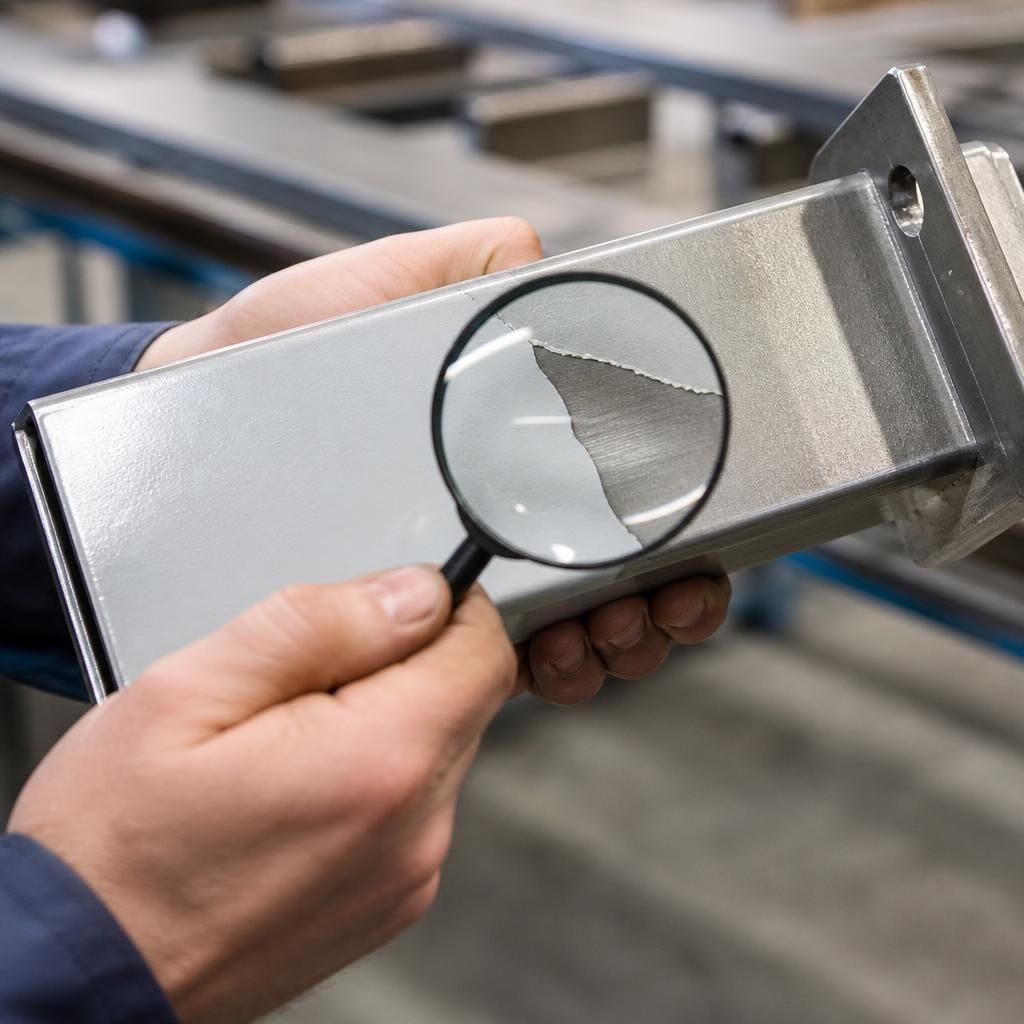
An epoxy primer can make coating failures easier to assess because it separates the stainless-steel interface from the powder topcoat. If damage or delamination occurs, the exposed layers may help indicate whether the problem is related to substrate preparation, primer adhesion or bonding between the primer and powder. This supports more targeted investigation than a single-layer coating, where the cause can be harder to identify.
That diagnostic benefit depends on applying a continuous primer film and recording the agreed preparation, application and curing requirements. It does not replace inspection of the finished component, but it gives the coating system a defined interface that can be assessed during quality checks and future maintenance.
Discuss Epoxy Primer for Stainless Steel Powder Coating
If you are assessing epoxy primer for a stainless-steel component, discuss the substrate condition, service environment and intended powder coating system with a specialist before specifying the finish. Powder-coatings.co.uk can help identify a suitable coating approach for industrial parts and fabricated components.