

What are the key benefits of using chromate powder coating pretreatment for metal components?
Chromate powder coating pretreatment helps metal components resist corrosion while creating a more receptive surface for the powder coating to bond to. This can improve coating durability, reduce the risk of premature failure and support consistent finishes on suitable metal substrates.
Chromate powder coating pretreatment offers several practical benefits beyond preparing a metal surface for coating. It chemically conditions the substrate, helps create a more uniform basis for finishing and can improve the reliability of the complete coating system when the chemistry is correctly selected for the metal and service conditions.
- More consistent surface preparation: A conversion coating can treat small variations in the metal surface more evenly than mechanical preparation alone. This is particularly useful for batch production, where repeatable preparation helps reduce differences between individual components.
- Improved coverage of complex components: Pretreatment can reach areas that are difficult to prepare consistently by abrasion, including recesses, edges and formed sections. Correct cleaning and application remain essential, but the process can provide a more suitable base across components with varied shapes.
- Better support for finish quality: By conditioning the surface before powder application, chromate pretreatment can help the coating system produce a more even visual result. This is relevant where components are visible or where colour, gloss and surface uniformity need to be controlled across a production batch.
- Protection against coating-system weaknesses: A properly specified pretreatment adds an additional functional layer beneath the powder coating. This gives the overall system greater resilience when the component is exposed to handling, moisture or other service demands, rather than relying on the powder layer alone.
- Suitable for particular non-ferrous substrates: Chromate conversion treatments are commonly considered for metals such as aluminium and certain zinc-coated surfaces, subject to the precise alloy, finish and application requirements. The treatment must be matched to the substrate because a process suitable for one metal may be inappropriate for another.
- Useful for controlled production processes: When cleaning, rinsing, chemical concentration, contact time and drying are controlled, pretreatment can be incorporated into a repeatable finishing specification. This supports inspection and quality control by giving the coater defined process stages to monitor.
- Potentially lower preparation-related rework: Consistent chemical preparation can reduce defects associated with contamination, uneven surface condition or incomplete preparation. It does not remove the need for inspection, but it can help identify and control one of the variables that affects powder-coated component quality.
The benefits depend on the complete specification rather than on the word chromate alone. Substrate composition, component design, intended environment, powder type, film thickness and curing conditions all influence the result. A qualified coater should also confirm whether a trivalent or hexavalent system is being considered, as the two have different regulatory, handling and waste-management implications. In many projects, the correct choice is therefore a balance between technical performance, process control and the applicable environmental requirements.
For industrial metal components, chromate powder coating pretreatment is most valuable when the project requires a controlled, repeatable preparation stage and the treatment is selected specifically for the substrate and final use. It should be assessed as part of the full coating specification, not as a standalone substitute for sound cleaning, application and curing practices.
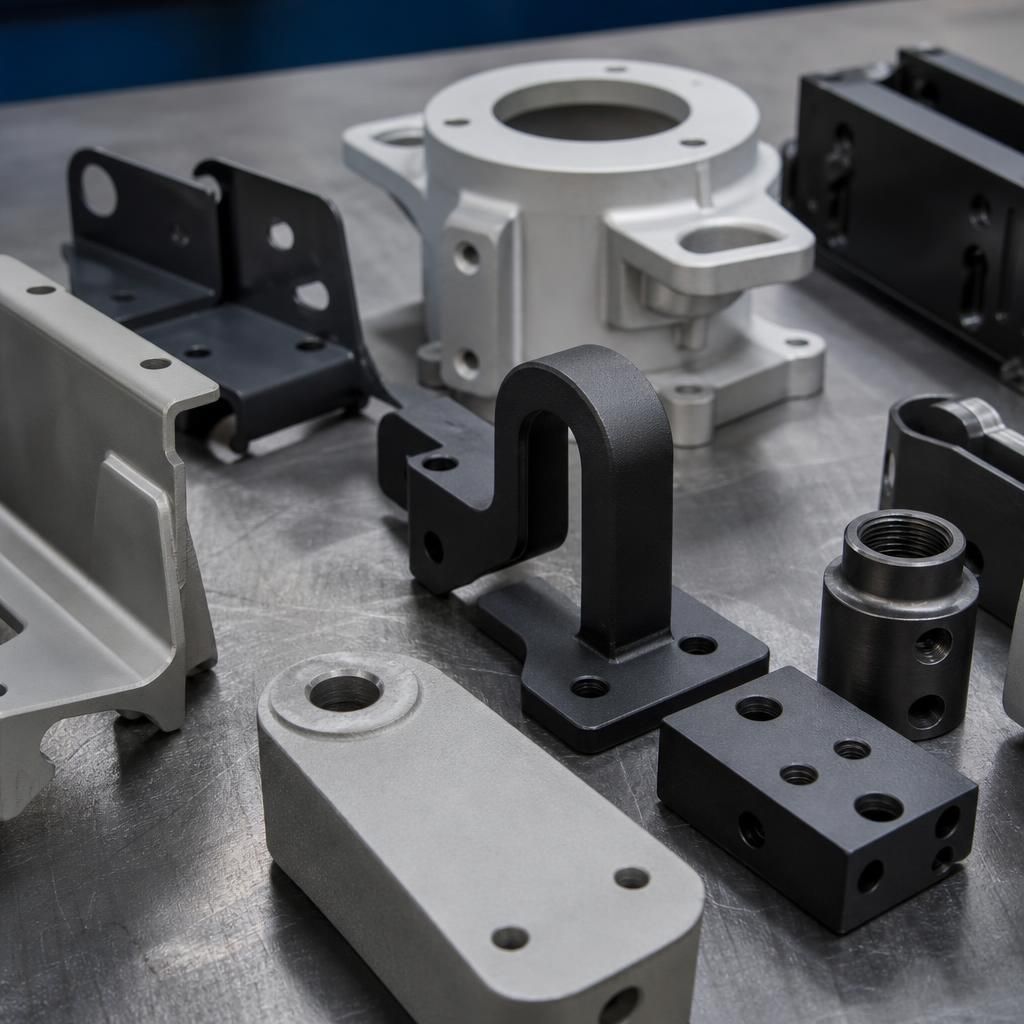
A further benefit of chromate powder coating pretreatment is that the conversion layer is very thin, so it can provide a prepared surface with limited impact on the underlying component dimensions. This can be relevant for metal parts with mating faces, holes, threads or other interfaces where excessive build-up could affect fit. The powder coating itself still adds film thickness, and any close-tolerance areas may require masking or specific process controls. These requirements should be confirmed during specification rather than assumed from the pretreatment alone.
Discuss chromate powder coating pretreatment for your components
Discuss your component material, operating environment and coating requirements with a powder coating specialist to establish whether chromate pretreatment is an appropriate option. A technical review can help define the preparation and finishing specification before production begins.