

What types of surfaces can be treated with sand blaster services?
Sand blaster services can treat many metal surfaces, including steel, iron and aluminium, as well as fabricated and cast components. The blasting method and abrasive are selected according to the substrate and its condition, allowing rust, scale, contaminants and existing coatings to be removed without unnecessarily damaging the underlying material.
Sand blaster services are primarily suitable for metal substrates and metal components, including carbon steel, stainless steel, aluminium, iron and many fabricated or cast parts. The process can prepare items with flat, curved, recessed or irregular surfaces, provided the abrasive, pressure and technique are matched to the material and the condition of the part.
Common examples include structural sections, brackets, frames, panels, housings, machinery components, vehicle parts, fabricated assemblies and castings. Blasting can reach edges, joints and surface profiles that are difficult to clean by hand, making it useful for components that need consistent preparation before powder coating or another protective finish.
- Mild and carbon steel: These substrates can generally tolerate more intensive preparation. Blasting is used to remove rust, mill scale, dirt and previous coatings, while creating a suitable surface profile for the next coating.
- Stainless steel: Blasting may be appropriate where contamination, corrosion products or an existing finish must be removed. The equipment and media must be controlled carefully to avoid transferring contaminants from other metals.
- Aluminium: Aluminium is relatively softer than steel, so less aggressive media and lower-impact settings may be required. Excessive blasting can alter dimensions, soften sharp detail or produce an uneven texture.
- Iron and cast components: Blasting can clean rust, residues and casting-related contamination from complex shapes. Particular care is needed around sharp edges, thin sections, holes and areas where abrasive could become trapped.
- Galvanised or previously coated metal: Existing layers can sometimes be removed or keyed, but the treatment depends on the coating type, its adhesion and the condition of the underlying substrate. The objective may be complete removal or controlled preparation rather than aggressive stripping.
The shape and construction of a component are as important as its material. Open sections and broad faces are generally straightforward to treat, whereas enclosed sections, narrow gaps, threaded holes and deep recesses require careful access planning. Components should be assessed for areas where abrasive may collect, become difficult to remove or interfere with later assembly.
Thin sheet, fine edges and precision-machined surfaces need particular attention. Heavy blasting can distort thin material, round edges or affect close-tolerance areas. Masking, altered blasting angles or a gentler abrasive may be used where certain faces, bores, threads or machined details must be protected.
Non-metal surfaces can sometimes be blasted, but suitability varies considerably. Masonry, concrete, timber, glass, ceramics and some plastics may be treated with specialised methods or less aggressive media, but they are not interchangeable with industrial metal preparation. The risk of etching, cracking, warping or removing too much material must be considered before work begins.
Surface condition also determines the appropriate treatment. Light contamination may need only a relatively controlled clean, while firmly bonded scale, corrosion or old coating may require a more intensive process. A coating applicator should also consider whether the prepared surface will be coated immediately, as clean blasted metal can be vulnerable to renewed contamination or corrosion if left exposed.
Before selecting a process, provide details of the substrate, dimensions, thickness, existing finish, areas requiring protection and the coating that will follow. This allows the blasting approach to be matched to the component rather than applying the same treatment to every surface. For industrial work, a trial or technical assessment may be appropriate where the material is thin, valuable, unusually shaped or subject to close dimensional tolerances.
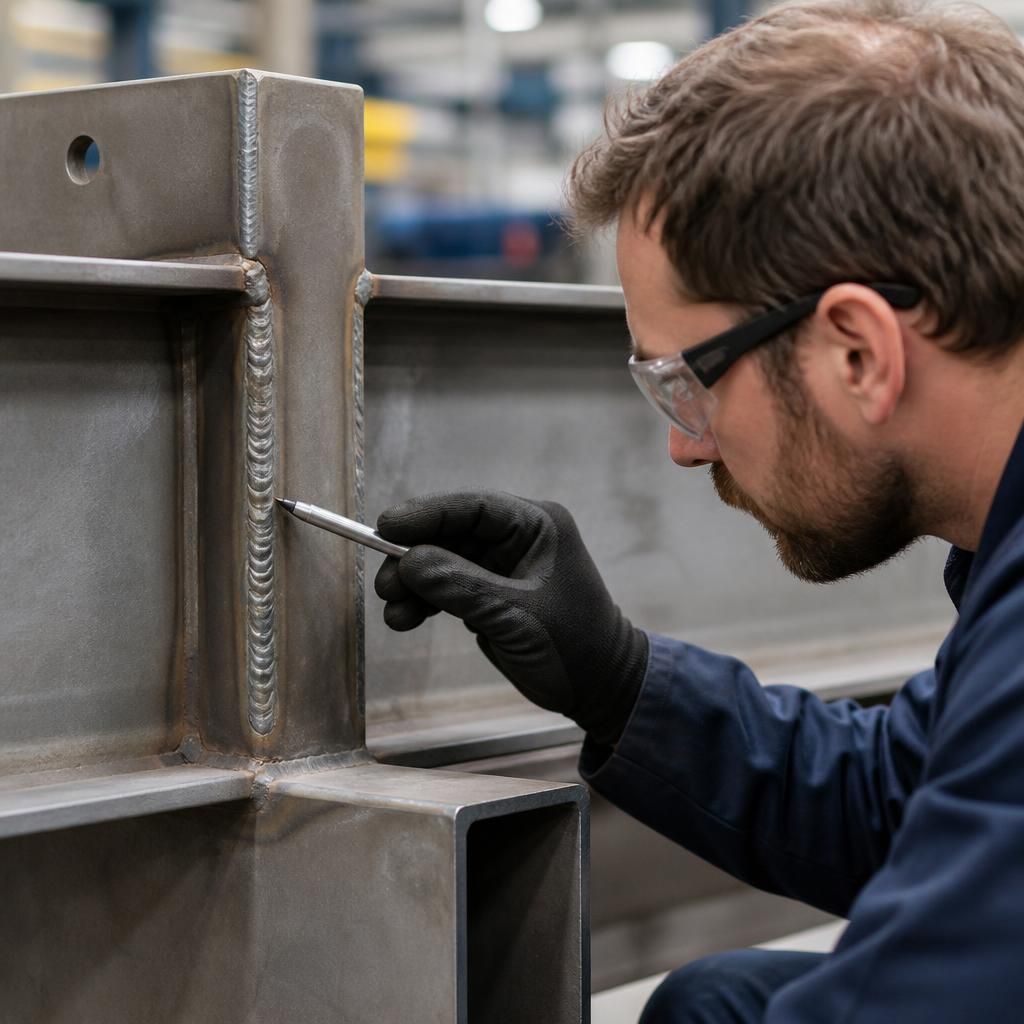
Welded and fabricated surfaces can be treated, but the weld area should be assessed separately from the surrounding parent metal. Weld spatter, slag, heat tint and fabrication residues may require targeted blasting, while excessive treatment around the joint can unnecessarily alter the weld profile or expose sharp transitions.
Blasting cleans the surface; it does not correct fabrication defects. Pitting, weld undercut, distortion and sharp edges may remain visible after preparation and should be addressed before the coating stage where necessary. This makes inspection of the treated component an important part of deciding whether it is ready for coating.