

What steps are involved in the metal pretreatment process before powder coating?
The metal pretreatment process usually involves removing grease, oil, dirt, rust and mill scale, followed by rinsing, chemical conversion treatment, drying and inspection. The prepared surface is then checked to confirm it is clean, dry and suitable for powder application.
The metal pretreatment process is a controlled sequence that prepares a component for powder application by establishing a clean, chemically suitable and physically sound surface. In practice, the work begins with assessing the substrate and finish requirements, then progresses through preparation, contamination removal, surface conditioning, drying, masking and final inspection before the part is released for coating.
- Review the component and coating specification. The metal type, component dimensions, fabrication method, intended use and required corrosion protection all influence the treatment route. Welded areas, folded sections, cast surfaces, threaded holes and enclosed profiles may need particular attention because they can retain contaminants or moisture. Any masking requirements, electrical contact points and areas that must remain uncoated should also be identified at this stage.
- Inspect the incoming metal. The component is checked for existing corrosion, mill scale, weld spatter, sharp edges, burrs, embedded dirt and residues from fabrication. Oil from machining, silicone, marking products and adhesive traces can interfere with adhesion, so unusual contamination or previous coatings may require a separate preparation method. Defects that will remain visible after powder coating should be addressed before the chemical stages begin.
- Prepare the physical surface. Abrasive preparation, brushing, sanding or other suitable mechanical methods may be used to remove loose scale, rust, spatter and surface irregularities. The objective is not simply to make the metal look clean; it is to produce a consistent surface profile and remove weak material that could later detach beneath the powder film. Welds and cut edges should be sound, while sharp projections may need to be reduced so that the finished coating can cover them reliably.
- Apply the appropriate cleaning treatment. Degreasing removes oils, grease and other organic residues that mechanical preparation alone cannot eliminate. The treatment must be compatible with the substrate and the level of contamination. Components with heavy fabrication residues may need more than one cleaning stage, while delicate or complex parts require careful control so that cleaning solution does not remain trapped in joints, folds or hollow sections.
- Condition the metal surface. Where required, the prepared substrate is given a conversion treatment to improve the bond between the metal and powder coating and to support corrosion protection. The chemistry and contact time depend on the substrate, because aluminium, galvanised steel and ferrous steel do not respond in the same way. A treatment suitable for one metal may be ineffective or damaging on another, so mixed-metal assemblies need particular consideration.
- Control the rinsing stages. Rinsing removes residues from preceding treatments and prevents salts or chemicals being carried into the coating stage. Water quality, coverage and drainage are important, especially around seams, recesses and overlapping sections. Poor drainage can leave concentrated residues behind even when the main surfaces appear satisfactory.
- Dry the component thoroughly. All moisture must be removed before powder is applied. Water retained in joints, threaded features, box sections or recessed areas can cause adhesion problems, surface defects or premature corrosion. Drying conditions need to suit the part’s shape and mass, and the component should be protected from handling contamination once it has been prepared.
- Mask areas that must remain free of powder. High-temperature masking materials, plugs or other suitable protective methods can be used for threads, bearing seats, machined faces, earth points and mating surfaces. Masking is normally planned alongside the preparation route so that it does not block drainage, prevent adequate treatment or introduce fibres and residue onto the cleaned metal.
- Carry out the final coating-readiness inspection. Before powder application, the component is examined for visible contamination, remaining corrosion, water marks, incomplete preparation, damage and incorrect masking. The surface should be dry and uniform, with no obvious residue or loose material. Critical work may also be checked against the agreed process requirements for surface condition, treatment coverage and handling.
- Release the component for powder coating. Once the preparation checks are satisfactory, the part is handled in a way that avoids fingerprints, oil transfer and contact with dirty supports. Correct racking is important because it provides a reliable electrical path for powder application while keeping the component stable during spraying and curing. The prepared item can then move into the coating process without compromising the work carried out during pretreatment.
The precise sequence varies with the substrate and component design. New fabricated steel, aluminium, galvanised material and parts with existing corrosion each present different preparation risks, while large batches also require consistent chemical control and repeatable handling. For that reason, the correct pretreatment route should be agreed from the component drawing, substrate and required service conditions rather than selected as a generic cleaning routine.
For manufacturers, fabricators, construction firms and automotive businesses, supplying accurate details about the metal, fabrication residues, previous treatment and areas requiring masking helps a powder-coating specialist select and control the appropriate pretreatment process. Collection and delivery arrangements can also be considered for batch or larger components, while the technical priority remains a clean, dry and suitably conditioned surface before powder application.
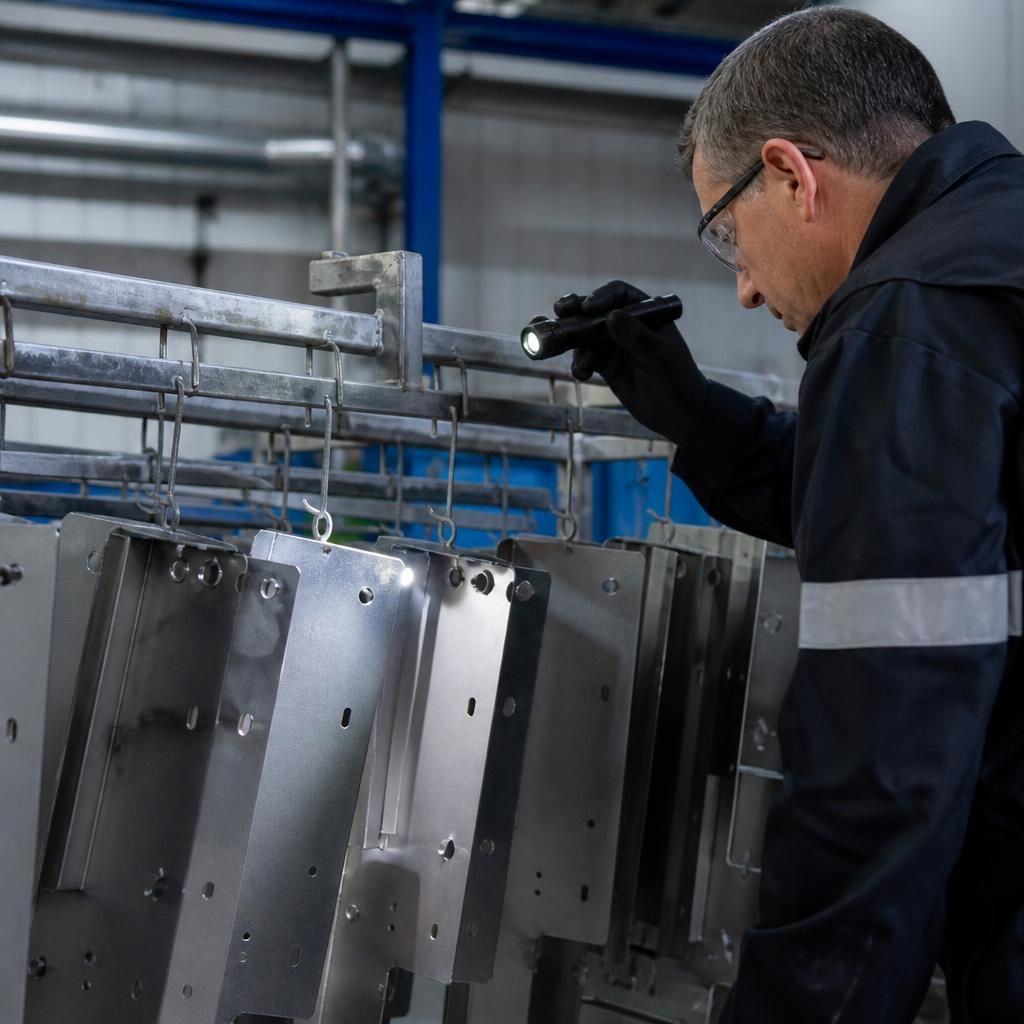
Effective pretreatment depends on controlling each stage, not simply completing a set of cleaning operations. Cleaning solution strength, temperature, contact time, rinsing performance and drying conditions should be kept within the agreed process requirements for the substrate and component design. These controls are particularly important on batch work, where small changes between loads can produce inconsistent surface preparation.
Process records and visual checks help identify variation before powder is applied. If a component has complex geometry, unusual contamination or a mixed-metal construction, the preparation route may need technical review rather than being treated as a standard cycle. This prevents an apparently clean surface from progressing to coating when its chemical condition or drainage performance has not been adequately confirmed.