

What is the process for preparing metal surfaces before applying a textured black powder coat?
Preparing metal for a textured black powder coat involves inspecting the part, removing oil, grease, rust and other contaminants, and creating a clean, suitably keyed surface through methods such as degreasing and abrasive blasting. The surface is then dried and checked, with masking or a compatible primer applied where the coating specification requires it, before the textured black powder is sprayed and cured.
Preparing metal for a textured black powder coat is a controlled surface-treatment process designed to give the powder a clean, stable and suitably receptive base. The preparation must account for the metal type, the condition of the component, its intended environment and the coating specification; a method suitable for mild steel may not be appropriate for aluminium, galvanised steel or cast metal.
1. Confirm the substrate and coating requirements
Before treatment begins, the coater should establish what the component is made from and whether it has previously been painted, plated, galvanised or treated with another finish. The required film build, appearance, corrosion resistance and service conditions influence the preparation system. Components exposed outdoors, to moisture, road contaminants or industrial chemicals generally require more controlled pretreatment than parts used in a clean, dry indoor environment.
Drawings should also identify areas that must remain uncoated, threaded holes, bearing faces, electrical contact points and close-fitting interfaces. These details affect masking, hanging and the amount of preparation that can be carried out without changing critical dimensions.
2. Deal with fabrication defects before coating
Powder coating reproduces the underlying shape of the metal, so it will not conceal poor fabrication. Weld spatter, sharp projections, laminations, deep scratches and rough cut edges should be removed or corrected where the specification permits. Welds may need to be dressed, and sharp external edges may require suitable rounding because powder tends to pull away from very acute edges during application.
Any pinholes, cavities or contamination trapped in welds can affect the final finish. Fabricated assemblies should therefore be checked for incomplete welds, inaccessible crevices and areas where water or pretreatment chemicals could collect. If a component cannot be adequately treated internally, the design or drainage arrangement may need to be reviewed before coating.
3. Remove existing finishes and corrosion
Previously coated parts need a preparation method that removes the old finish without damaging the underlying substrate. Mechanical stripping, chemical stripping or abrasive treatment may be selected according to the coating type, metal and component geometry. Loose corrosion is not a suitable base for powder, while firmly bonded oxide or mill scale may also need removal to expose sound metal.
Galvanised surfaces require particular care because the zinc layer must be prepared without unnecessarily removing its protective function. Aluminium can develop an oxide layer quickly after treatment, and castings may contain pores or residues that become apparent during heating. These substrates should be handled using processes suited to their characteristics rather than treated identically to ordinary steel.
4. Apply the appropriate chemical pretreatment
Where the specification calls for it, a chemical conversion treatment is applied after the surface has been prepared. This can improve adhesion and provide an additional barrier between the substrate and the powder film. The chemistry depends on the metal: systems for steel, zinc-coated steel and aluminium are not interchangeable.
The treatment must be properly controlled, rinsed and allowed to dry without leaving residues. Inadequate rinsing, excessive chemical carry-over or contamination from handling can interfere with adhesion and may lead to blistering or corrosion beneath the coating. The selected pretreatment should also reflect any restrictions on the use of particular chemical systems.
5. Manage porous and outgassing materials
Cast components, porous welds and some galvanised parts can release trapped air, moisture or process residues when heated during powder curing. This is known as outgassing and may produce pinholes, bubbles or small surface defects in the textured finish. Depending on the component, preparation may include controlled preheating, a suitable outgassing stage, the use of an appropriate primer or adjustments to the coating process.
These measures are not automatically suitable for every part. Heating can affect dimensions, temper, seals or assembled components, so the treatment has to be considered alongside the engineering requirements.
6. Protect areas that must remain functional
Masking is used for threads, machined faces, holes, earth points, moving interfaces and other areas where powder would affect fit or electrical continuity. Plugs, caps and high-temperature masking materials must be selected to withstand the preparation and curing stages. Masking should be planned before the part is processed, since inaccessible areas can be difficult to protect once treatment has started.
Hanging points also require consideration. The component must make reliable electrical contact with the coating equipment, while the contact mark should be placed where it will not affect assembly or appearance. Heavy or awkward parts may need additional support to prevent movement and to allow all required surfaces to be treated consistently.
7. Control handling after preparation
Once the substrate has been treated, it should only be handled with clean gloves or suitable equipment. Contact with bare hands can transfer oils and salts back onto the surface. Prepared parts should be kept away from dust, workshop debris, condensation and unprotected storage conditions until the powder is applied.
The final pre-coating check should confirm that the surface is visually uniform, free from visible residue and suitable for the specified textured black system. Any remaining defect, contamination or masking error is easier to correct at this stage than after application and curing. For specialist, repaired or unfamiliar substrates, a test piece or sample area can help confirm that the preparation and coating system are compatible before a full batch is processed.
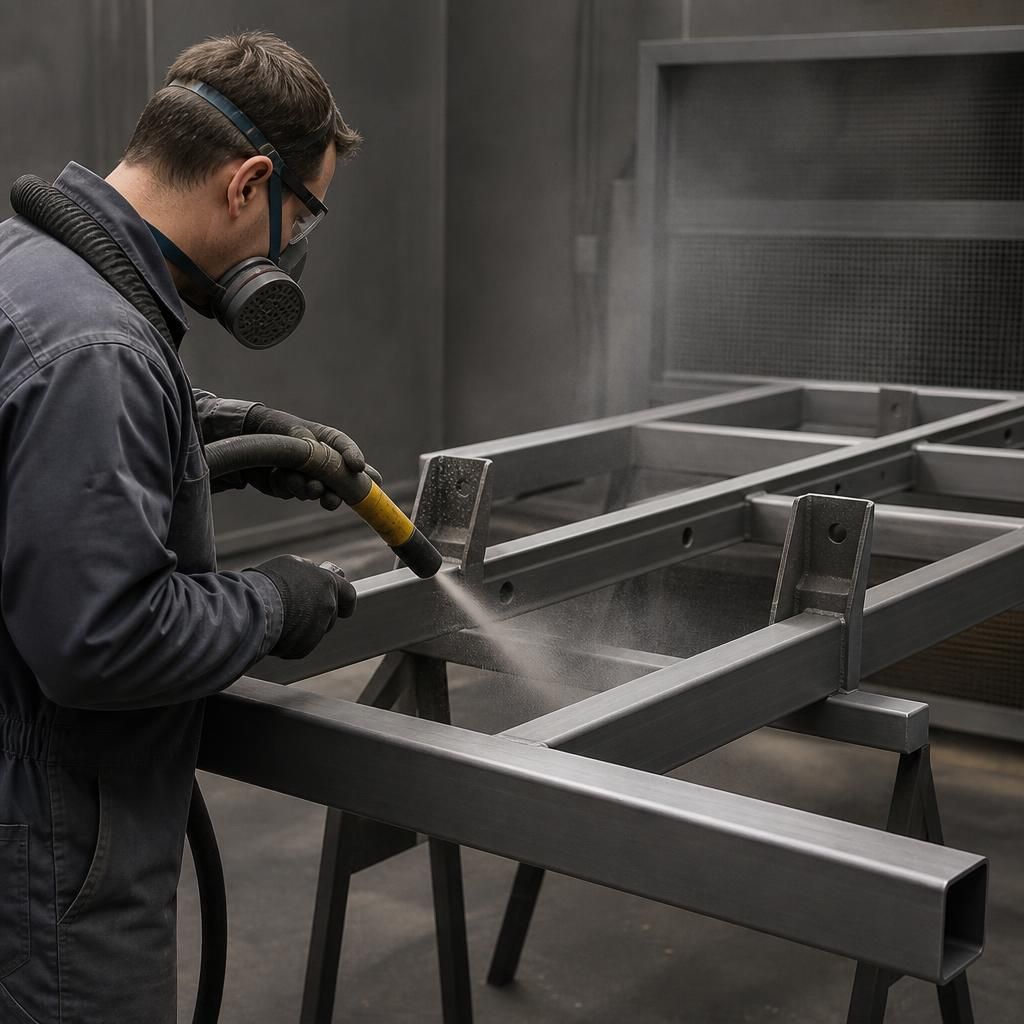
Abrasive preparation must create the right surface profile for the textured black powder system, not simply remove visible rust or old coating. A surface that is too smooth may provide insufficient mechanical key for adhesion, while an excessively rough profile can remain visible through the finish and affect the apparent texture or film coverage.
The preparation method should therefore be matched to the substrate and component specification. After blasting, the surface profile and cleanliness should be checked against the coating requirements before the part moves to application. This verification helps identify inconsistent preparation across a batch and allows corrective work before powder is applied.