

What are the benefits of using electrostatic powder coating compared to traditional wet paint?
Compared with traditional wet paint, electrostatic powder coating typically produces a tougher, more uniform finish with greater resistance to wear and corrosion. It also reduces solvent use and overspray waste, while the heat-curing process can provide a faster route to a fully hardened coating.
Electrostatic powder coating is a dry finishing process in which electrically charged powder is attracted to an earthed metal component before being heat-cured. Compared with traditional wet paint, its main advantages are more controlled application, consistent film build, simpler handling after curing and a coating system well suited to repeatable industrial production.
More controlled application
The electrostatic charge helps the powder adhere to the component before curing, rather than relying solely on liquid paint to remain on the surface. This can make the process easier to control on brackets, frames, panels and other fabricated parts. The operator can manage gun settings, distance, movement and powder delivery to suit the component, helping produce a repeatable coating specification across a batch.
Powder can also be applied at a relatively consistent thickness without the same reliance on the evaporation of liquid carriers. With wet paint, application conditions such as viscosity, solvent balance, temperature and humidity can significantly affect how the coating flows and levels. Powder coating removes much of this liquid-management requirement from the application stage.
Reliable film build and edge coverage
A suitable powder system can provide a substantial protective film in a single application cycle. This is useful where the component requires a defined coating thickness or where additional build is needed around exposed edges and working surfaces. The correct specification remains important: excessive powder, sharp edges, contamination or poor grounding can still cause defects, so preparation and process control are essential.
Wet paint may require several coats to achieve the required build, with drying or flash-off stages between applications. Each additional stage introduces another opportunity for dust, handling marks, uneven overlap or variation between operators. Powder coating can reduce the number of application stages for suitable metal parts and make the production sequence easier to standardise.
Consistent appearance across production batches
Once the powder, equipment settings and curing conditions have been established, the same process can be repeated across multiple components. This supports consistent colour, texture and gloss where parts are produced in batches or need to match an existing assembly. Powder is available in a broad range of decorative and functional finishes, allowing the specification to reflect both appearance and service requirements.
Consistency depends on more than the coating material. Parts should be correctly prepared, electrically grounded and positioned appropriately, while the oven must achieve the required metal temperature and cure schedule. These controls are particularly important when coating components from different fabricators or when a project includes a mixture of sizes and shapes.
Cleaner handling and workplace conditions
Powder is supplied as a dry material, so the process does not involve the same wet storage, mixing and viscosity adjustments associated with liquid paint. Finished components are not carrying a wet surface that can run, sag or collect airborne contamination while being moved between coats. This can simplify internal movement and reduce the risk of damage caused by handling at an intermediate stage.
For businesses managing a regular flow of metalwork, the dry process can also make coating specifications easier to document. The chosen powder, preparation method, application settings and cure requirements can be recorded as part of a repeatable production procedure.
Good suitability for industrial metalwork
Powder coating is particularly effective for conductive metal substrates that can tolerate the required curing temperature. It is commonly considered for fabricated steel, aluminium and other compatible components used in manufacturing, construction, automotive and general engineering applications. The finish can be selected according to factors such as expected handling, exposure, appearance, temperature and contact with chemicals.
It is not automatically the best option for every part. Heat-sensitive materials, large assemblies that cannot be placed in an oven, components requiring very thin films or work that must be coated on site may be better suited to a liquid system. Wet paint can also be preferable where a complex multi-layer system, precise on-site colour adjustment or a particular solvent-borne formulation is required.
What determines the better choice?
- Substrate: powder is primarily suited to conductive metal parts that can be properly earthed.
- Component size: the part must fit the available application and curing equipment.
- Required finish: colour, gloss, texture, film thickness and visual uniformity should be defined before selection.
- Service conditions: outdoor exposure, abrasion, chemicals, moisture and temperature should guide the powder formulation.
- Production pattern: repeat batches often benefit from a controlled powder process, while one-off or on-site work may favour wet paint.
- Preparation standard: cleaning, degreasing, blasting or chemical pre-treatment has a direct effect on coating performance, regardless of the application method.
In practical terms, electrostatic powder coating offers a controlled and repeatable route for finishing compatible metal components, particularly where batch consistency, defined film build and straightforward industrial handling matter. Traditional wet paint remains useful in situations involving heat-sensitive substrates, complex site work or specialist thin-film requirements, so the correct comparison depends on the component and its intended environment rather than on the coating method alone.
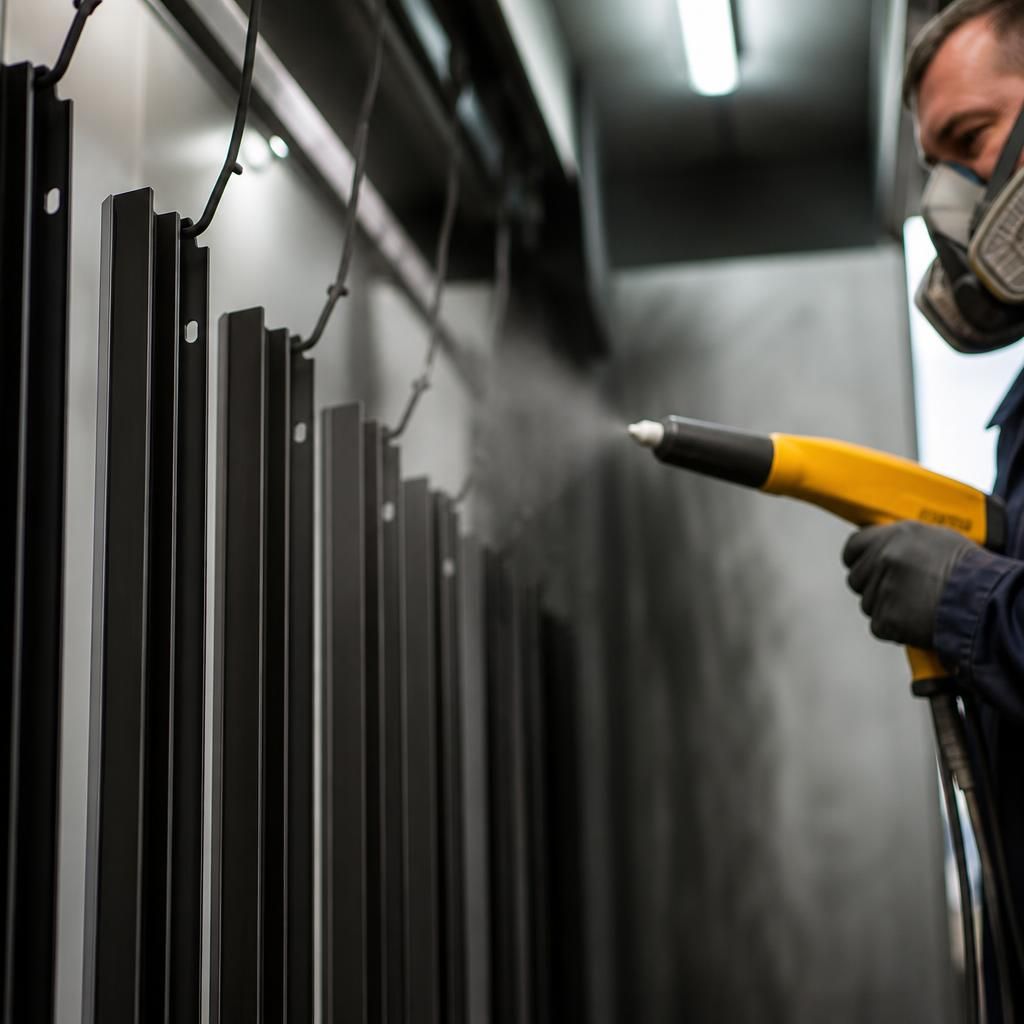
A key advantage of electrostatic powder coating is that the finish can be specified for a functional purpose rather than chosen only for colour or gloss. Specialist options, including nylon and protective coatings, can be considered where a component needs a coating specification suited to its particular use.
This makes powder coating relevant to more than visible external surfaces. The appropriate formulation can be assessed against the component’s working conditions, contact with other parts and required level of protection, helping manufacturers and fabricators select a finish based on performance requirements as well as appearance.
Discuss electrostatic powder coating for your application
Discuss your component, substrate and service conditions with Powder-coatings.co.uk to assess whether electrostatic powder coating is a suitable alternative to wet paint. You can also request a quote for your requirements, including collection and delivery across the Midlands and surrounding areas.