

What preparations are needed before powder coating chassis and frames?
Before powder coating, chassis and frames should be stripped of existing coatings, rust, oil and other contaminants, then inspected for damage and repaired where necessary. Any areas that must remain uncoated should be identified for masking, and the component should be free from fittings or materials that cannot withstand the preparation and curing process.
Preparation for powder coating chassis and frames involves more than making the metal clean. The component must be assessed, documented and arranged so that the coating system can reach the required surfaces, drain correctly during processing and cure without compromising the part or its function.
Confirm the coating requirements first. Before work begins, provide the coater with the component’s intended use, substrate material, service environment and any specified colour, gloss or performance requirement. Chassis used outdoors, in exposed industrial settings or around road contaminants may require a different coating specification from an indoor support frame. Drawings, photographs and notes should identify functional faces, mating surfaces, earth points, threaded connections and areas where dimensional build-up is restricted.
Review the design for pretreatment and curing. Hollow sections, boxed rails and fabricated assemblies need suitable drainage and venting. Any trapped water, cleaning solution or air can interfere with preparation, while sealed cavities may present a pressure risk when heated. Drain holes and vent holes should be positioned with the component’s final orientation in mind. They should not be added without checking structural, sealing and corrosion-control requirements, particularly on load-bearing chassis.
Complete fabrication work before coating. Welding, grinding, drilling and modification should be finished before the frame enters the coating process. Weld spatter, sharp burrs, excessive weld seams and rough transitions can affect the appearance and may create weak points in the finished film. Corners and edges should be reviewed because powder tends to form a thinner film on sharp edges. Where appropriate, edges can be softened during fabrication or finishing, provided this does not alter critical dimensions or strength.
Check the metal and previous treatments. Different substrates require different preparation methods. Steel, galvanised steel, aluminium and cast components can react differently during cleaning, blasting and pretreatment. Galvanised or previously treated surfaces may need particular attention to adhesion and outgassing. Porous castings and heavily welded assemblies can release trapped gases during curing, which may cause pinholes or surface defects. These risks should be discussed before processing so that the preparation method and coating specification are suitable for the component.
Prepare interfaces and tolerances. Powder coating adds a measurable layer to the surface, so close-fitting parts should be checked before treatment. Masking may be needed for bearing seats, locating faces, electrical contact points, earth connections, hydraulic or fluid interfaces and accurately machined bores. Threads should be protected where coating would affect assembly, but temporary plugs or caps must be suitable for the preparation and curing conditions. The masking plan should distinguish between surfaces that need complete protection and those where a controlled coating edge is acceptable.
Plan handling and suspension. Large frames require secure lifting points and a method of supporting the part without damaging prepared surfaces. The suspension position can affect access, coating coverage, drainage and the visibility of the final finish. Contact points used to hang the component may leave small uncoated marks or require a defined touch-up approach. Agreeing these points in advance is especially important where the frame has a visible finish or where electrical continuity is required.
Supply useful technical information. The coater should be told about:
- the base material and any mixed-metal construction;
- the overall dimensions, weight and lifting limitations;
- areas requiring a particular finish or appearance;
- machined, threaded or close-tolerance surfaces;
- cavities, inserts, bearings, seals or heat-sensitive components;
- access restrictions affecting blasting, spraying or inspection; and
- any dimensional checks or assembly tests required after coating.
Photographs and marked-up drawings are useful where a chassis has concealed faces, complex brackets or several different interface requirements. They help establish what can be coated, what must remain clear and how the part should be positioned throughout the process.
Finally, the finished component should be transported and stored in a way that avoids new contamination or impact damage before coating. Once preparation requirements have been agreed, the chassis or frame can be processed against a defined specification rather than relying on assumptions about its construction or end use. This reduces the risk of unsuitable masking, inaccessible surfaces, coating interference with assembly and avoidable rework.
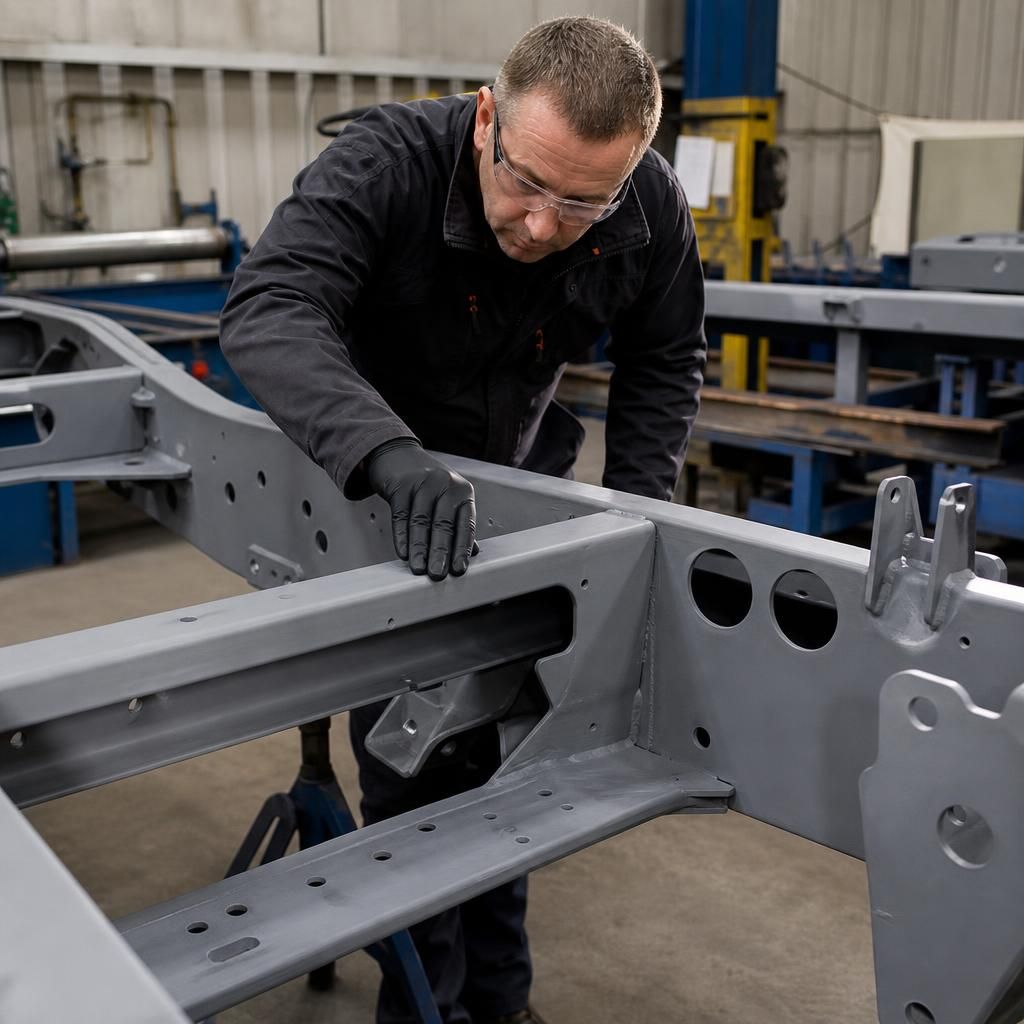
A final inspection after stripping and pretreatment confirms whether the chassis or frame is genuinely ready for powder coating. The surface should be checked for remaining oil, corrosion, loose scale, cleaning residue and areas where the preparation has not reached fully. Welds and repaired sections also need examination for pinholes, contamination or other defects that could become visible through the powder film.
This inspection is the point to resolve problems rather than conceal them with coating. Any remaining issue should be recorded against the relevant area of the component, with the required remedial work agreed before powder application. For complex frames, marked-up photographs or an inspection record can help confirm that concealed faces, brackets and difficult-to-access sections have been assessed consistently.