

What is the process of powder coating on galvanised steel and how does it enhance material properties?
Powder coating galvanised steel involves cleaning and preparing the zinc surface, applying electrically charged powder, and curing it under controlled heat so the particles melt and form a continuous film. The resulting coating adds a durable decorative and protective layer, working with the galvanised zinc to improve resistance to corrosion, abrasion, weathering and surface wear.
Powder coating on galvanised steel is a duplex protection system: the galvanised zinc layer provides sacrificial corrosion protection, while the powder coating forms a sealed, coloured surface film above it. The process is successful when the zinc coating is sound, contaminants and corrosion products are removed without unnecessarily damaging the zinc, and the powder system is compatible with the prepared surface.
1. Inspection of the galvanised component
Before treatment, the component is inspected for oil, grease, storage stains, white rust, loose zinc, sharp projections, weld contamination and areas where the galvanising is thin or damaged. The condition of the zinc matters because powder coating cannot reliably conceal loose material or compensate for poor galvanising. Drainage holes, enclosed sections and contact points are also considered. If moisture or treatment residues can become trapped, they may later cause blistering, staining or corrosion beneath the coating.
The design of the part can affect the result. Closed sections need suitable venting and drainage, while sharp edges may require attention because powder tends to form a thinner film over them. Welds, cut edges and handling damage may need local preparation or a compatible repair treatment before the powder system is applied.
2. Preparation of the zinc surface
Galvanised steel usually needs more controlled preparation than untreated mild steel. The aim is to remove contamination and lightly condition the surface while preserving the protective zinc layer. Depending on the condition of the component and the specified coating system, preparation may involve a suitable chemical treatment, mechanical abrasion, or a combination of methods.
Abrasive preparation is normally controlled carefully. Aggressive blasting can remove too much zinc, create an uneven profile or expose the underlying steel. Light sweep blasting with an appropriate abrasive can provide a key for the powder film without treating the galvanising as though it were bare steel. Chemical pretreatment may improve adhesion and help control surface reactions, but the process must be selected for the particular galvanising condition and thoroughly managed before coating.
Any salts, dust, grease or loose corrosion products left on the surface can interfere with adhesion. After preparation, the part must therefore be clean and sufficiently dry. Handling also needs control at this stage, as fingerprints and workshop contamination can create localised coating defects.
3. Managing outgassing and zinc-related defects
Galvanised coatings and zinc-rich surfaces can contain absorbed moisture or microscopic porosity. When the part is heated during powder coating, gases may escape through the softening film. This can produce pinholes, craters, blisters or small areas of disrupted gloss, commonly described as outgassing.
Outgassing risk can be reduced through appropriate preheating or a controlled degassing stage, allowing volatile material to escape before the final film is formed. A powder formulation designed for sensitive or galvanised substrates may also be specified. The exact approach depends on the zinc coating, component geometry, powder chemistry and required appearance. Test pieces or a representative first-off component are useful where the substrate condition varies or a highly decorative finish is required.
4. Powder deposition and curing
Once prepared, the component is connected to earth and powder is deposited so that it is attracted to the metal surface. Coverage must be controlled around recesses, corners, edges and complex fabrications, where the electrical field can produce thin areas or uneven deposition. Masking may be used to keep powder away from threads, bearing seats, mating faces, earthing points and other functional surfaces.
The coated component then enters a curing process in which the powder melts, flows and chemically cross-links into a continuous film. Cure is governed by the temperature reached by the metal and the time required by the selected powder, rather than simply by the displayed oven temperature. Insufficient cure can reduce hardness, adhesion and chemical resistance; excessive heat can affect colour, gloss or the substrate. Large or heavy galvanised fabrications may need particular attention because their temperature rises at a different rate from thinner sections.
5. Inspection after curing
Quality checks commonly include visual inspection for pinholes, runs, bare patches, inclusions, blistering and inconsistent appearance. Depending on the specification, the finished coating may also be assessed for film thickness, adhesion and cure. Checks are especially important at edges, welds, recesses and repaired areas, as these locations are more likely to show incomplete coverage or preparation-related failure.
A powder coating does not restore zinc that has been removed or replace a damaged galvanised area automatically. If the coating is later cut, drilled or heavily abraded, the exposed area may need a compatible repair system. This preserves the continuity of the duplex protection rather than relying on the powder film to cover a defect indefinitely.
How the process enhances material properties
- Improved barrier protection: the powder film restricts the access of water, oxygen, salts and other contaminants to the zinc surface.
- Combined corrosion protection: the powder layer acts as a barrier while the zinc can provide sacrificial protection at small areas of damage, subject to the condition and continuity of both coatings.
- Greater resistance to surface wear: a correctly cured film can improve resistance to handling marks, abrasion and general service wear compared with exposed galvanised steel alone.
- Better weathering performance: the selected powder can provide resistance to sunlight, rain and changing outdoor conditions, with colour and gloss retention depending on the formulation and exposure.
- Controlled appearance: powder allows the surface to be specified by colour, gloss and texture while retaining the underlying corrosion protection of the zinc.
- Easier cleaning: a continuous, suitably selected film can provide a more uniform surface for removing ordinary dirt and deposits.
The process does not materially increase the strength or load-bearing capacity of the steel. Its principal contribution is to the surface: corrosion resistance, appearance, durability and resistance to environmental and mechanical attack. The final performance depends on the quality of the galvanising, preparation, powder selection, curing and the conditions in which the component is used.
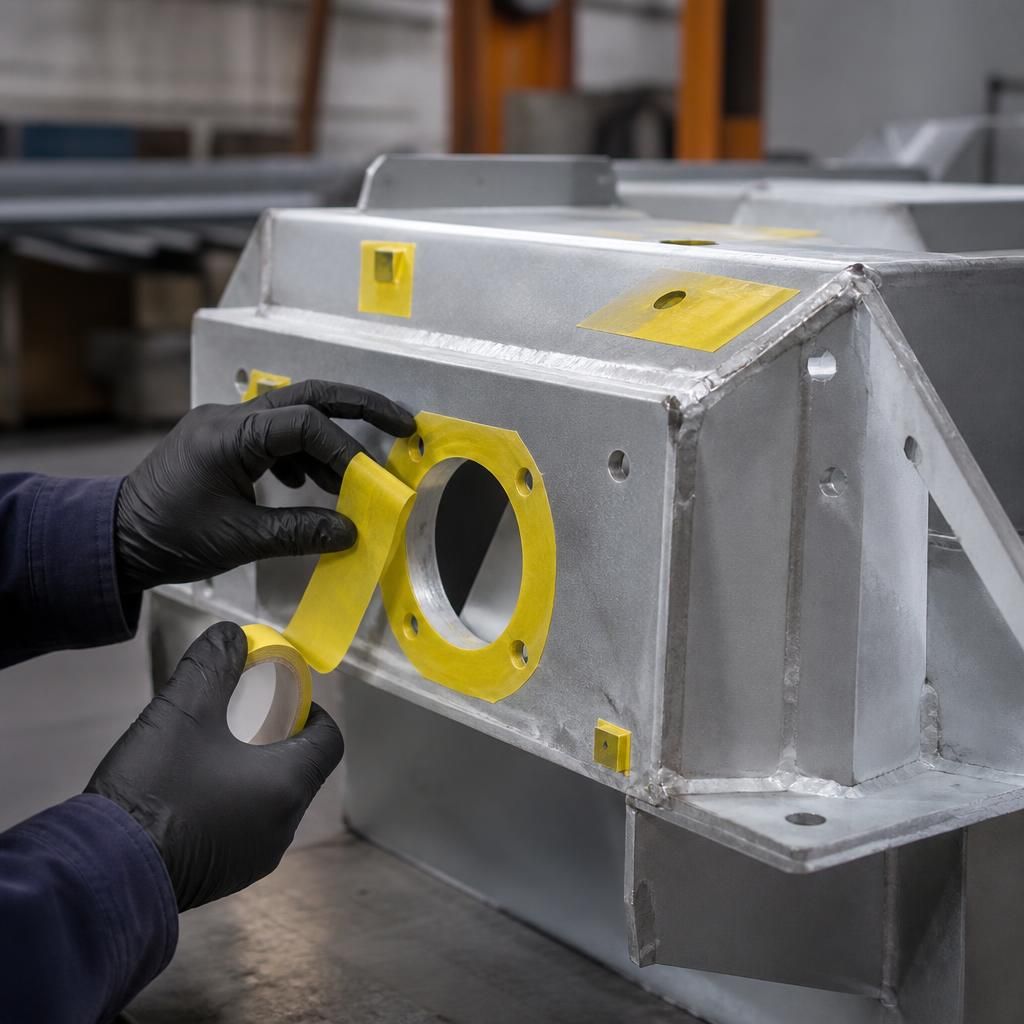
Powder coating enhances the exposed surface of galvanised steel, but functional interfaces must be protected during application. Threads, bores, bearing seats and mating faces may need masking because the cured film can alter clearances or prevent accurate assembly. Drainage and venting features must also remain open so water cannot become trapped against the coating system. This allows the finished component to gain improved surface durability and appearance without compromising its fit, movement or intended function.
Discuss your galvanised steel coating requirements
If you are specifying a powder coating system for a galvanised component, discuss its substrate condition, geometry, service environment and required finish with the team at Powder-coatings.co.uk. This will help identify suitable preparation, powder and curing requirements before production begins.