

What types of finishes are available for powder-coated steel?
Powder-coated steel is available in smooth, textured, wrinkle and metallic finishes, with sheen levels ranging from high gloss through satin to matt. Colour and protective powder options can then be selected to suit the component’s appearance, handling requirements and exposure conditions.
Powder-coated steel finishes are defined by more than colour. The final specification can include the coating chemistry, surface appearance, film build, layer structure and resistance required in service. A suitable finish therefore depends on whether the steel component is primarily exposed to sunlight, moisture, chemicals, abrasion, impact, heat or frequent handling.
Common coating chemistries
- Polyester powder: commonly selected for steel used outdoors because it can provide good resistance to weathering and ultraviolet exposure. It is available in a broad range of colours and surface effects.
- Epoxy powder: valued for adhesion and resistance to many chemicals. It is often considered for internal components or as part of a corrosion-protection system, but prolonged outdoor exposure can affect its appearance.
- Epoxy-polyester hybrid: combines properties of both resin types and may be suitable for indoor steelwork where chemical resistance and a consistent decorative finish are required.
- Polyurethane powder: can be specified where appearance, weathering resistance and surface durability need to be balanced, subject to the exact product formulation and curing conditions.
The resin is only one part of the specification. Surface preparation, pretreatment, application method and curing have a direct effect on adhesion and service performance. Oil, rust, mill scale and other contaminants must be removed before coating, while the steel profile and any weld areas should be suitable for consistent coverage.
Single-layer and multi-layer systems
A single powder layer may be appropriate where the steel has moderate exposure and the required performance is straightforward. More demanding applications can use a primer and topcoat system. The primer is selected to improve corrosion protection and adhesion, while the topcoat supplies the specified colour and surface properties. Multi-layer systems are particularly relevant where steel will face moisture, salts, industrial contaminants or damage during handling.
Specialist protective powders can also be used where ordinary decorative coating is not sufficient. Nylon coatings, for example, may be considered for components that need resistance to abrasion, impact, friction or repeated contact. Their suitability depends on the component’s geometry, operating environment and the required coating thickness, so they should be assessed as an engineering finish rather than chosen solely for appearance.
Colour and visual effects
Colour is normally selected using an agreed industry colour reference or an approved sample. The result can vary slightly with the substrate, coating batch, film thickness, curing conditions and viewing light. For components that will be produced in batches or assembled alongside existing parts, an approved physical sample can help establish the expected appearance.
Additional decorative options may include clear protective layers, mica or pearlescent effects, and finishes designed to imitate materials such as fine metallic surfaces. Metallic powders need particular control during application because changes in spray settings, orientation or film build can affect the visual consistency between parts. Large panels and components viewed together should therefore be specified and processed as a coordinated batch where consistent appearance is important.
Functional surface characteristics
The coating can be selected for practical properties as well as appearance. Depending on the product, these may include:
- greater resistance to scratching, abrasion or impact;
- reduced friction for sliding or repeatedly handled components;
- resistance to oils, cleaning agents or selected chemicals;
- electrical insulation where the coating system is suitable for that purpose;
- additional corrosion protection through a primer or specialist undercoat; and
- an easily identifiable colour for component coding, safety marking or equipment classification.
No finish provides identical protection in every environment. A coating intended for an indoor machine guard may not be suitable for a steel component exposed to continual condensation, coastal salts, aggressive chemicals or elevated temperatures. The operating conditions should be stated before the coating is selected, along with any requirements for masking, earthing points, threaded holes, mating surfaces and dimensional tolerances.
For industrial steelwork, the most useful specification usually records the resin type, colour reference, surface appearance, coating thickness range, number of layers, pretreatment requirements and intended exposure conditions. Providing drawings or representative samples also helps identify areas where powder may accumulate, fail to cover properly or interfere with assembly. A specialist powder coater can then recommend a finish that balances visual requirements with the component’s actual service demands.
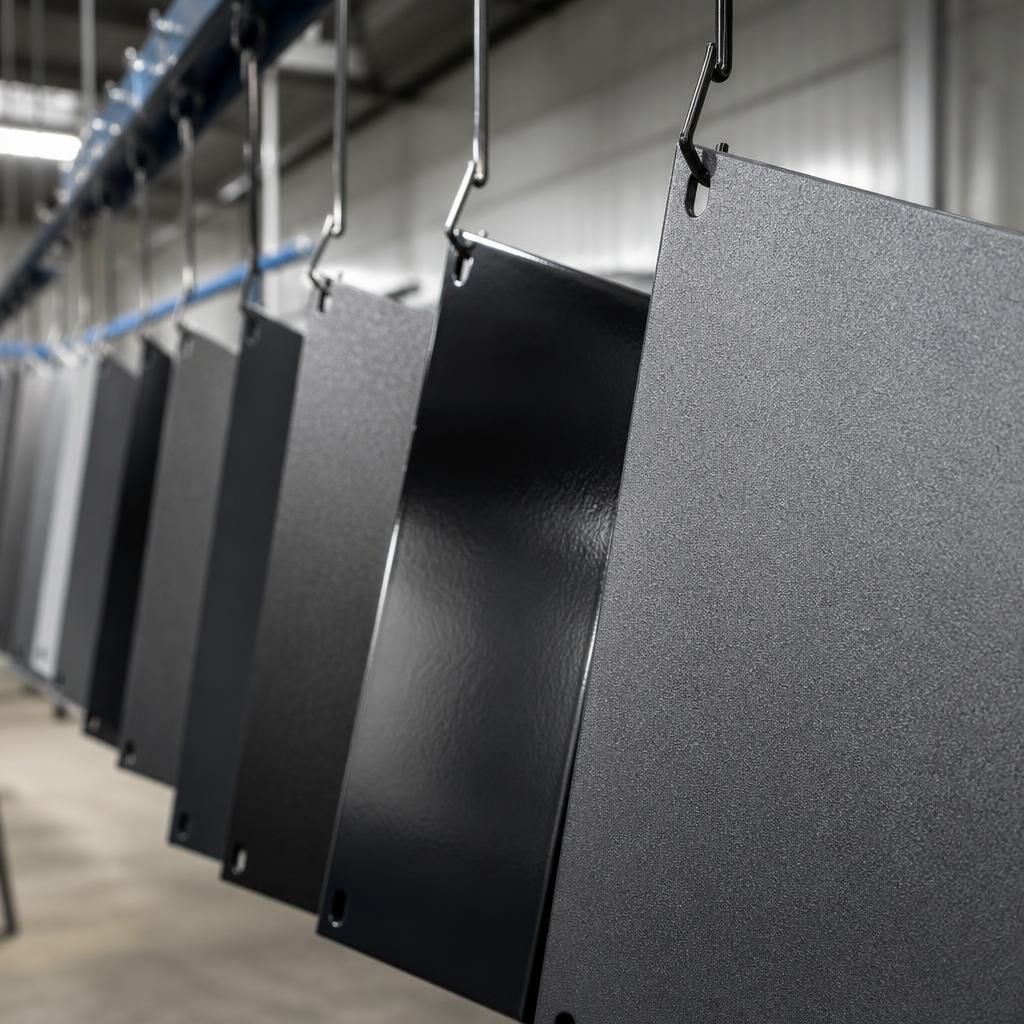
Surface texture affects how powder-coated steel looks and how it is handled in service. Smooth finishes are generally easier to wipe clean and inspect, making them suitable where visible contamination or surface condition must be monitored. Textured and wrinkle finishes create a less reflective surface that can reduce the prominence of minor visual variation, but they do not compensate for poor preparation or unsuitable steelwork.
Texture should also be considered around joints, handles, access panels and frequently touched areas. A finish with the right balance of appearance, cleanability and surface feel can be more practical than selecting a colour or sheen alone. The chosen texture should be recorded alongside the colour reference so replacement or batch-produced parts can be assessed against the same specification.