

What are the key benefits of choosing metal shot blasting over other surface preparation methods?
Metal shot blasting uses propelled abrasive shot to remove rust, mill scale, old coatings and other contaminants from metal surfaces efficiently and consistently. Compared with less controlled preparation methods, it can produce a more uniform surface profile, helping subsequent coatings achieve reliable adhesion while reducing manual preparation of suitable components.
Metal shot blasting can offer a more controllable, repeatable and production-suitable form of metal surface preparation than hand abrasion, wire brushing, chemical stripping or less precisely controlled cleaning methods. Its main advantages are the ability to process suitable components efficiently, adjust the treatment to the substrate and produce a surface condition that can be assessed before the next manufacturing stage.
Greater control over the treatment
Shot blasting parameters can be selected to suit the component, including the type and size of shot, blast pressure, angle, distance and exposure time. This allows the operator to vary the intensity of the treatment rather than applying the same level of abrasion to every part. Correct control is particularly important where the component has machined faces, edges, apertures or areas that require protection.
By comparison, manual methods depend heavily on the operator’s access, technique and the time available for each part. Chemical preparation introduces different considerations, including chemical compatibility, handling, rinsing and the management of residues. Shot blasting avoids the need to apply a chemical stripping agent to the metal surface, although the process still requires suitable extraction, housekeeping and waste controls.
More suitable for production and batch work
Shot blasting is well suited to repeat orders and batches of components because the process can be defined and monitored against an agreed treatment specification. Multiple parts can be prepared using the same general operating parameters, subject to their material, geometry and condition. This is more practical for many industrial applications than preparing each item individually by hand.
It can also be incorporated into a wider finishing sequence. For example, components may be inspected, masked where necessary, blasted, checked for the required condition and then passed to a coating or fabrication stage. This makes the preparation step easier to plan within a manufacturing workflow, provided that parts are handled correctly after blasting to prevent contamination or corrosion before the next process.
Access to difficult surface areas
The abrasive action can reach many recessed, irregular or detailed areas that are difficult to treat evenly with a hand tool. This is useful for fabricated assemblies, profiles, brackets, castings and components with textured or complicated surfaces. The result depends on line of sight, nozzle access and the geometry of the part, so shot blasting is not a solution for every enclosed cavity or narrow passage.
Reduced reliance on labour-intensive preparation
For suitable components, mechanical blasting can reduce the amount of prolonged scraping, sanding or wire brushing required before finishing. The benefit is not simply speed: reducing repetitive hand preparation can make the process less dependent on individual operator effort and can help direct skilled labour towards inspection, masking, repair and quality control.
Potentially lower secondary waste than some alternatives
Metallic shot is a reusable abrasive in appropriate systems, where it is separated, cleaned and returned to service. This differs from single-use abrasives that may generate a larger volume of spent media. The actual environmental and disposal profile depends on the condition of the removed material, the type of shot, the equipment and the controls used, so it should be assessed as part of the process specification rather than assumed.
Useful surface conditioning for subsequent finishing
As well as removing unwanted material, shot blasting can alter the surface texture and help provide a suitable mechanical key for a specified coating system. The required profile must be compatible with the coating manufacturer’s requirements and the component’s design. Excessive blasting can be counterproductive by creating an unsuitable profile, rounding edges, embedding debris or altering dimensions.
When other methods may be preferable
Metal shot blasting is not automatically the best choice. Thin sheet, soft metals, delicate machined surfaces and components with tight dimensional tolerances may require a less aggressive method or carefully controlled specialist treatment. Chemical cleaning may be selected where abrasive access is impossible, while hand preparation may be appropriate for a small repair or an isolated area. A suitable method is determined by the metal, contamination, geometry, required finish and the specification for the next stage.
Before choosing shot blasting, the component should therefore be reviewed for vulnerable features, masking requirements, allowable dimensional change and any areas that must remain untouched. This assessment ensures that the advantages of controllable mechanical preparation are gained without creating damage that requires further rework.
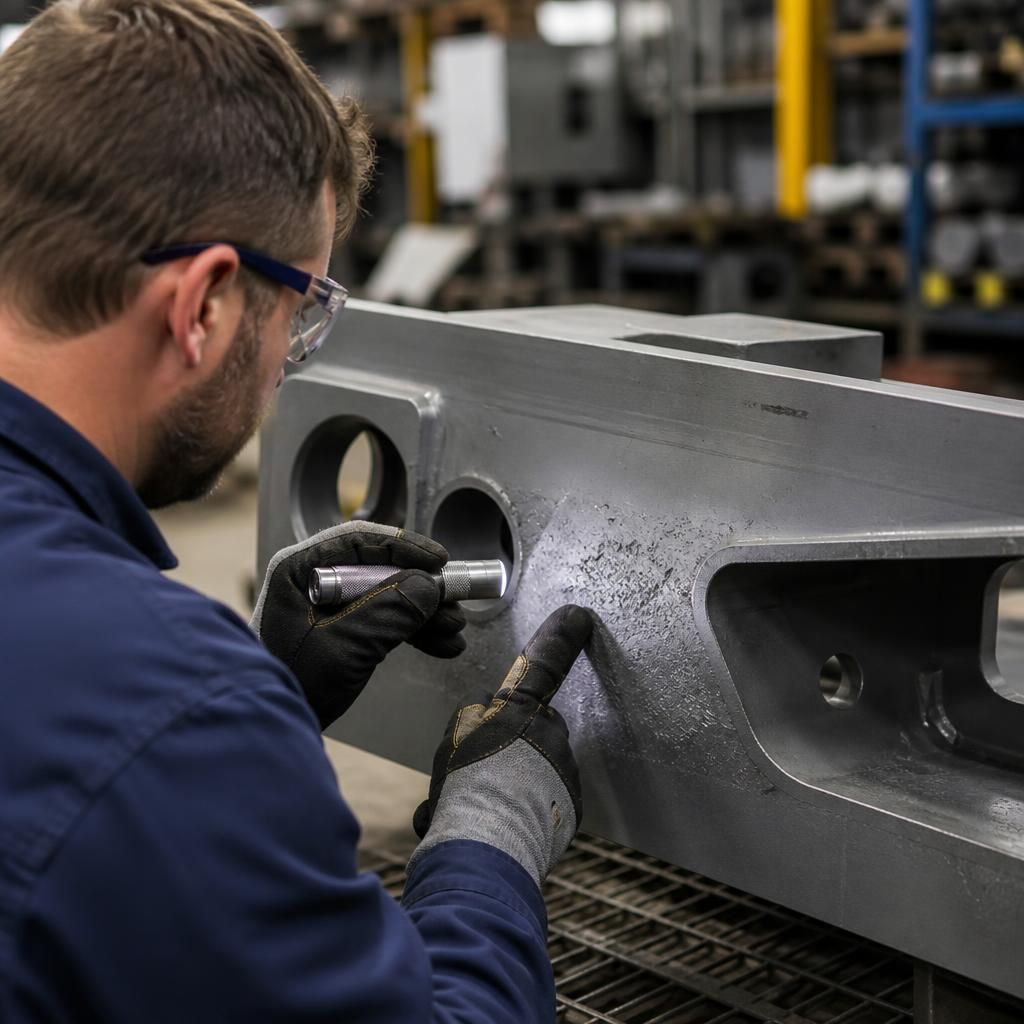
A further benefit of metal shot blasting is that it can reveal the underlying condition of a component before coating or further fabrication. By removing rust, scale and deteriorated finishes, the process makes surface damage such as pitting, localised corrosion and visible weld irregularities easier to inspect.
This helps businesses identify areas that may need repair, rework or additional assessment before a coating is applied. It can prevent defects from being concealed beneath a new finish, supporting more informed decisions about whether a component is ready for the next stage. Shot blasting is not a substitute for specialist non-destructive testing where internal or fine defects must be assessed, but it provides a cleaner and more consistent surface for visual inspection.
Discuss Your Metal Shot Blasting Requirements
If you are comparing surface preparation options for metal components, discuss your material, dimensions, contamination and finishing requirements with the powder-coating team. They can help assess whether metal shot blasting is appropriate for your parts and process.