

How do I prepare rusted steel surfaces for powder coating?
Prepare rusted steel for powder coating by removing all loose rust, mill scale, old coating and contaminants, typically through abrasive blasting or mechanical preparation, followed by thorough degreasing and cleaning. The prepared surface should then be dry, free from dust and treated with a suitable pre-treatment system before powder is applied.
Preparing rusted steel for powder coating means converting the existing surface into a sound, stable substrate that will allow the coating to bond consistently. The work involves assessing the steel’s condition, removing unstable material, correcting defects, controlling contamination and ensuring that the component is suitable for the coating system selected.
1. Assess the condition of the steel
Begin by checking whether the corrosion is limited to surface rust or has caused pitting, thinning, distortion or perforation. Powder coating can protect a structurally sound component, but it cannot restore metal that has been lost through corrosion. Deeply pitted areas may require additional preparation, repair or replacement, particularly where the part is load-bearing or forms part of a safety-critical assembly.
Inspect joints, folded sections, box sections, drilled holes and areas beneath brackets carefully. Rust often remains in crevices that are not obvious from the main faces. Any drainage holes should remain open so that cleaning fluids cannot become trapped inside the component.
2. Remove defects that could show through the finish
Before coating, remove weld spatter, sharp burrs, loose scale, sharp edges and protruding fasteners. Grind back rough welds where the finished appearance or fit of the component requires it. Do not leave abrupt ridges around corrosion patches, as powder may follow the underlying profile rather than conceal it.
Edges should normally be softened rather than left knife-sharp. Very sharp edges can receive less coating coverage and may be more vulnerable to damage during handling. Any repairs, replacement sections or filler materials should be compatible with the preparation and curing process; ordinary body filler is not automatically suitable for powder coating temperatures.
3. Deal with oil, grease and embedded contamination
Rust removal alone is not enough if the steel has been exposed to cutting fluids, hydraulic oil, wax, silicone, adhesive residue or workshop handling. These substances can interfere with adhesion and may produce craters, pinholes or areas of poor coverage. Degreasing should therefore be carried out before the final surface preparation, with attention paid to recesses and overlapping parts.
Contaminants can also become embedded in heavily corroded or previously painted steel. If oil continues to bleed from seams or porous deposits after cleaning, further treatment may be needed before the component can be coated. Coating over that contamination risks trapping the problem beneath the finish.
4. Choose preparation according to the substrate
Abrasive blasting is often appropriate for steel with widespread rust, scale or an older coating because it can reach a consistent surface across complex areas. The abrasive and operating conditions should be selected to remove corrosion without unnecessarily deforming thin sections. Mechanical preparation may be more appropriate for localised rust, delicate features or areas that must be protected from aggressive blasting.
The required surface profile depends on the powder coating system and the steel specification. A surface that is too smooth may provide insufficient mechanical key, while excessive roughness can remain visible through the coating or require more powder to cover. The preparation standard should therefore be agreed before work begins, especially for fabricated assemblies, visible architectural parts and components exposed to demanding service conditions.
5. Pay particular attention to welds and fabricated joints
Welds should be continuous where necessary, free from porosity and cleaned of flux, spatter and heat-affected contamination. Unsealed lap joints and crevices can retain moisture and later cause corrosion beneath the coating. Where the design permits, joints should be sealed or modified to prevent water traps. Vent and drain provisions may be necessary on hollow fabrications, both for safe processing and to allow trapped air, moisture and treatment residues to escape.
Galvanised, previously coated or repaired sections may require a different preparation approach from bare mild steel. Mixed substrates should be identified before processing so that the pre-treatment and powder system are appropriate for every exposed surface.
6. Control the condition immediately before coating
After preparation, protect the steel from rain, condensation, dirty handling and airborne dust. Flash rust can develop on freshly prepared steel, particularly in humid conditions, and may need to be removed before coating. Components should be handled with clean gloves or suitable lifting equipment rather than bare hands, since fingerprints can transfer salts and oils to the surface.
Before powder application, the processor should check the parts for remaining corrosion, visible dust, moisture, sharp defects and masking requirements. Threads, bearing seats, electrical contact points, machined faces and identification surfaces may need temporary protection so that coating does not affect assembly or function. Masking should be planned around the component’s dimensional tolerances rather than applied as an afterthought.
7. Confirm the pre-treatment and coating specification
The correct pre-treatment depends on the steel type, the level of exposure and whether the component includes mixed materials or previous repairs. The powder manufacturer’s technical data should be used to confirm curing requirements, allowable substrate conditions and compatibility with the chosen pre-treatment. For outdoor, corrosive or industrial applications, preparation should be specified as part of the complete corrosion-protection system rather than treated as a cosmetic step.
For a commercial coating project, provide details of the component’s intended use, exposure, previous finish, repairs, hollow sections and any areas that must remain uncoated. Clear preparation requirements help prevent unsuitable items being processed and reduce the risk of coating failure caused by defects that were present before powder application.
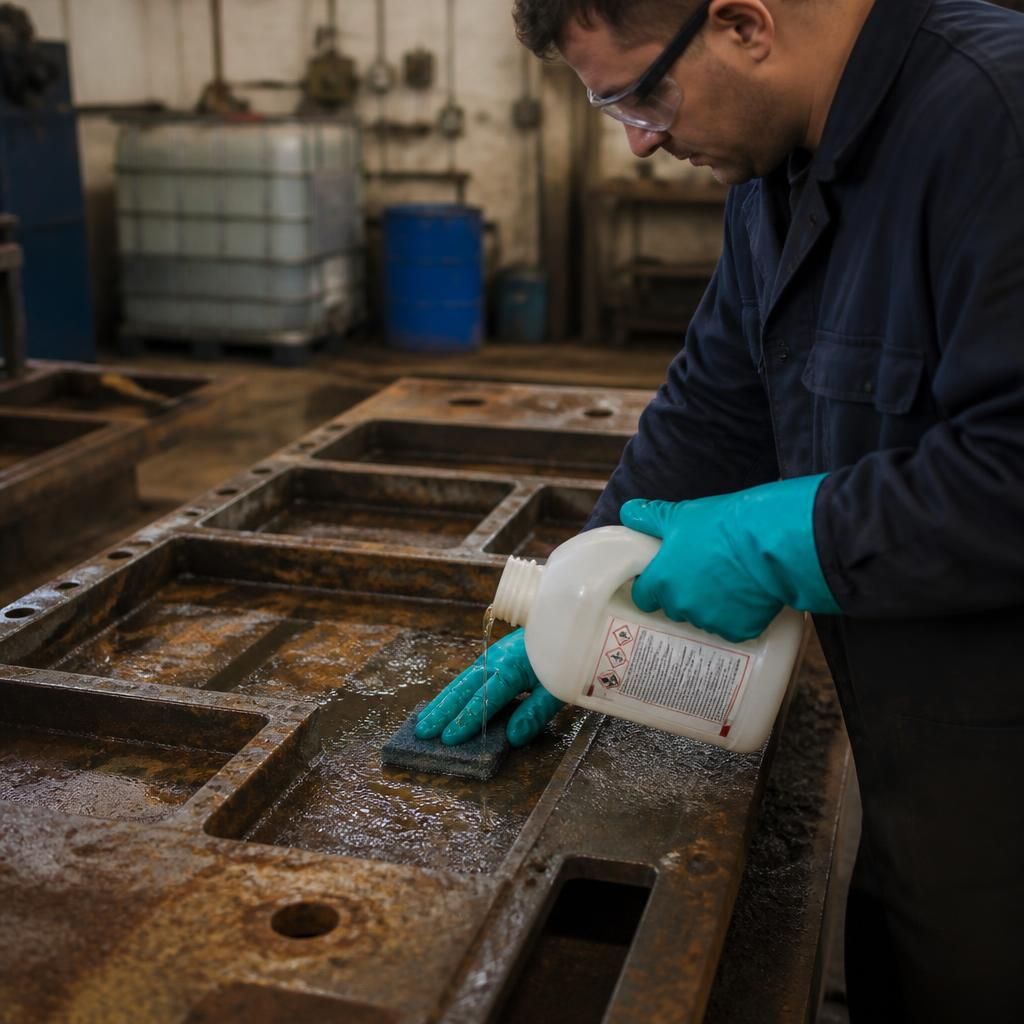
Chemical rust removers and converters should not be treated as a substitute for preparing steel for powder coating. Acid-based products can leave residues if they are not thoroughly rinsed and neutralised, while some converters create a film that is incompatible with the chosen coating system. If chemical treatment is used on localised corrosion, the product must be suitable for powder coating and the steel must be fully cleaned and dried before pre-treatment and coating.
Discuss your rusted steel preparation requirements
Discuss your rusted steel components with the powder-coating team, including their intended use, condition and any finish or dimensional requirements. This will help establish whether the parts are suitable for processing and identify the preparation approach needed.