

What are the advantages of powder coating galvanised metals over other coating methods?
Powder coating galvanised metal combines the galvanising layer’s sacrificial corrosion protection with a tough, uniform polymer finish, providing greater overall protection than either system used alone. Compared with conventional liquid paint, it can offer improved resistance to chipping, weathering and abrasion, while producing a consistent decorative finish with efficient, controlled application.
The principal advantage of powder coating galvanised metals is that it allows a single component to meet several requirements at once: a consistent specified appearance, resistance to handling and service conditions, and the established protection provided by the zinc coating. This makes the combined system more versatile than relying on an uncoated galvanised surface or on a conventional paint system alone.
More design and specification choices. Galvanised steel normally has a characteristic metallic appearance, whereas powder coating allows the finish to be selected by colour, gloss level and surface texture. This is useful where components must match a corporate colour scheme, architectural palette, existing equipment or a broader site specification. Textured and matt finishes can also help disguise minor visual variation in the underlying zinc surface, although they do not remove the need for suitable preparation.
Better control of the finished appearance. Powder is applied as a dry coating and cured under controlled conditions. Compared with brush or spray-applied liquid paint, this can produce a more even film across suitably prepared parts, without visible brush marks or the same risk of runs caused by liquid application. The result is particularly valuable for batches of brackets, frames, panels and fabricated components that need to look consistent when installed together.
Additional protection for the zinc layer. The powder coating acts as a physical barrier over the galvanised surface. This reduces direct exposure of the zinc to moisture, salts, pollutants and repeated contact. If the outer coating is locally damaged, the zinc beneath can still provide a degree of sacrificial protection to exposed steel, subject to the extent of the damage and the surrounding environment. This layered approach is a significant advantage over coating bare steel, where a defect can expose the substrate directly to corrosion.
Improved resistance to everyday handling. A correctly selected and cured powder coating can withstand routine contact, impact and friction more effectively than many decorative liquid finishes. This matters during fabrication, transport, installation and use, particularly for metalwork that is handled regularly or exposed to tools, equipment and general site activity. The appropriate powder type still depends on the component’s environment, operating temperature and likely chemical exposure.
Lower solvent use during application. Powder coating is applied without the liquid solvents found in many conventional wet-paint formulations. This can reduce solvent-related emissions within the coating process and avoids leaving a solvent carrier in the applied film. Powder application also produces dry overspray that may be collected and managed within an appropriate process, although recovery and reuse depend on the equipment, colour and coating specification.
Efficient production of repeat components. Once the preparation, application and curing parameters have been established, powder coating is well suited to repeatable batch work. Parts can be processed to the same documented specification, which helps manufacturers and fabricators maintain consistency between production runs. This is different from treating each item as an isolated wet-painting job, where application conditions and operator technique can have a greater effect on the result.
Reduced need to choose between function and appearance. Other protective methods may prioritise either corrosion performance or visual presentation. Powder-coated galvanised metal can be specified for both, making it suitable for visible structural and engineering components, enclosures, street furniture, fabricated assemblies and other products where the finish is part of the design requirement. The coating system should be selected according to the actual exposure rather than appearance alone.
These advantages depend on the galvanised surface being suitable for coating. Preparation may include removing contaminants, dealing with excess zinc or sharp deposits, allowing trapped gases to escape where necessary, and applying a compatible pretreatment or primer system. Galvanised steel is not automatically ready for powder coating simply because it is clean to the eye. Inadequate preparation can lead to poor adhesion, bubbling or premature failure, reducing the benefit of the combined system.
Powder coating galvanised metals is therefore not universally superior to every alternative. Liquid coatings may be more practical for on-site repairs or very large fixed structures, while specialist systems may be required for extreme chemical or temperature conditions. The most suitable option depends on the component’s size, geometry, service environment, appearance requirements, production volume and repair strategy. For Midlands manufacturers and fabricators, discussing these factors before processing helps establish whether a powder-coated galvanised finish is appropriate and which preparation and coating specification should be used.
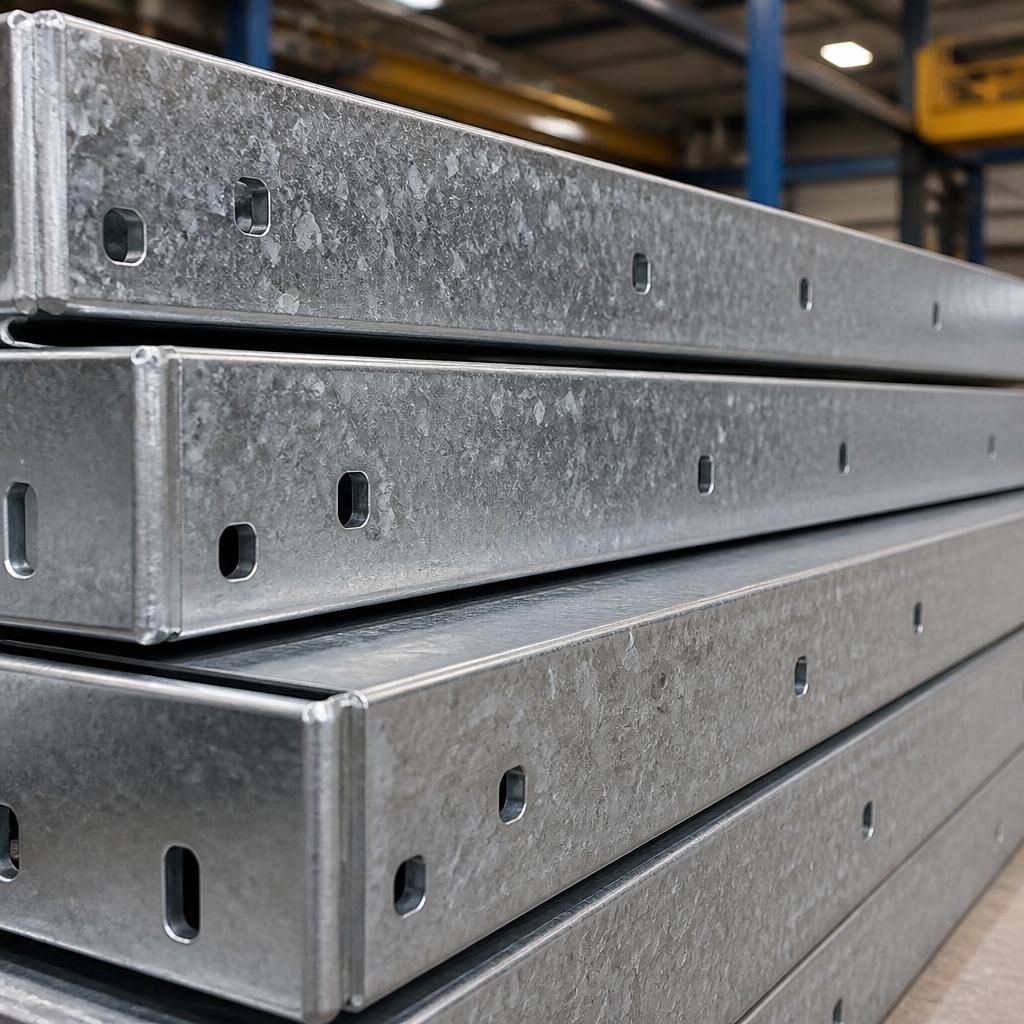
A further advantage of powder coating galvanised metal is that it helps preserve the condition of the zinc surface beneath the finish. Galvanised steel can develop visible zinc corrosion products, staining or surface variation when exposed to moisture and pollutants. A correctly prepared powder coating separates the zinc from this exposure, helping the component retain a more consistent surface during service rather than relying on the galvanised appearance alone.
This is particularly useful where metalwork remains visible but must also withstand outdoor or industrial conditions. The powder specification should still match the expected exposure, and the galvanised surface must be prepared correctly so that the additional finish remains securely bonded.