

What are the key benefits of using powder coating for corrosion protection on steel?
Powder coating protects steel against corrosion by forming a tough, continuous barrier that limits contact with moisture, oxygen and contaminants. It provides a durable, uniform finish with low routine maintenance requirements, provided the steel is properly prepared and the coating system suits its environment.
The key benefits of powder coating for steel corrosion protection are its strong adhesion, resistance to mechanical damage, consistent coverage and ability to form a coating system suited to the service environment. These benefits help protect steel components during handling, installation and use, while also providing a controllable and visually consistent finish.
Resistance to impact and abrasion: Steel parts may be exposed to knocks, friction, vibration and repeated handling. A correctly specified powder coating can resist chipping and surface wear more effectively than a less robust finish. Preserving the coating is important because scratches and exposed areas can become local points for corrosion to begin.
Reliable coverage of complex components: Powder is applied electrostatically, allowing charged particles to be attracted to the metal surface before curing. This can produce an even coating across brackets, frames, panels and other fabricated parts when the application process is properly controlled. Consistent film formation reduces the risk of thin areas that could provide weaker protection.
Strong adhesion when steel is correctly prepared: The coating’s performance depends on the bond between the powder and the substrate. Cleaning, removal of mill scale, degreasing and suitable surface preparation help eliminate contaminants that could cause blistering, flaking or premature breakdown. The result is a more dependable protective system than one applied over poorly prepared steel.
Resistance to particular service conditions: Powder coating formulations can be selected according to exposure to moisture, sunlight, chemicals, abrasion and temperature changes. This matters because steel used indoors, outdoors, in industrial areas or in transport-related applications may face very different corrosion risks. The coating should therefore be matched to the environment rather than chosen solely by colour or appearance.
Protection of fabricated and batch-produced parts: Powder coating is suitable for many steel components, including enclosures, frames, brackets, machinery parts and architectural fabrications. It can support repeatable production work because the application and curing stages can be controlled consistently across a batch. Consistency is particularly important where parts must meet an agreed specification or fit together after coating.
Lower solvent use during application: Powder coating is supplied as a dry material rather than a solvent-rich liquid coating. This can reduce reliance on liquid carriers during the coating process and avoids the need to manage overspray in the same way as wet paint. Uncured powder may also be collected and reused where the equipment and process allow, although the practical result depends on the coating system and application controls.
Clean, controlled appearance: Corrosion protection does not have to compromise presentation. Powder coating provides a broad choice of colours, textures and gloss levels, allowing protective steel components to meet functional and appearance requirements together. A consistent finish can also make defects, damage or contamination easier to identify during inspection.
Reduced risk of early coating failure: Many apparent coating problems are caused by unsuitable specification or preparation rather than by powder coating itself. Correctly identifying the steel grade, removing contaminants, addressing welds and edges, and selecting an appropriate powder system can reduce risks such as pinholing, blistering, delamination and under-film corrosion.
Powder coating is not a universal solution for every steel application. Severe chemical exposure, immersion, high temperatures, sharp edges, threaded interfaces or areas with trapped moisture may require additional design measures or a multi-layer protective system. The coating specification should account for the component’s shape, intended service, handling requirements and likely damage mechanisms.
For B2B steelwork, the most useful assessment is therefore not simply whether powder coating is available, but whether the complete system is appropriate. Review the preparation method, coating type, target film build, curing requirements, edge coverage, expected exposure and inspection arrangements before approving the finish. When these factors are aligned, powder coating offers a practical combination of corrosion resistance, physical protection, process consistency and finish control.
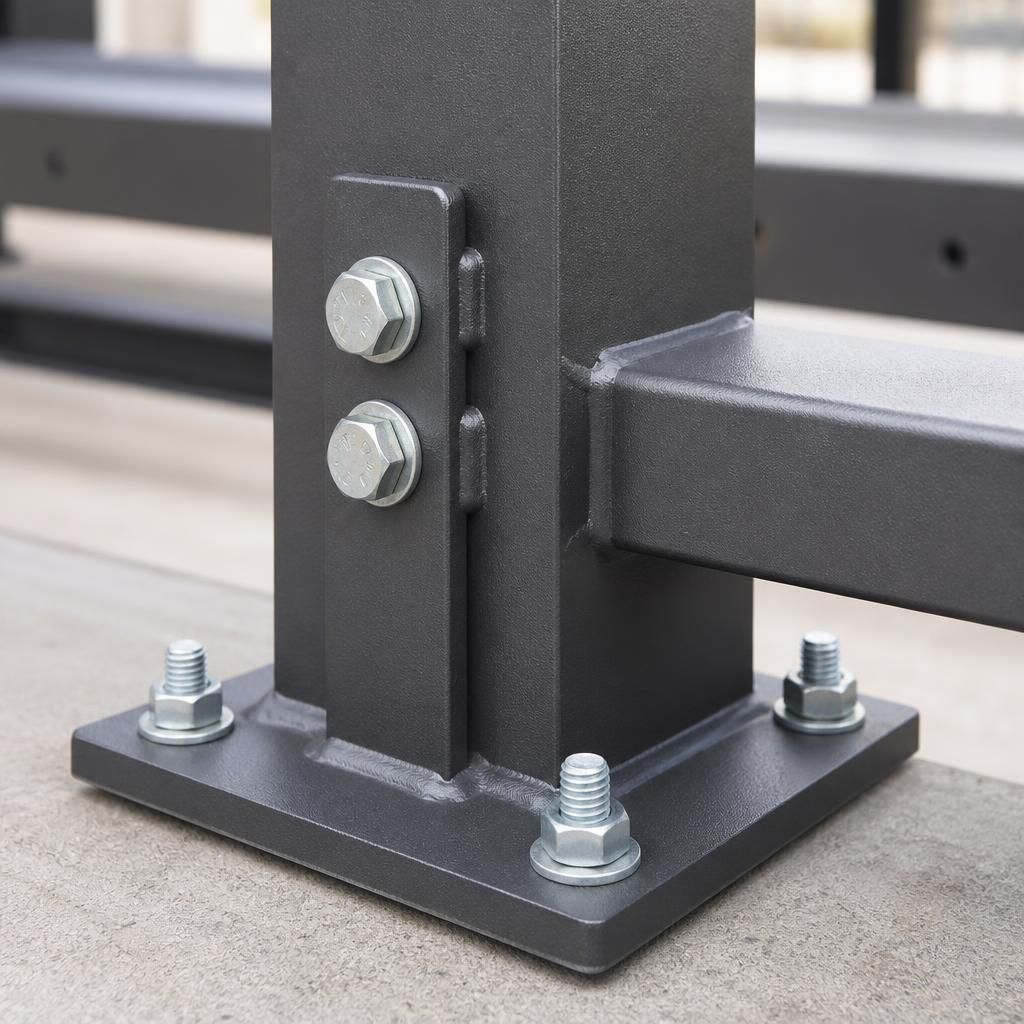
Powder coating can help limit galvanic corrosion by electrically isolating steel from moisture and, where the coating remains continuous, from contact with dissimilar metals. This is relevant to fabricated assemblies containing aluminium, stainless steel or galvanised components, where an electrolyte and direct electrical connection can accelerate corrosion of the less noble metal.
The benefit depends on coating coverage at joints, holes, edges and fastener interfaces. Uncoated contact points can still provide a path for galvanic activity, while trapped moisture may undermine protection locally. For this reason, corrosion-resistant powder coating should be considered alongside suitable fasteners, joint design, drainage and sealing. These measures help the finished assembly retain the protective benefit of the coated steel rather than relying on the coating alone.