

What preparation steps are necessary before applying anti-corrosion powder coating?
Before anti-corrosion powder coating, metal components must be inspected, degreased and cleaned to remove oil, dirt, rust, mill scale and other contaminants. The surface is then suitably treated—often by abrasive blasting or chemical pre-treatment—before thorough rinsing, drying and masking of areas that must remain uncoated.
Effective preparation for anti-corrosion powder coating involves more than making the metal visibly clean. The component, substrate, welds, edges, joints and coating requirements must all be assessed so the powder can form a continuous, well-adhered protective film without hidden defects or areas that are difficult to coat.
Confirm the coating specification first
Before physical preparation begins, establish the service conditions and the required performance of the finished component. The specification should identify:
- the base metal, such as mild steel, galvanised steel or aluminium;
- the expected exposure to moisture, chemicals, salts, abrasion or outdoor conditions;
- the required coating system, colour, gloss level and film thickness;
- any corrosion category, durability requirement or testing standard that applies; and
- which surfaces must be coated and which must remain free of powder.
This information determines whether a particular pre-treatment and powder system is suitable. Different metals and surface conditions cannot always be prepared in the same way, so the substrate should be identified before processing.
Check the component design and condition
Parts should be examined for features that could interfere with coating quality. Deep recesses, overlapping sections, enclosed voids and narrow gaps can retain moisture or treatment chemicals. If the design allows water to remain trapped after coating, corrosion may develop from the inside or at a joint that is not readily visible.
Where practical, components should include suitable drainage and ventilation holes, accessible surfaces and clear separation between joined sections. Fabricators should also consider whether the finished part can be safely supported, electrically connected and heated during the coating process. These issues are best resolved at the design or fabrication stage rather than after coating.
Correct fabrication defects
Welds should be continuous where required and free from pinholes, cracks, excessive spatter and loosely bonded residue. Sharp projections, rough weld profiles and abrupt edges can produce thin coverage or create points where the coating is more vulnerable to damage. Burrs should be removed, edges suitably eased and weld areas made consistent with the surrounding metal.
Any oil-soaked areas, embedded foreign material, laminations or deep corrosion damage may require repair or further assessment before coating. Powder coating conceals a surface visually but does not correct poor fabrication, weakened metal or unsuitable joints. Repairs should be completed using compatible methods, followed by preparation of the repaired area to match the rest of the component.
Prepare threaded and precision features
Threads, bearing seats, machined faces, bores, electrical contact points and close-tolerance interfaces may need temporary protection or a defined coating exclusion. Powder adds a measurable layer, so coating these features unintentionally can affect assembly, fit or conductivity.
Masking materials and methods should be selected for the curing conditions and the geometry of the part. The required boundaries need to be agreed before processing, particularly where a component has mating surfaces or must make a reliable earth connection during installation.
Control handling before coating
Once preparation is complete, components should be handled with clean equipment and suitable protective measures. Bare hands, dirty slings, contaminated racks and unprotected storage can transfer oil or particles back onto the prepared surface. Parts should therefore be supported at appropriate contact points and kept separate from sources of dust, moisture and other contamination.
Fixtures and hanging points also need consideration. The coating process requires a dependable electrical path, while contact points may leave small uncoated marks that need to be positioned where they will not compromise service performance or appearance. The part should be arranged so that all required faces are accessible and powder can reach the intended surfaces.
Verify readiness before application
A final pre-coating check should confirm that the component is dry, free from visible residue, correctly masked and presented in the agreed orientation. The prepared surface should not be touched unnecessarily, and any delay or contamination between treatment and coating should trigger reassessment rather than proceeding automatically.
For complex, fabricated or corrosion-critical components, it is useful to document the substrate, preparation route, masking requirements and inspection criteria before the batch enters production. This creates a clear reference for checking that preparation is consistent across multiple parts and helps identify whether a defect originated in fabrication, preparation, handling or coating.
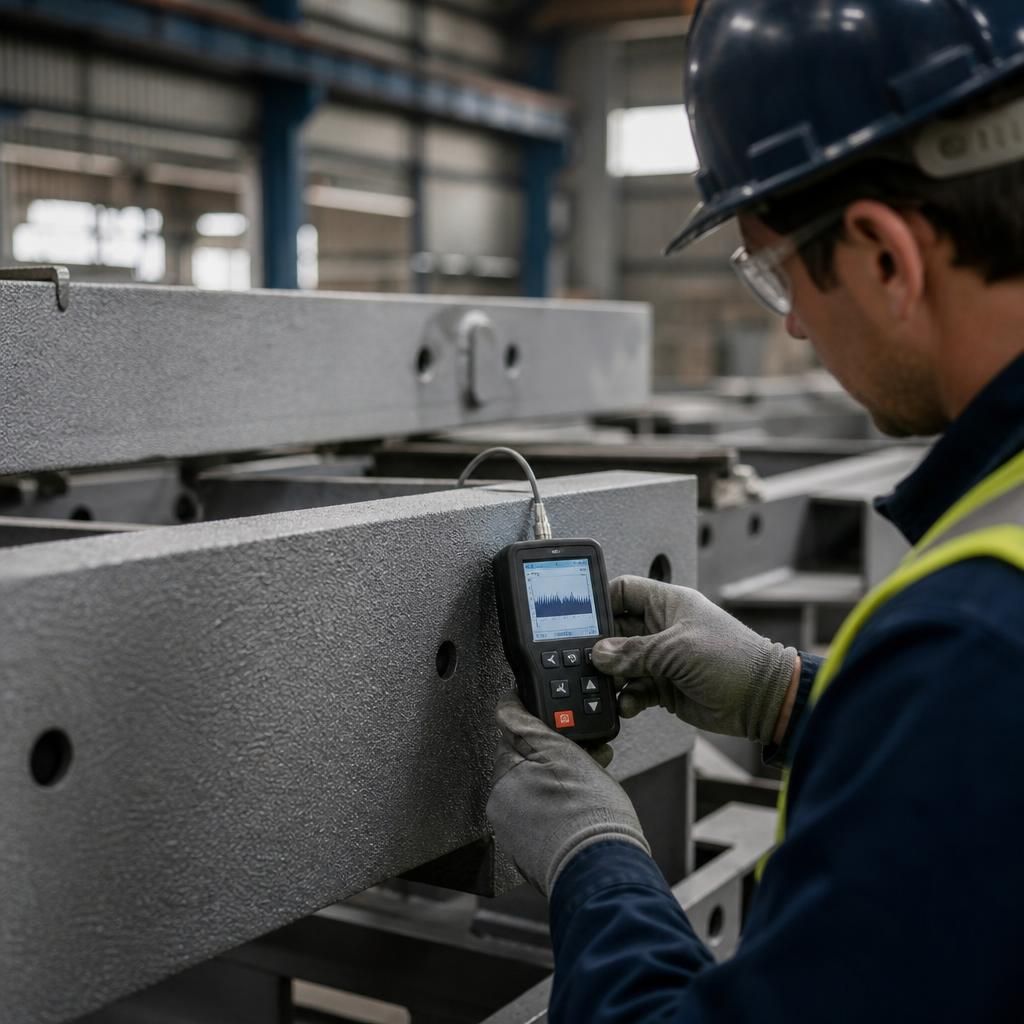
Where abrasive blasting is used, the surface profile should be checked before powder application. Blasting creates a controlled texture that gives the coating a mechanical key, but an unsuitable profile can reduce coating performance or affect the finished appearance. The preparation method should therefore match the metal, coating specification and required film thickness.
After blasting, all loose abrasive, dust and residue must be removed without introducing fresh contamination. A suitable inspection should confirm that the surface has the required texture, is visibly clean and has not developed flash rust or other deterioration before it moves to the next treatment stage.