

What are the key benefits of using anti-corrosion coatings for steel?
Anti-corrosion coatings protect steel from moisture, oxygen, salts and other corrosive agents by forming a barrier at its surface. This can extend component service life, reduce maintenance requirements and help preserve the steel’s appearance and structural performance.
Anti-corrosion coatings provide steel with a controlled protective surface that helps limit corrosion-related deterioration and supports more dependable performance in service. The main benefits are improved resistance to the conditions that cause corrosion, greater control over the component’s finish and specification, and a lower risk of disruption associated with premature coating failure or steel replacement.
Protection against demanding environments
Uncoated steel can be affected by water, humidity, salt deposits, industrial pollutants, chemicals and cyclic changes in temperature. A correctly selected coating system separates the steel from these influences. The level of protection depends on the coating chemistry, film thickness, surface preparation and the severity of the environment, so a system suitable for an indoor component may not be appropriate for coastal, external or chemically exposed applications.
Some formulations also provide resistance to abrasion, impact, ultraviolet exposure or specific chemicals. These properties can be important where steel parts are handled frequently, exposed to sunlight, washed down or positioned near manufacturing processes. They should be treated as specification requirements rather than assumed characteristics of every anti-corrosion coating.
More reliable component performance
Corrosion can create pitting, flaking, seized joints and loss of section in steel. Preventing or slowing these forms of deterioration helps components remain within their intended operating condition for longer. This is particularly relevant to fabricated assemblies, brackets, frames, enclosures, machinery parts and structural items where corrosion could affect fit, movement, fastening or safe use.
The benefit is not simply visual. A coating can help maintain the designed interface between mating parts and reduce the likelihood that corrosion products will interfere with tolerances, hinges, threads or connection points. Critical applications still require appropriate engineering assessment, inspection and maintenance; a coating should not be treated as a substitute for correct material selection or design.
Lower whole-life costs
Corrosion control can reduce the need for remedial preparation, recoating, part replacement and associated labour. It may also limit secondary costs such as dismantling equipment, removing affected components or managing contamination from corrosion debris. The financial benefit should be assessed over the expected operating life of the steel item rather than by comparing the initial coating price alone.
Good specification is central to this outcome. A coating that is incorrectly matched to the exposure, applied over contamination or damaged during installation may fail earlier than expected. Conversely, suitable preparation, application and inspection give the coating a better opportunity to perform as intended.
Consistent finish and easier asset management
Coating systems can provide a consistent colour, texture and level of coverage across batches of steel components. This supports a uniform appearance on fabricated products and can assist with visual identification of different equipment, zones or functions where a planned colour system is used.
A sound, continuous finish is also easier to inspect than scattered areas of rust or old, deteriorating paint. Maintenance teams can identify scratches, impact damage, blistering, lifting or other changes at the coating surface and decide whether local repair or further investigation is required.
Improved cleanliness and surface control
A suitable smooth or sealed finish can make steel easier to clean and less likely to retain dirt, moisture and process residue. This can be useful in manufacturing areas, transport-related equipment, commercial facilities and other settings where surface cleanliness matters. The coating must still be compatible with the cleaning agents, temperatures and operating conditions involved; a general-purpose finish should not be assumed to withstand every cleaning regime.
Choice of application and finish
Anti-corrosion protection is available through different coating technologies, including powder-based and liquid-applied systems, as well as specialist formulations for particular exposure conditions. This gives specifiers flexibility to balance corrosion resistance with factors such as appearance, substrate size, component geometry, curing requirements, chemical exposure and expected wear.
For steel components processed in batches, a defined coating specification can also improve repeatability between production runs. The specification should identify the substrate condition, preparation standard, coating type, target finish and inspection requirements. Where components are large or have difficult-to-coat areas, the application method and access to edges, recesses, joints and welds need particular attention.
Overall, the benefits of anti-corrosion coating are greatest when the system is selected for the actual service environment and supported by suitable preparation, application and inspection. Coating protects the steel surface, but long-term results depend on the complete system rather than the product name alone.
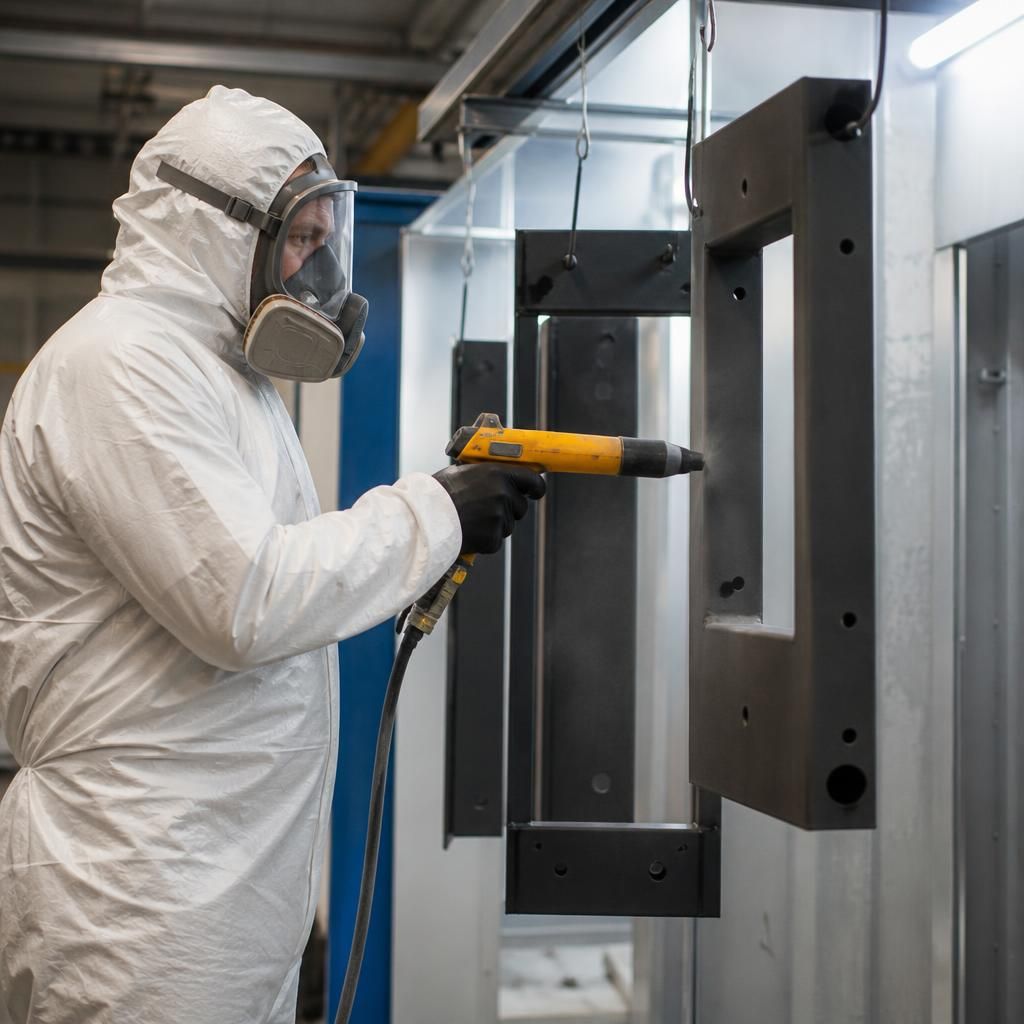
One important benefit of an anti-corrosion coating is that it can form part of a wider protective system rather than acting as the steel’s only defence. For demanding applications, a compatible metallic treatment and organic coating may be specified together. The underlying layer provides additional corrosion protection, while the outer coating creates a sealed, specified surface with the required colour, texture or chemical resistance.
This approach is often considered for external steelwork, fabricated assemblies and components exposed to moisture or salts. Its effectiveness depends on compatibility between the layers, appropriate preparation and careful control of edges, welds, holes and other vulnerable areas. The complete system should therefore be defined and inspected as a single specification, rather than selecting each treatment independently.