

What preparation is required before applying the Interpon D1036 Matt Aluminium coating to ensure optimal adhesion and durability?
Before applying Interpon D1036 Matt Aluminium, the metal substrate must be clean, dry and free from oil, grease, dust, corrosion, oxides and other contaminants. Appropriate surface preparation, including cleaning and conversion treatment where required, creates a sound surface for the powder coating to bond to and helps support a durable, uniform finish.
Preparation for Interpon D1036 Matt Aluminium coating should begin with a documented assessment of the component, its substrate and its intended use. The applicator needs to confirm that the metal is suitable for powder coating, identify any existing finish or treatment, and select a preparation process that is compatible with the substrate rather than relying on a single standard method for every part.
Before processing, inspect the components for defects that could remain visible after coating. Weld spatter, sharp burrs, deep scratches, laminations, dents and poorly finished joints can affect both appearance and coating coverage. These defects should be corrected mechanically where appropriate, with welds dressed and edges refined without creating thin sections or unsuitable profiles. Drainage and vent holes may also be needed in hollow or enclosed fabrications to allow process fluids and trapped air to escape safely.
Aluminium parts require particular attention to their surface condition and fabrication history. Extrusions, castings, machined sections and previously treated components can respond differently during preparation. Any anodised, painted or otherwise finished surface must be assessed before coating; simply applying powder over an unknown or poorly bonded layer can compromise the whole system. Where dissimilar metals, inserts, sealants or adhesives are present, their compatibility with the preparation and curing stages should also be checked.
The preparation sequence should be controlled rather than improvised. It normally includes the following checks:
- Confirm the substrate, existing surface treatment and condition of every batch before it enters production.
- Remove fabrication residues and correct physical defects that would interfere with the finish.
- Use a suitable cleaning and pre-treatment system for the particular metal and the required level of protection.
- Ensure that parts are thoroughly rinsed where the process requires it, with no retained process residues.
- Dry the components completely before powder application, including recesses, joints, folded sections and hollow areas.
- Protect areas that must remain uncoated, such as threads, bearing seats, electrical contact points and accurately machined faces.
Masking should be planned before the parts reach the booth. Suitable high-temperature masking materials and plugs are needed for apertures, threaded holes and close-tolerance features. The masking plan should also account for powder build-up at corners and interfaces, since excessive coating in these areas can affect assembly even when the visible face appears satisfactory.
Component design can influence the final result as much as the preparation process. Tight internal corners, deep recesses and Faraday cage areas can restrict powder deposition, while sharp edges may receive less coating than adjacent faces. The applicator should review the racking and hanging method to provide a reliable earth path and expose the required faces to the spray. Parts should be supported without damaging prepared surfaces or leaving unacceptable contact marks.
Cast aluminium and components containing pores may release air or gases when heated. This can cause pinholes, blisters or surface defects during curing. Where the material and component design indicate a risk of outgassing, the proposed treatment should be evaluated on a representative sample before the full batch is processed. Any preheating or alternative preparation method must follow the coating system’s technical guidance and should not be introduced without checking its effect on adhesion, colour and surface texture.
Handling between preparation and coating is also important. Prepared parts should be kept in a controlled, protected condition and handled with clean equipment and suitable gloves where necessary. Contact with bare hands, dirty racks, moisture or workshop dust can reintroduce contamination after the formal preparation stage. Components should not be left exposed to conditions that allow the surface to deteriorate before powder application.
For production work, a trial piece or representative sample is useful where the substrate, geometry or previous finish is uncertain. The sample can be assessed for coverage, visible defects and adhesion before the complete batch is committed. The final process should then be recorded, including the substrate condition, preparation route, masking arrangement, powder application settings and curing instructions. The Interpon D1036 Matt technical documentation and the applicator’s process controls should determine the precise pre-treatment, film and curing requirements for the job.
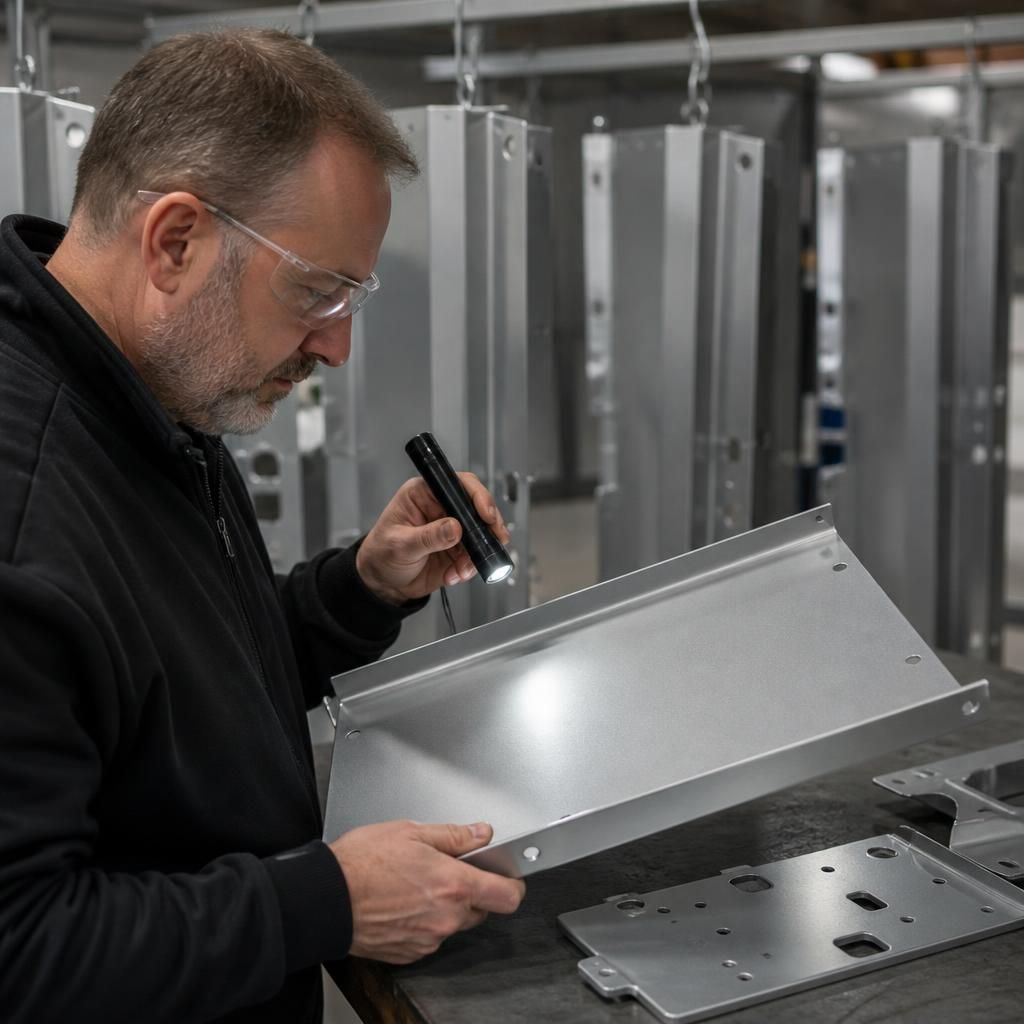
Immediately before powder application, the prepared aluminium should undergo a final release check rather than being coated solely because it has completed the pre-treatment line. Inspect the surface under suitable lighting for staining, powdery residue, water marks, flash corrosion or areas where the treatment appears uneven. Check that no moisture has formed through condensation, particularly on components moved between different environments. Any suspect part should be isolated and reviewed before coating, because defects identified after curing are more difficult to correct and may indicate that the preparation process needs adjustment.