

What preparation is needed before applying the RAL 2000 powder coat to aluminium surfaces?
Aluminium surfaces should be clean, dry and free from oil, grease, dust, oxidation and other contaminants before RAL 2000 powder coating. Preparation typically includes cleaning and degreasing, suitable aluminium pre-treatment, thorough drying and masking of areas that must remain uncoated.
Preparation for RAL 2000 powder coating on aluminium involves more than making the surface visually clean. The component should be inspected, corrected and presented in a condition that allows the coating to form an even film, remain attached during service and cover the intended areas without interfering with assembly.
Begin with a substrate assessment. Identify the aluminium alloy where this is relevant, check for existing anodising or paint, and look for pitting, embedded debris, handling damage and uneven areas. Previous coatings need particular attention because residual layers may affect adhesion or conceal defects. Any unsuitable coating should be removed using a process compatible with the component and its dimensions.
Resolve fabrication defects before coating. Welds should be continuous and sufficiently dressed where the finished appearance requires it. Sharp burrs, loose swarf, deep scratches and raised edges can remain visible through powder coating or create weak points at the edge of the film. Castings may require the removal of mould-release residues, while fabricated parts should be checked for weld spatter and trapped manufacturing debris.
Component design also affects preparation. Enclosed sections need suitable drain and vent holes so that treatment fluids do not remain trapped and interfere with later processing. Crevices, overlapping joints and pockets can retain chemicals or moisture, leading to inconsistent coverage or corrosion beneath the coating. Where a part is being designed or modified specifically for powder coating, these features should be considered before manufacture.
Define the areas that must remain free of coating. Masking plans should cover threads, bearing seats, machined faces, electrical contact points, holes and close-tolerance mating surfaces. The masking material and method must withstand the curing stage without transferring residue to the aluminium. Racking or hanging points should also be agreed in advance, since the suspension point may leave a small uncoated contact mark.
Dimensional requirements should be reviewed before processing. Powder coating adds a measurable film to edges, bores, threads and fitted interfaces, so particularly close tolerances may need protection or post-coating machining. Parts should be supplied with clear information about critical dimensions, contact surfaces, identification marks and any areas where a coating build-up would prevent assembly.
The pre-treatment route should be selected according to the aluminium, its intended environment and the level of protection required. Aluminium can react differently from steel during chemical treatment, and the wrong process may affect adhesion, appearance or the condition of the substrate. A suitable conversion treatment or other aluminium-compatible system can provide a prepared surface for the powder film; the treatment must then be handled in accordance with its technical requirements.
After preparation, components should be handled with clean gloves or suitable equipment and protected from renewed contamination during transfer. They should be arranged so that surfaces are accessible and cannot rub against one another. Parts should not be packed or wrapped in a way that introduces fibres, adhesive residue or moisture before coating.
For batch work, consistent preparation is especially important. Components should be grouped by material, geometry and required finish where practical, with any variations recorded. A trial or approval piece can be useful for confirming the appearance of RAL 2000, the suitability of masking and the treatment of edges, recesses and contact points before the full batch is processed.
Providing accurate drawings, tolerances, material information and masking instructions gives the coater the information needed to prepare the aluminium correctly. Once the substrate condition, component design and coating boundaries have been addressed, the powder can be applied and cured with fewer risks of uneven coverage, defects or assembly problems.
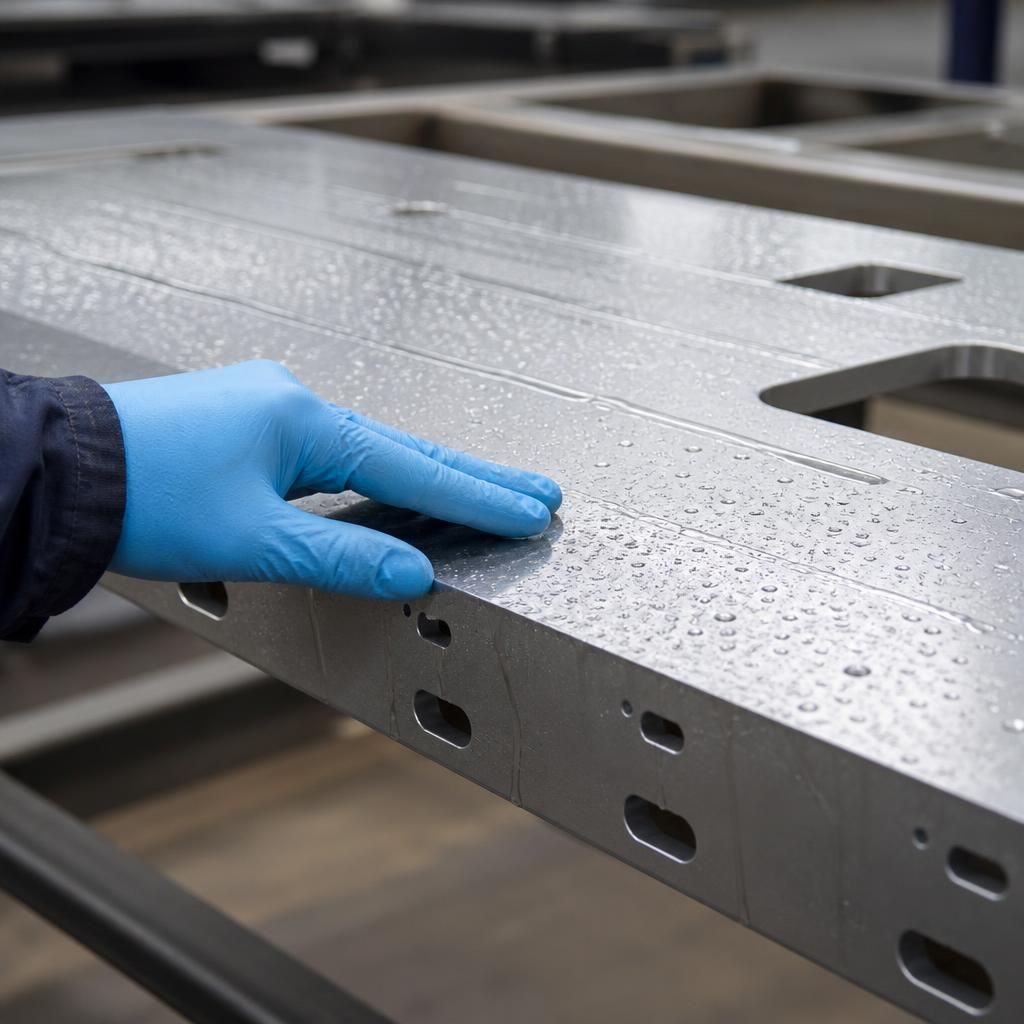
A final cleanliness check confirms whether the aluminium is ready for powder application after pre-treatment. A properly prepared surface should show an even water film rather than isolated beads or breaks, which can indicate residual oil or contamination. The component should also be inspected for chemical residue, staining and moisture before it reaches the spray stage.
This check is particularly useful around joints, recesses and edges, where residues can remain hidden. If contamination is found, the part should be returned for further preparation rather than coated. Clean handling after inspection is equally important: gloves or suitable handling equipment help prevent fingerprints and transfer of oil back onto the surface.