

What are the main benefits of using UV resistant powder coatings for metal components outdoors?
UV resistant powder coatings help outdoor metal components retain their colour and finish when exposed to sunlight. They also provide a durable protective layer that supports corrosion resistance, reduces surface deterioration and helps components remain suitable for demanding outdoor conditions.
UV resistant powder coatings are formulated to slow the photodegradation caused by prolonged sunlight, helping an outdoor coating retain its functional performance for longer. Their main benefits are improved resistance to weathering, reduced loss of mechanical integrity, fewer requirements for recoating and more predictable service performance when the formulation is matched to the component’s environment.
Ultraviolet radiation can break down the resin or binder that holds a coating together. As this happens, the surface may become chalky, brittle or less tightly bonded to the substrate. UV-resistant formulations use stabilising technologies to slow these reactions. This helps the coating remain cohesive and better able to perform its intended protective role during extended outdoor exposure.
- Better retention of coating integrity: The surface is less likely to become brittle or friable solely as a result of sunlight, which can help it withstand normal handling and environmental stresses for longer.
- More reliable adhesion over time: Slower binder degradation reduces the risk that the coating will lose its cohesion and adhesion prematurely. This is particularly relevant for fabricated parts that experience vibration, thermal movement or regular contact during use.
- Reduced recoating requirements: Where the original coating remains sound for longer, maintenance teams may have fewer occasions to strip and recoat the component. This can reduce removal, preparation and reapplication work, although the actual interval depends on exposure, preparation quality and the selected product.
- Less operational disruption: Components that need less frequent coating intervention may spend less time out of service or in a maintenance area. For manufacturers, fabricators and site operators, this can make asset planning more straightforward.
- More consistent performance across exposed areas: A suitable UV-resistant system helps reduce differences between surfaces that receive direct sunlight and those that receive partial shade. Correct pretreatment, film thickness and curing remain essential to achieving a uniform result.
- Suitability for visible external components: UV resistance is useful where metalwork forms part of a building, enclosure, vehicle-related installation, street-level equipment or other external assembly and must continue to meet both functional and presentation requirements.
The benefit is not limited to the top surface. By slowing deterioration of the coating film, UV resistance can help preserve the continuous barrier between the metal and the outdoor environment. This supports the coating system as a whole, but it should not be treated as a substitute for appropriate pretreatment, edge coverage, joint design or a formulation selected for the relevant corrosivity conditions.
UV resistance also improves specification confidence. Instead of selecting a coating solely for its initial appearance, a project engineer can assess how the binder, pigments, additives and curing requirements are expected to behave under the intended solar exposure. This is important for components that are difficult to access after installation, because premature coating degradation can make inspection and remedial work more complicated.
However, UV resistance is one part of outdoor performance rather than a complete specification. Moisture, salt, industrial pollutants, abrasion, impact, temperature cycling and cleaning chemicals can all affect service life. The coating should therefore be selected according to the component’s location and use, with the metal prepared correctly before application. A UV-resistant product intended for general outdoor exposure may not be appropriate for a coastal, heavily industrial or chemically demanding setting without additional assessment.
For B2B projects, the practical value lies in combining a UV-resistant formulation with controlled preparation and application. Powder coating specialists can review the metal type, component geometry, expected exposure and handling requirements before recommending a suitable system. Powder-coating.co.uk provides industrial coating services for businesses across the Midlands and surrounding areas, including collection and delivery options for metal components requiring outdoor protection.
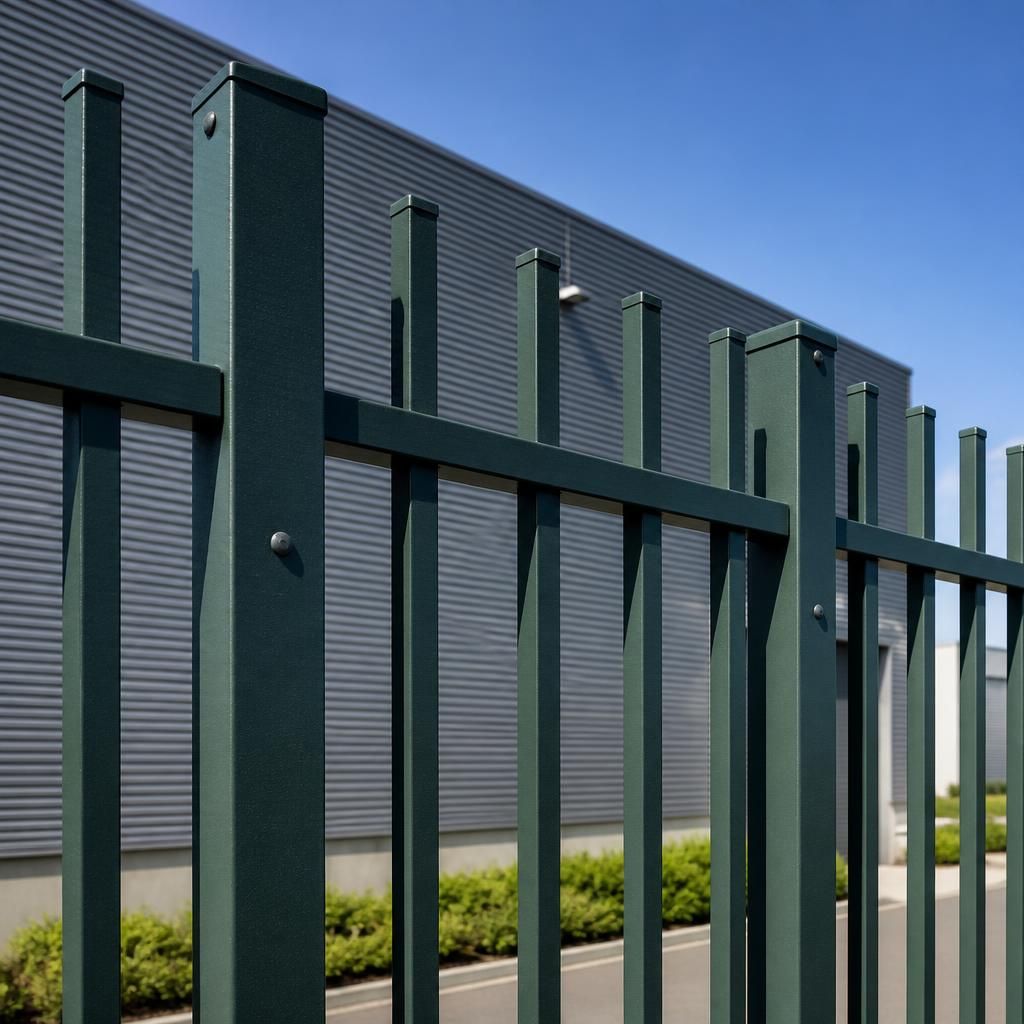
For outdoor assemblies specified in a consistent colour, UV-resistant powder coating helps preserve the visual relationship between original and replacement metal components. Slower fading can reduce the risk of noticeably different shades developing between parts installed at different times or in areas receiving different levels of sunlight.
This is useful for equipment, enclosures and fabricated assemblies that are maintained or extended in stages. A suitable formulation can help retain the intended colour identity for longer, making condition checks and future component replacement more straightforward. Colour stability still depends on pigment selection, film thickness, curing and the component’s exposure conditions, so these requirements should be agreed as part of the coating specification.