

What are the advantages of using filler primers in powder coating processes?
Filler primers improve powder coating processes by filling minor surface imperfections, creating a more uniform base for the topcoat and supporting a smoother, more consistent finish. They can also improve overall coating durability and add an extra layer of corrosion protection to suitably prepared metal components.
Filler primers offer advantages beyond simply preparing a visible base for powder coating. In a correctly specified system, they help manage substrate porosity, reduce outgassing-related defects, provide a controlled foundation for the colour coat and allow the coating system to be matched more closely to the component and its service conditions.
Reduction of outgassing defects
Castings, galvanised parts and other porous or pre-treated substrates may retain air, moisture or processing residues within their surface. When the component is heated during powder coating, these materials can escape through the coating and cause pinholes, bubbling or small craters. A suitable filler primer can seal or stabilise the surface, reducing the likelihood of these defects. This is particularly useful where the metal cannot be fully de-gassed by preparation alone.
The primer does not remove the need for proper cleaning, drying and pre-treatment. It is an additional control within the coating system, not a substitute for removing oil, salts, loose scale or other contamination.
More consistent colour development
A filler primer can provide a controlled base shade beneath the powder topcoat. This matters when the substrate varies in colour or texture, or when the chosen topcoat has limited opacity. A consistent undercoat can reduce visual variation caused by differences between weld areas, repaired sections, cast surfaces and adjacent metal. The primer colour and topcoat must be selected as a compatible system, particularly for light or highly visible finishes.
Better control over complex component geometry
Metal components often include weld transitions, formed sections, recesses, joints and changes in profile. A filler primer can help prepare these areas for the subsequent coating stages, making the transition between different parts of the component less pronounced. It may also help the applicator establish a more predictable coating system on components where the substrate is not uniform.
This benefit is dependent on film thickness and application control. Excessive primer build can affect dimensions, interfere with fits or reduce the definition of edges and apertures. Critical tolerances should therefore be identified before the coating specification is agreed.
Greater flexibility in coating system design
Using a filler primer allows the coating system to be designed in layers rather than relying on one powder coat to perform every function. The primer can be selected for properties suited to the substrate, while the topcoat is selected for the required appearance and service performance. This approach may be useful for fabricated steelwork, cast components and parts with variable surface characteristics.
However, the layers must be chemically and physically compatible. The primer, powder topcoat, pre-treatment and curing schedule should be assessed together. A product that performs well beneath one powder formulation may not be suitable beneath another, especially if the materials require different cure temperatures or have incompatible binders.
Improved production consistency
For repeat batches, a defined primer stage can make the coating process less dependent on natural variation in the metal surface. It gives the coater another controlled stage at which to inspect the component, identify unsuitable areas and confirm that the surface is ready for the topcoat. This can be valuable for manufactured parts where consistent appearance and repeatable processing are more important than treating each item as an isolated job.
Important limitations to consider
- A filler primer adds an application and curing stage, so the complete process must be planned around the extra layer.
- Its performance depends on correct surface preparation, application thickness and curing.
- The primer must be compatible with the metal, pre-treatment and powder topcoat.
- Additional film build may affect threads, mating faces, holes, hinges and other close-tolerance features.
- Test panels or representative components are advisable where the substrate, finish or service conditions are unusual.
In practical terms, filler primers are most advantageous when the metal surface is porous, variable, difficult to stabilise or likely to cause defects during heating. Their value comes from addressing a defined substrate or process problem; they should be specified as part of a tested powder coating system rather than added automatically to every application.
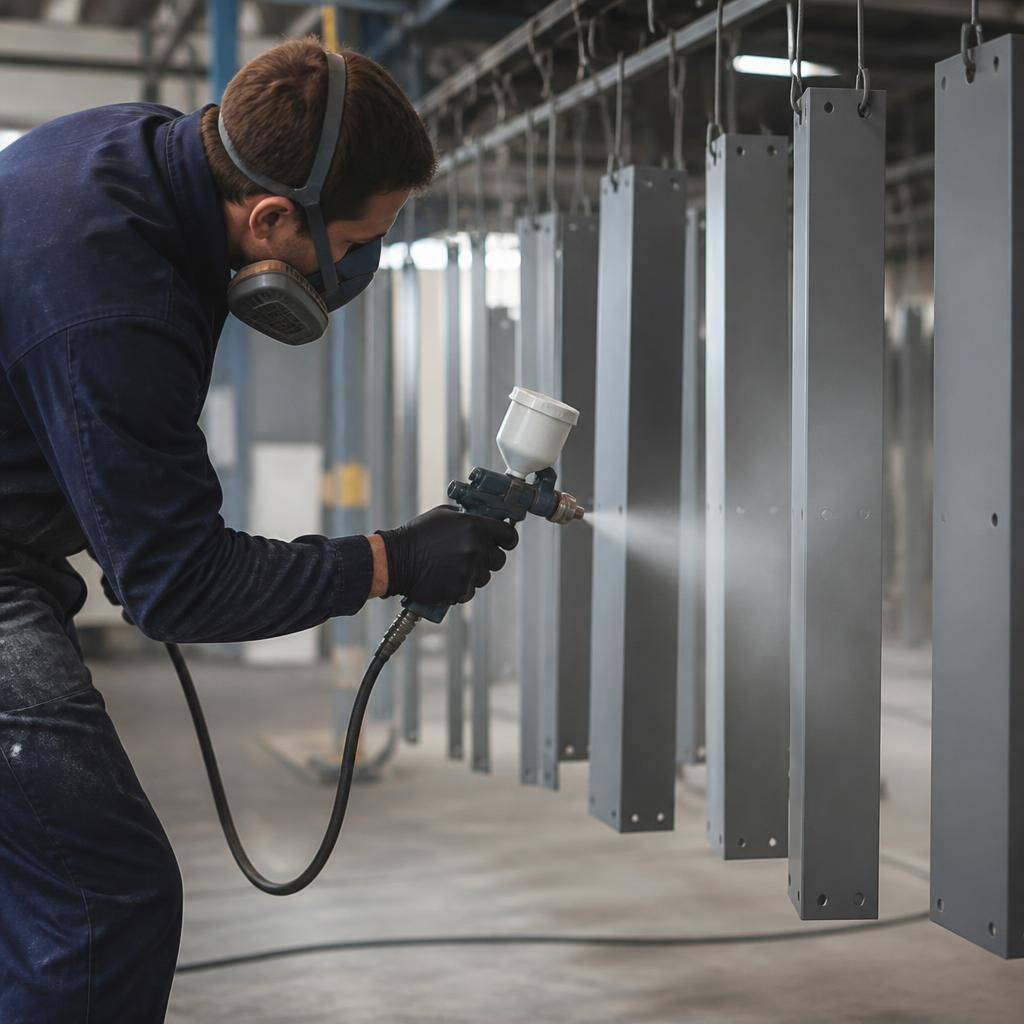
A suitably specified filler primer can improve the coating system’s resistance to mechanical wear by adding an intermediate layer between the metal substrate and the powder topcoat. This can be valuable for components exposed to handling, assembly, vibration or light abrasion, where damage to the topcoat could otherwise expose the underlying metal.
The benefit depends on the primer formulation, film thickness, powder topcoat and service conditions. The complete system should therefore be assessed for impact and abrasion requirements rather than assuming that any filler primer will provide the same level of protection. Representative components or test panels can help confirm that the finished coating has the required mechanical performance.
Discuss the advantages of filler primers for your coating process
If you are assessing whether a filler primer is appropriate for a particular component, discuss the substrate, surface condition, dimensional tolerances and intended service conditions with our powder-coating team. This helps establish whether a primer should form part of the specified coating system.