

What metal substrates are compatible with black protective primer finishes?
Black protective primer finishes are generally compatible with mild steel, carbon steel, cast iron, galvanised steel and aluminium, provided each substrate receives the correct cleaning and pretreatment. The suitable primer and application method depend on the metal’s surface condition, expected corrosion exposure and the final coating system.
Black protective primer finishes are suitable for a range of industrial metal substrates, but compatibility depends on the substrate grade, surface condition, preparation method and the topcoat used over the primer. Ferrous metals are usually the most straightforward to specify, while galvanised metals, aluminium and less common alloys require a system selected for their surface chemistry.
- Mild and carbon steel: These substrates are commonly used with protective primer systems because the coating can provide an intermediate barrier before the final finish is applied. Particular attention is needed around welds, sharp edges, cut ends, seams and areas affected by mill scale or previous corrosion. The primer specification should account for the intended exposure, especially where components will face moisture, salts or industrial contaminants.
- Cast iron: Castings can be coated successfully, although their porous surface and irregular profile create additional risks. Oil, foundry residue and trapped gases may affect coating quality, while deep recesses can make it difficult to achieve an even film. Degassing requirements, drainage, masking and the design of the casting should therefore be considered before production coating begins.
- Galvanised steel: A black protective primer can be used over galvanised steel when the system is designed for zinc-coated surfaces. The condition of the zinc layer matters: bright, sound galvanising presents different requirements from weathered material, white corrosion products or areas damaged during fabrication. The primer must be capable of bonding to the prepared zinc surface without compromising the protective role of the galvanising beneath it.
- Aluminium: Aluminium is compatible with suitable primer systems, but its oxide layer and the particular alloy influence adhesion. Extrusions, castings and fabricated aluminium parts may each require different preparation controls. Thin sections, folded edges and assemblies containing dissimilar metals also need consideration, as movement or contact between metals can affect the long-term coating system.
- Stainless steel: Stainless steel can be coated where there is a clear functional or visual reason to do so, but it should not be treated like ordinary carbon steel. Its relatively passive surface can make adhesion more demanding, so the preparation and primer must be specifically approved for stainless substrates. The selected system should also reflect the grade of stainless steel and the environment in which the part will be used.
Material condition is as important as material type. Rust, grease, cutting fluids, welding residues, oxidation, old paint and embedded blast media can all interfere with primer performance. Components should also be assessed for galvanic contact, recessed areas, drainage, handling marks and edges that may receive less consistent coverage than broad faces.
The primer must be compatible with the complete coating build, not considered in isolation. This includes the substrate preparation, primer chemistry, curing conditions and final topcoat. A primer intended for steel may not provide the same adhesion on aluminium or galvanised surfaces, and a finish selected for indoor components may be unsuitable for an exposed structure. Colour is also relevant: black primer can support a black or dark topcoat, but it does not by itself determine the corrosion resistance or weathering performance of the finished system.
For unusual alloys, mixed-metal assemblies or components with demanding exposure conditions, the practical approach is to confirm the specification before coating the full batch. The review should cover the exact substrate, expected service environment, required appearance, curing limitations and any areas that must remain uncoated for electrical, mechanical or assembly purposes. A representative test piece can help verify adhesion, coverage and appearance where the substrate or construction is unfamiliar.
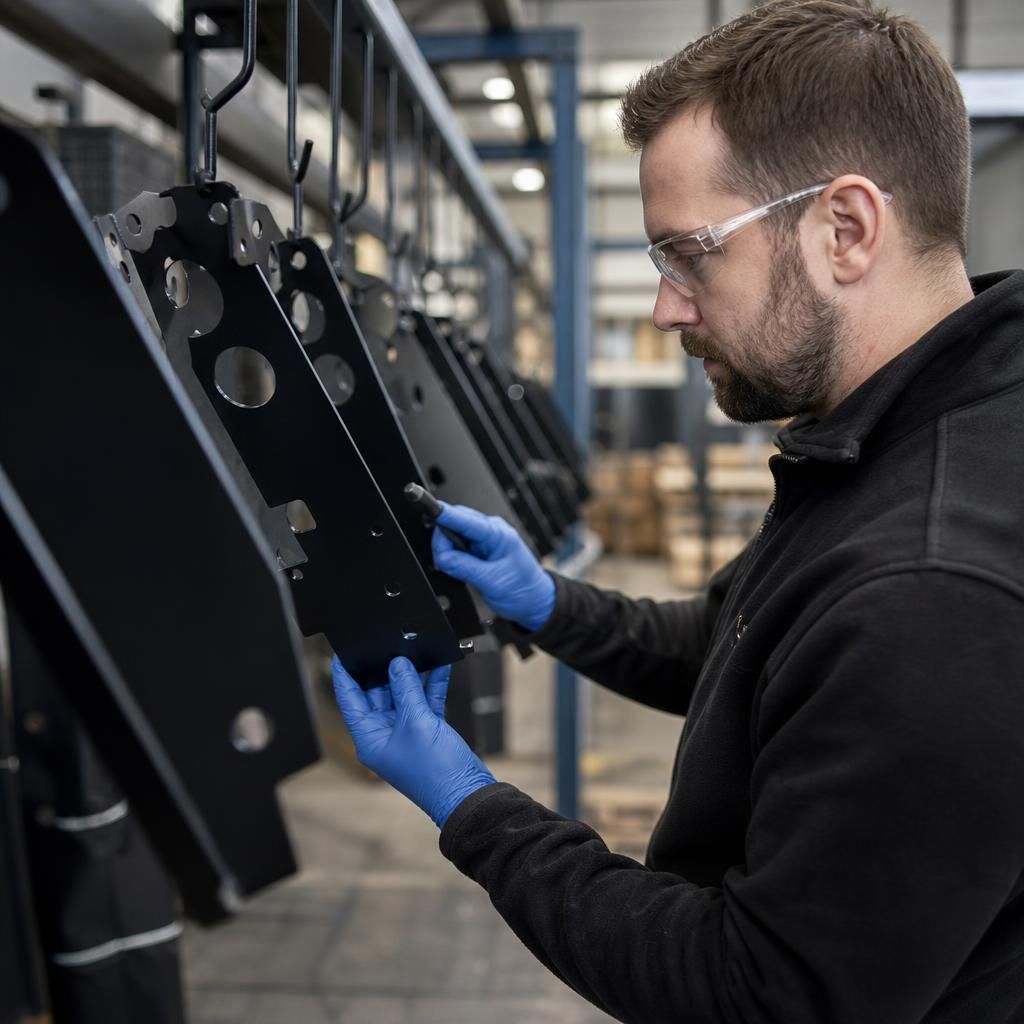
Before specifying a black protective primer, confirm the actual substrate rather than relying on appearance alone. Components described simply as “steel” may include carbon steel, galvanised sections, stainless parts or mixed-metal fabrications, each requiring different preparation and primer selection. Drawings, material records and fabrication details should be checked, particularly where a single assembly contains welded, plated or replacement parts.
This identification is also important for quality control after coating. The finished component should be assessed against the agreed system for adhesion, coverage and appearance, with any areas that need to remain bare clearly defined before production. Where the material history is uncertain, a representative sample can establish whether the proposed black protective primer is suitable before the full batch is processed.
Discuss your metal substrate and primer requirements
If you are unsure whether your component is suitable for a black protective primer, discuss the substrate, service environment and required finish with the powder-coating team before processing. They can help assess the specification and identify whether a representative test piece is appropriate.