

How do nylon coatings enhance the wear resistance of metal coils?
Nylon coatings enhance the wear resistance of metal coils by forming a tough, low-friction barrier between the metal and sources of abrasion, impact or repeated contact. This protective layer helps reduce surface damage and can extend the usable service life of coils in demanding industrial applications.
For a metal coil, nylon improves wear resistance by distributing contact forces across a resilient working surface rather than allowing the metal to experience concentrated rubbing, scuffing or edge loading. This is particularly valuable where coils move against guides, rollers, housings, fixtures or other components during operation.
The improvement comes from several related properties:
- Load distribution: Nylon can accommodate minor surface irregularities and spread contact over a wider area. This reduces localised pressure points that could otherwise produce grooves, scoring or deformation in the metal.
- Resistance to scuffing: During sliding or oscillating movement, the coating helps prevent direct metal-to-metal contact. This reduces the risk of galling and adhesive wear, where material transfers between two contacting surfaces.
- Resilience under intermittent impact: A correctly selected nylon coating can absorb and recover from minor knocks and repeated contact more effectively than an uncoated metal surface. This is useful where a coil experiences vibration, handling contact or fluctuating loads.
- Protection at working edges: Coated edges and contact points are less exposed to direct abrasion, provided the coating has been applied evenly and is sufficiently bonded to the substrate.
Coil geometry makes coating consistency especially important. Tight radii, turns, edges, internal faces and recessed areas can receive different levels of coating during application. An area that is visibly covered may still have insufficient film build or a weak edge if preparation, powder distribution or curing is not properly controlled. Uneven coverage creates potential wear points that may fail before the rest of the coil.
Adhesion is also central to wear performance. The metal surface needs to be clean and suitably prepared so that oil, scale, rust and other contaminants do not remain beneath the coating. If the coating is poorly bonded, repeated movement can cause lifting, chipping or flaking even when the nylon itself has suitable wear characteristics. Preparation should therefore be considered part of the wear-resistance specification, not as a separate cosmetic stage.
The coating must also be compatible with the way the coil flexes or moves. If a coil is repeatedly bent, compressed or wound around a small radius, the nylon layer needs enough flexibility to follow the substrate without cracking. Conversely, a coating that is too soft for the operating load may deform excessively. Selection should balance resilience, hardness, temperature resistance and the forces generated at the contact points.
Operating conditions that influence the choice include:
- the direction, speed and frequency of movement;
- the pressure applied at contact areas;
- whether the wear is caused by sliding, impact, vibration or a combination of these;
- the presence of abrasive dust, metal particles, oils, cleaning agents or other chemicals;
- the working temperature and any repeated heating or cooling; and
- the dimensional clearance available after coating.
Clearance is a practical consideration because the coating adds material to the coil. Excessive film build can affect fit, winding, movement or the relationship between the coil and its mating parts, while inadequate build may provide limited protection at heavily loaded areas. The required finish should therefore be set against the coil drawing, contact pattern and operating tolerances rather than selected on appearance alone.
Wear resistance should be assessed across the complete coated component. Visual inspection can identify missed areas, pinholes, runs, inclusions and edge defects, while coating thickness and adhesion checks help confirm that the applied layer is consistent. Where the service conditions are severe or unusual, representative testing under comparable load, movement, temperature and contamination can provide a more meaningful indication of performance than a general material description.
In practice, nylon is most effective on metal coils when the coating formulation, surface preparation, coverage, film build and curing conditions are matched to the coil’s actual duty. Treating those factors as one specification helps prevent premature wear at the areas that carry the greatest load or experience the most movement.
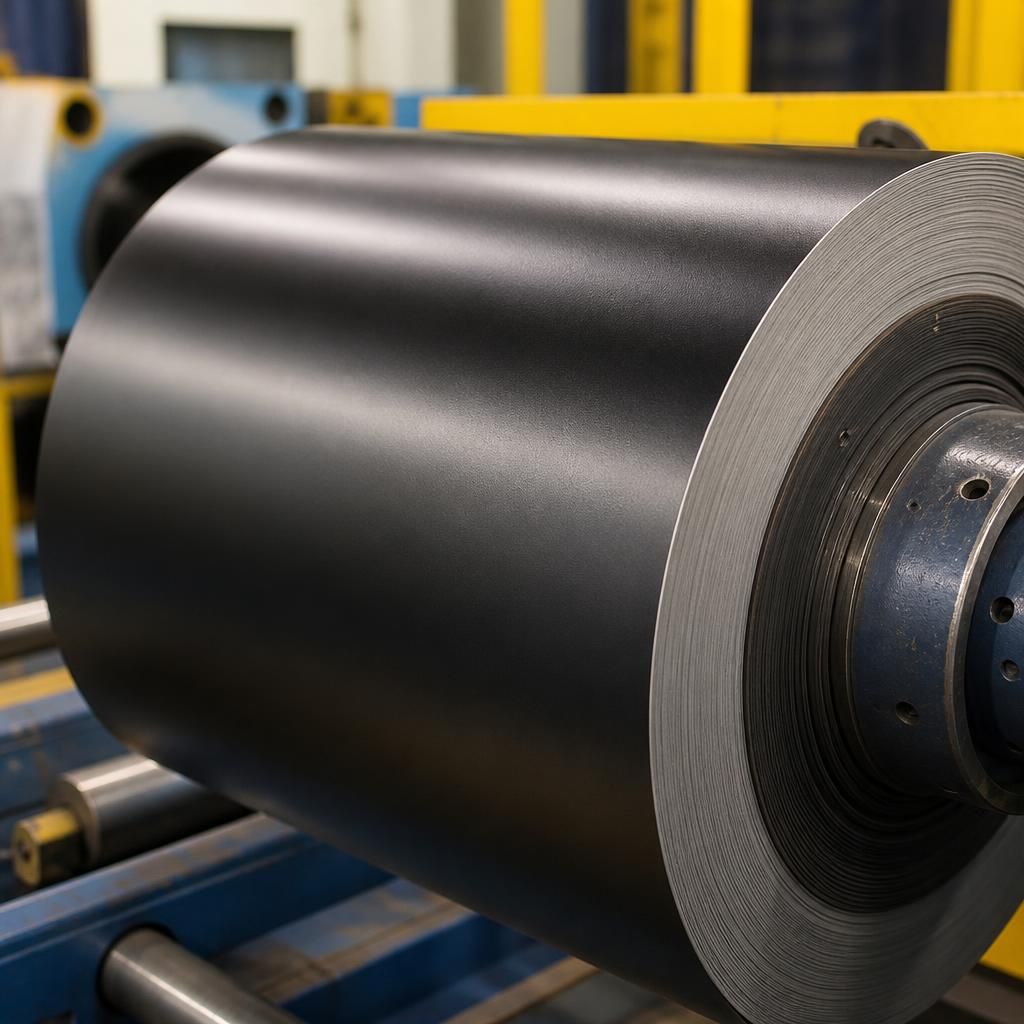
Nylon coatings improve the wear resistance of metal coils by interrupting the cycle of progressive surface damage. On an uncoated coil, repeated contact can create small scratches and roughened areas. These imperfections increase friction and provide points where further abrasion can develop, gradually affecting the metal surface.
The nylon layer presents a resilient working surface that helps limit the formation and growth of this damage. By maintaining a smoother interface between the coil and contacting parts, it can reduce the rate at which minor surface defects develop into deeper wear. This is particularly useful where the coil is subject to repeated movement, because protecting the surface from the earliest stages of damage helps preserve its functional condition over time.
Discuss nylon coating for your metal coils
Discuss your metal coil’s movement, contact loads, operating temperature and dimensional requirements with our powder-coating specialists. These details can help establish whether a nylon coating is suitable and define the appropriate preparation and finish specification.