

What are the key benefits of using a primer system in powder coating?
A primer system in powder coating provides an additional layer between the prepared metal substrate and the topcoat, improving adhesion and helping protect against corrosion. It can also support a more durable, consistent finish where components face demanding service conditions or require enhanced barrier protection.
A primer system adds technical functions that a single powder topcoat may not provide on its own. Its main benefits are improved coverage of difficult areas, greater control over the final appearance, the ability to tailor the coating build to the service conditions, and additional tolerance where the substrate or component geometry makes a one-coat finish less predictable.
- More complete coverage of complex components: A primer can help build a more continuous coating over sharp edges, welds, corners, recesses, drilled holes and areas with a textured blast profile. These locations can be difficult to cover evenly with one coat because powder distribution and film flow are affected by geometry. A primer layer gives the coating system greater overall build before the topcoat is applied.
- Improved visual uniformity: Primers can help mask minor differences in substrate texture, machining marks and variations in the underlying metal. This gives the topcoat a more consistent base and can reduce visible changes in shade, gloss or texture across a component. The primer colour and the thickness of both coats should be selected carefully, particularly for light, bright or translucent topcoat colours.
- Greater control of total film build: A two-coat system allows the required coating thickness to be divided between a primer and a topcoat rather than relying on one thick layer. This can be useful where the specification requires substantial build or where the component includes recessed sections and exposed edges. Film thickness still needs to be measured and controlled, since excessive build can affect dimensions, curing and the final appearance.
- More options for matching the coating to the application: The primer and topcoat can be selected for different but complementary purposes. For example, the primer may be chosen for its substrate interaction or resistance to a particular service condition, while the topcoat provides the required colour, gloss, texture or surface cleanability. This separates some of the technical requirements instead of asking one powder formulation to perform every function.
- Better treatment of difficult substrates: Certain metals, castings, fabricated assemblies and previously challenging surfaces may require a coating system designed around their surface characteristics. A suitable primer can help manage differences in surface energy, porosity or preparation profile, although it cannot correct contamination, oil, rust, poor blasting or other preparation defects. The substrate and the primer must be confirmed as compatible before production.
- Reduced risk of local weaknesses in the coating system: On components with cut edges, weld zones or complicated profiles, a primer can provide a more consistent base for the topcoat. This is particularly useful where the component will experience handling, moisture, chemicals, abrasion or repeated cleaning. The benefit depends on correct application, cure and inspection rather than simply adding an extra layer.
- Greater flexibility in specification and design: A primer system can make it possible to specify a finish for both functional and appearance requirements. This may be useful for industrial enclosures, fabricated frames, machine components, vehicle parts and construction assemblies where the coating must meet a defined visual standard as well as the demands of use. The additional layer can also help accommodate changes in topcoat colour or finish, provided the complete system has been tested.
Using a primer does introduce extra process requirements. The primer must be applied at a controlled thickness, cured in accordance with its technical requirements and checked for compatibility with the topcoat. The interval between coats, surface cleanliness, oven conditions and the possibility of recoating all need to be considered. A primer that is suitable in isolation may not perform correctly when combined with a particular topcoat or substrate.
A primer system may also affect dimensional tolerances, masking requirements and the appearance of edges, threads or mating surfaces. These details matter when coating components that assemble closely or contain machined interfaces. Areas that must remain uncoated should be defined before preparation and coating, and the total coating build should be included in the component specification.
For these reasons, the best primer system is selected according to the metal substrate, component geometry, preparation method, service environment, topcoat chemistry and required finish. Small-scale trials or test panels can be used to confirm appearance, curing, adhesion between coats and resistance to the relevant service conditions before the system is applied to a production batch.
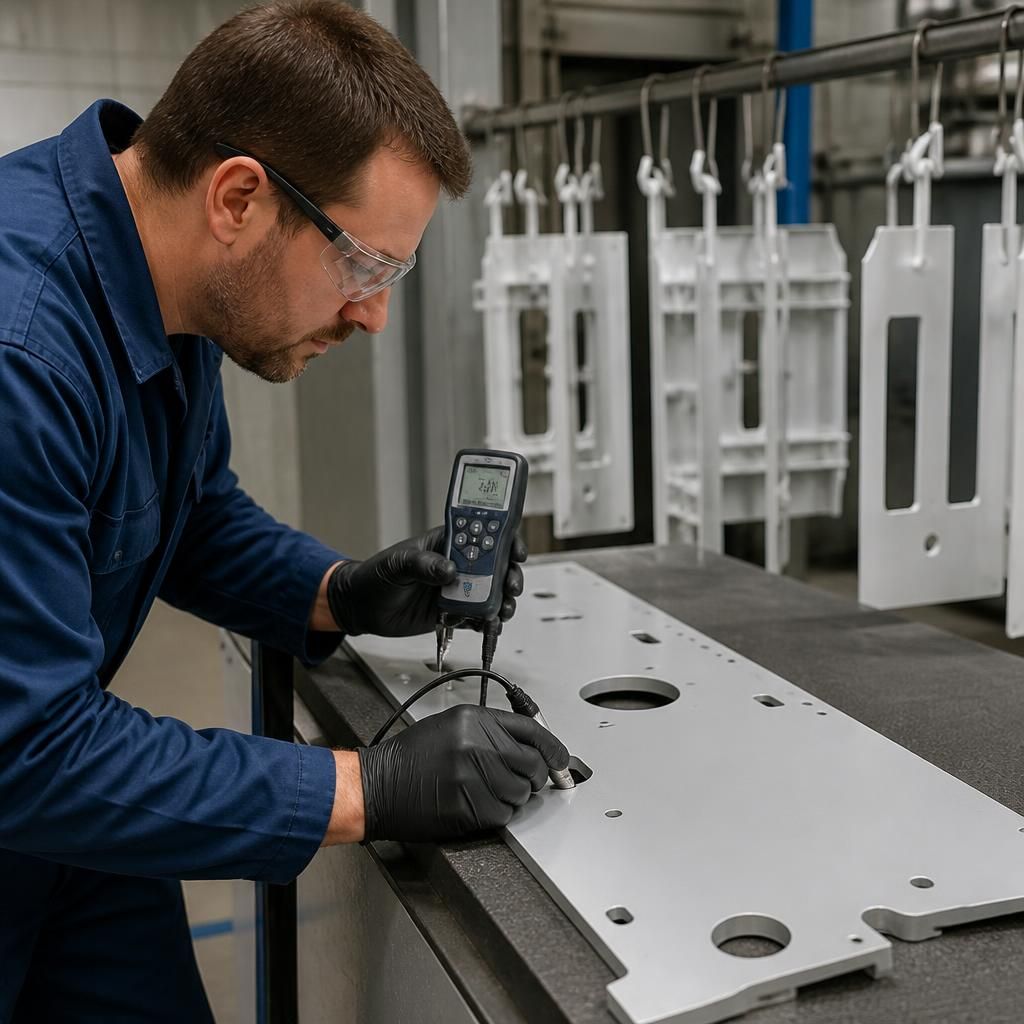
A primer system should be viewed as part of a tested coating structure, not simply as extra thickness. Its effectiveness depends on clean, correctly prepared metal, a continuous primer film and a topcoat that is compatible with the primer. If moisture or contaminants remain at the interface, the additional layer cannot compensate for poor preparation and may conceal defects until the coating is in service.
This makes system qualification an important benefit in its own right. Test panels can confirm intercoat adhesion, cure and resistance under conditions that reflect the component’s intended use before a production batch is processed.
Discuss the Benefits of a Primer System for Your Application
Discuss your component’s substrate, geometry, service environment and required topcoat with the powder-coating team to determine whether a primer system is appropriate. Providing these details allows the coating specification and any required testing to be considered before production.