

What materials can be treated with the electrostatic powder coating process?
Electrostatic powder coating is primarily used on conductive metals, including steel, mild steel, galvanised steel and aluminium. Specialist metals may also be suitable, provided the surface can be correctly prepared and the coating system is compatible with the substrate.
Electrostatic powder coating is best suited to clean, electrically conductive metal substrates that can be properly grounded and withstand the curing stage. The exact suitability depends on the alloy, surface condition, component design and compatibility between the pretreatment and the powder system.
Stainless steel can generally be treated, but its naturally resistant surface needs effective preparation to promote adhesion. Degreasing, suitable abrasion and the correct chemical pretreatment may be required, particularly where the component will face moisture, chemicals or outdoor exposure.
Cast iron is also a potential substrate. Its porous structure can retain oil, moisture and other contaminants, while trapped gases may be released during heating. Cleaning, outgassing control and inspection are therefore important before coating. Areas such as machined faces, bores and threaded holes may need masking where a powder layer would affect fit or assembly.
Zinc-coated components and zinc die castings require careful treatment because their surfaces can react during heating or contain porosity. A compatible pretreatment and powder system helps reduce adhesion problems, bubbling and other defects. The condition of the zinc surface also matters: white corrosion, oils and handling residues should be removed rather than coated over.
Copper, brass and other conductive alloys may be suitable for specialist work, although they can require additional consideration. Their high thermal conductivity can influence how heat is transferred during curing, and oxidation or contamination on the surface can reduce coating adhesion. The coating specification should take account of the alloy, intended service conditions and required appearance.
Component shape is as important as the base material. Tubes, mesh, perforated panels, deep recesses and enclosed corners can create electrostatic shielding, commonly known as the Faraday cage effect. Powder may be thinner in recessed areas or accumulate more heavily at edges. Gun settings, part orientation, earthing and operator technique must be adjusted to achieve an even deposit.
Assemblies made from more than one material need separate assessment. Metal sections can usually be coated, but rubber seals, plastic fittings, adhesives and other heat-sensitive parts may need to be removed or protected. Threads, bearing seats, electrical contact points and close-tolerance faces are normally masked because powder thickness can interfere with installation or operation.
Most ordinary plastics, rubber, timber, glass and other non-conductive materials are not suitable for standard electrostatic powder coating. They do not provide the electrical path needed for efficient powder attraction, and some cannot tolerate the curing conditions. Special low-temperature or alternative powder processes exist for selected non-metallic substrates, but these require a different specification and should not be assumed to be interchangeable with conventional metal coating.
Before treatment, a coater will normally need information about the substrate, previous finishes, service environment, required appearance and any areas that must remain uncoated. This allows the preparation method, powder type, masking approach and curing requirements to be matched to the component rather than relying on a one-size-fits-all process.
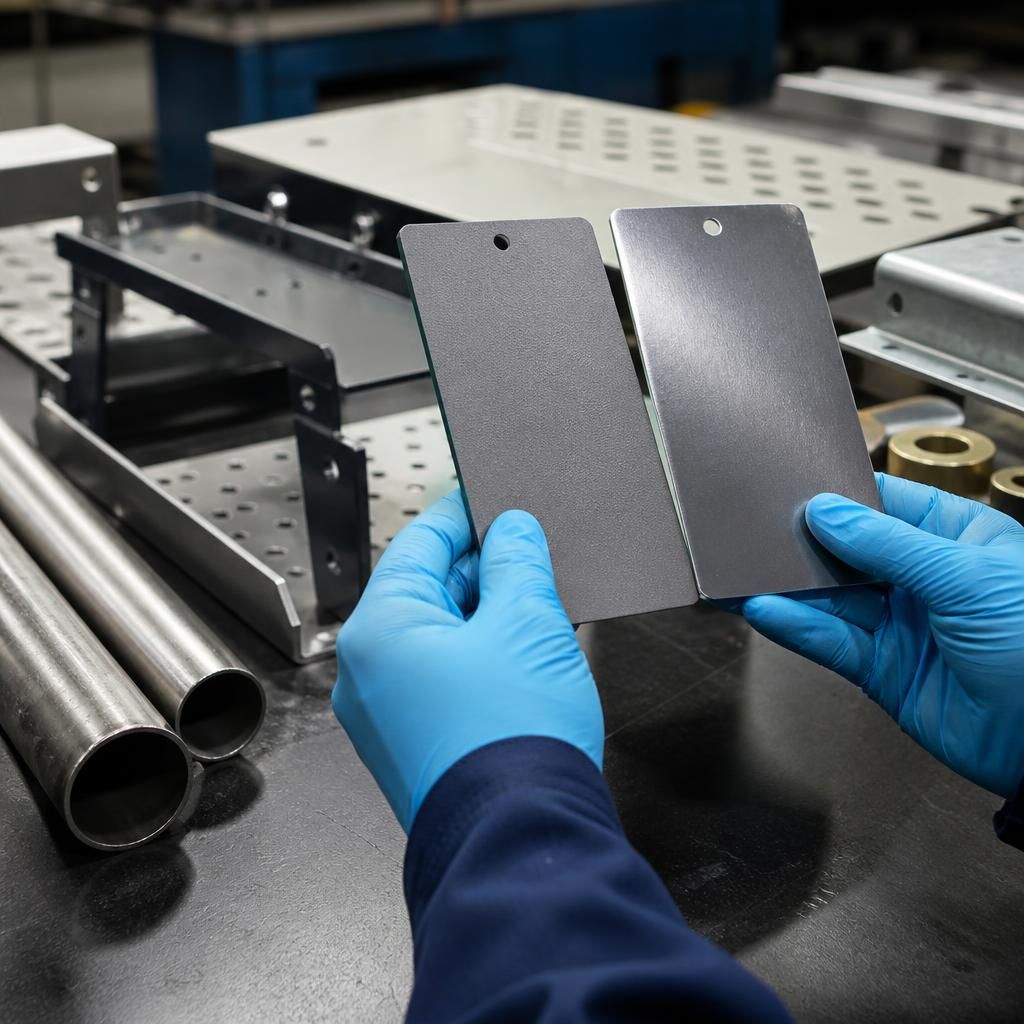
For less common or mixed metal substrates, suitability is best confirmed with a coating trial before full production. A test piece can show whether the selected preparation and powder system provide the required adhesion, appearance and cure without revealing defects such as pinholing, blistering or uneven coverage.
The trial should represent the actual component as closely as possible, including its alloy, surface condition, thickness and joint details. This is particularly useful where a part combines different metals or has a previous coating, because results from one material grade cannot automatically be applied to another.
Discuss your material’s suitability for electrostatic powder coating
Discuss your substrate, component design and service requirements with the powder-coating.co.uk team to establish whether electrostatic powder coating is suitable. Where the material or specification is unusual, ask about assessing a representative test piece before full production.