

What are the key benefits of using powder coating for aluminium sections?
Powder coating aluminium sections provides a tough, durable finish that helps protect against corrosion, weathering, abrasion and everyday wear. It also produces a consistent decorative appearance across batches, with a wide choice of colours and textures, making it a practical and cost-effective alternative to traditional wet painting for industrial applications.
Powder coating offers aluminium sections a controlled, repeatable and adaptable finishing system, with benefits that extend beyond appearance and surface protection. It is particularly suitable for extrusions and fabricated profiles because the coating can be applied to defined specifications across repeated batches, helping manufacturers maintain a consistent finish while accommodating different section designs.
- Consistent coverage on profiled sections: Aluminium sections may include corners, channels, recesses and other formed features that are difficult to paint evenly. Powder application allows the coating system to be selected and controlled for the geometry of the component, reducing the risk of visible brush marks, runs or uneven application associated with manual wet painting.
- Repeatability for manufactured components: Once the preparation, application and curing requirements have been established, the same specification can be applied across production batches. This is valuable where sections are used together on one project or incorporated into repeated assemblies, as differences in appearance between individual components can be limited.
- Reduced routine maintenance: A correctly specified and applied powder-coated surface is easier to maintain than an uncoated aluminium surface in many industrial and architectural applications. Normal cleaning can remove surface dirt and deposits without the need to repaint the complete section as part of ordinary upkeep.
- Efficient application of a dry coating: Powder is applied as a dry material and then fused during curing. This avoids the liquid carrier associated with conventional solvent-based paint systems and can reduce issues such as drips, runs and solvent evaporation when the process is properly controlled. Unused powder may also be recoverable in suitable application systems, although the exact environmental and material-efficiency benefit depends on the equipment and process used.
- Suitable for varied component requirements: Powder coating can be specified in different coating chemistries, surface effects and thicknesses to match the intended use of the aluminium section. The selection should take account of exposure conditions, handling, cleaning requirements, appearance and the performance demanded by the finished component rather than relying on one coating specification for every application.
- Improved production planning: Aluminium sections can be coated as individual components before assembly, allowing the finish to be defined as part of the manufacturing specification. This can simplify later fabrication and reduce the need for painting or touching up assembled products, provided that the design, masking and handling requirements are considered in advance.
The benefits depend on correct preparation as much as on the powder itself. Aluminium must be suitably cleaned and pre-treated so that the coating can bond to the substrate. The powder type, application method, coating thickness and curing conditions also need to be compatible with the section’s alloy, dimensions and intended service environment. Poor preparation or incomplete curing can undermine the advantages of the system, regardless of the selected colour or finish.
For B2B applications, the main practical value is therefore the combination of controlled manufacture, specification flexibility and reduced upkeep. Manufacturers, fabricators, construction firms and automotive businesses can assess powder coating by considering the complete service requirement: the aluminium alloy and profile shape, expected exposure, handling conditions, required appearance, batch consistency and any collection or delivery arrangements needed for the components.
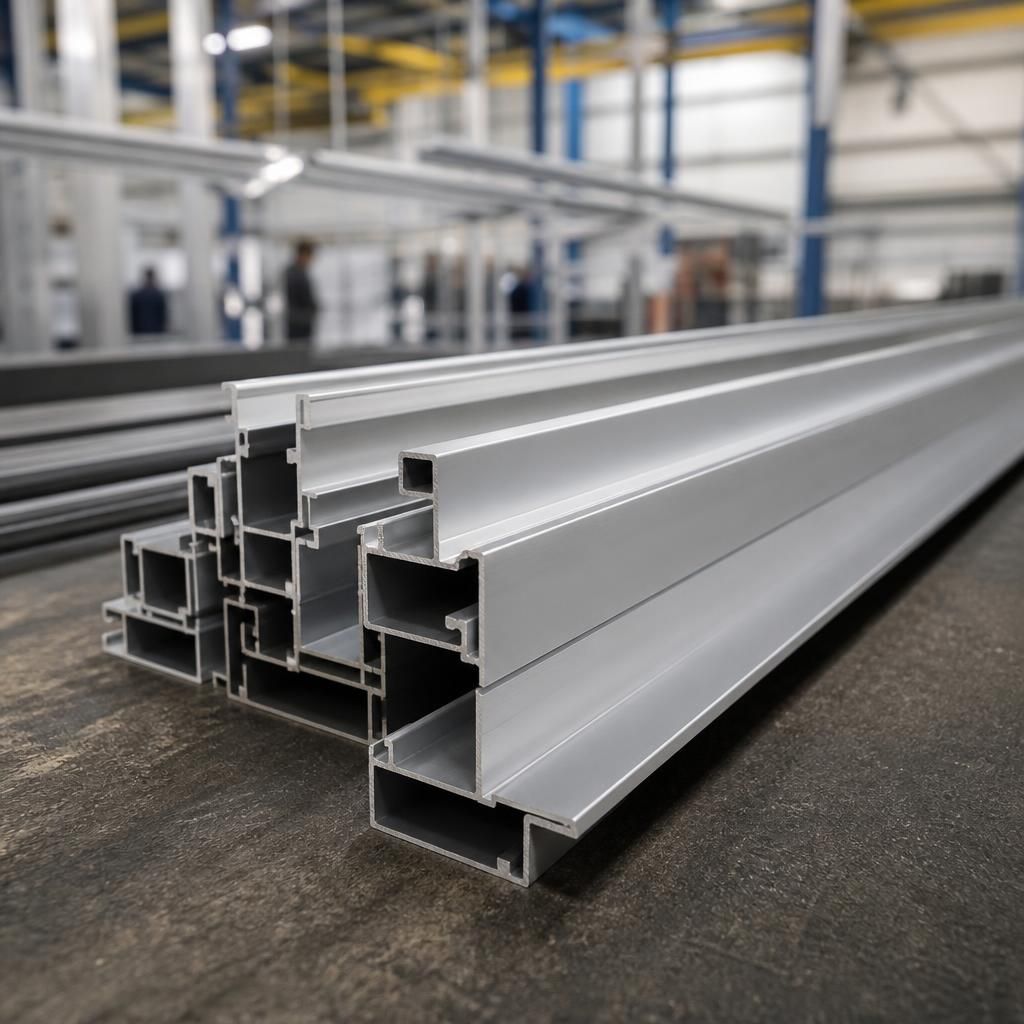
Powder coating can help preserve the functional dimensions of aluminium sections when the coating specification is matched to the component’s design. Controlled coating thickness is important for profiles that slide, interlock, fit into channels or meet other coated parts, because excessive build-up may affect clearances and assembly. The required thickness should therefore be agreed alongside the section tolerances and end use, rather than treating the finish as purely decorative. This approach allows the aluminium to receive protective surface treatment while keeping the finished component suitable for its intended assembly.
Discuss powder coating options for your aluminium sections
Discuss your aluminium sections with the powder-coating team, including the profile design, intended environment, required finish and dimensional tolerances. This information can be used to identify a suitable coating specification for your application.