

What are the benefits of using powder coating for electrical insulation compared to traditional methods?
Powder coating provides a continuous, durable dielectric layer over suitably prepared metal components, offering uniform coverage without the seams, overlaps or mechanical fasteners associated with some traditional insulation methods. Compared with conventional approaches, it can also simplify application, improve resistance to abrasion and corrosion, and support consistent electrical separation where the coating system is correctly specified for the operating conditions.
Powder coating can provide electrical insulation by forming a cured, electrically resistive polymer layer over a metal component. Compared with traditional methods such as tapes, sleeves, liquid varnishes or separately fitted insulating parts, its main advantages are the potential for integrated protection, repeatable application and reduced reliance on additional assembly operations. The result depends on selecting a suitable powder, controlling film thickness and curing the coating in accordance with the component’s design and operating conditions.
Electrical separation built into the component
A correctly specified coating can insulate areas that would otherwise require a separate sleeve, wrap or barrier. This can help designers incorporate insulation directly into housings, brackets, busbar supports, enclosures and other shaped metal parts. Because the coating follows the prepared surface, it can protect complex profiles without adding a loose component that may move, crease or become detached during handling.
Powder coating also avoids some common weaknesses of mechanically fitted insulation. Tapes can lift at edges, sleeves can shift and fasteners used to retain insulating materials can introduce additional design considerations. A bonded coating removes those interfaces, although masking and contact points must still be planned where the metal needs to remain electrically connected.
More consistent production than manual insulation methods
Manual wrapping, dipping or fitting processes can be affected by operator technique, overlap, tension and positioning. Powder coating is applied using defined preparation, spraying and curing stages. When these stages are controlled, the coating process can provide more consistent coverage across repeat batches and reduce variation between components.
Consistency is particularly important where insulation must maintain a specified clearance or prevent contact between conductive surfaces. It is not enough to rely on the appearance of the finish: the coating system, deposited thickness, cure and relevant electrical tests must be assessed against the component specification.
Improved resistance to handling and service conditions
Traditional insulating materials may be vulnerable to tearing, puncture, displacement or damage at exposed edges. A cured powder coating is part of the component surface and can offer a durable barrier against handling damage, subject to the formulation and service environment. This is useful for metal parts that are assembled, transported or exposed to vibration.
Specialist powder formulations can also be selected for resistance to moisture, chemicals, heat or other environmental influences. These properties should not be assumed from the term “powder coating” alone. Electrical insulation performance can change with temperature, humidity, contamination, mechanical damage and prolonged exposure to chemicals, so the coating must be matched to the actual application.
Fewer separate components and assembly stages
Where a coating can replace a separate insulating item, it may reduce part count and simplify handling during assembly. There may be fewer components to store, position and retain, and fewer opportunities for an insulating insert or wrap to be incorrectly fitted. This can support more straightforward production of repeated metal components.
That benefit is application-specific. Powder coating cannot replace every form of insulation. Components may still require air gaps, insulating washers, moulded parts, barriers or other systems to achieve the necessary creepage, clearance, voltage withstand and thermal performance. A coating should therefore be considered as one part of the insulation design rather than an automatic substitute for all traditional methods.
Lower process emissions than many liquid alternatives
Powder coating is a dry finishing process and does not use solvent as the carrier in the same way as conventional solvent-borne liquid coatings. This can reduce reliance on solvent handling and may make the process suitable for manufacturers seeking a cleaner finishing route. Overspray can also be collected within an appropriately designed application system, although powder recovery, waste management and colour or material changeover still require control.
This environmental advantage does not remove the need for responsible process management. Powder handling, ventilation, equipment cleaning and curing must be managed correctly, and the selected powder still needs to meet the technical requirements of the electrical application.
Potential lifecycle and cost benefits
Powder coating may offer lifecycle advantages where its durability reduces the need for remedial work or replacement of damaged insulating coverings. It can also make batch production more efficient when the same coating specification is repeatedly applied to compatible components. However, cost comparisons should include preparation, masking, racking, curing, inspection, testing and any areas that still need separate insulation. A lower coating price alone does not establish a lower overall cost.
Important limitations compared with traditional insulation
- The metal substrate must normally tolerate the curing conditions, and heat-sensitive assemblies may require a different method.
- Threads, mating faces, earthing points and electrical contact areas often need accurate masking or post-coating treatment.
- Damage, pinholes or insufficient film thickness can compromise insulation, so visual inspection and, where required, electrical testing are important.
- Powder coating is not always suitable for internal voids, inaccessible surfaces or parts that cannot be racked and sprayed correctly.
- Repairing a damaged coating may require cleaning, preparation and reapplication rather than a simple replacement of a tape or sleeve.
- Voltage, temperature, humidity, contamination and mechanical stresses must be considered when determining whether the coating provides adequate insulation.
For these reasons, the practical benefit over a traditional method is greatest when the component geometry, powder chemistry, coating thickness and curing process can be controlled together. A suitable specification should define the areas to be insulated, the areas to remain conductive, the required dielectric performance, environmental exposure, permitted thickness range and inspection or test requirements. A powder-coating provider can then assess the substrate and application method before production, while the equipment designer remains responsible for confirming the complete insulation system meets the relevant engineering and safety requirements.
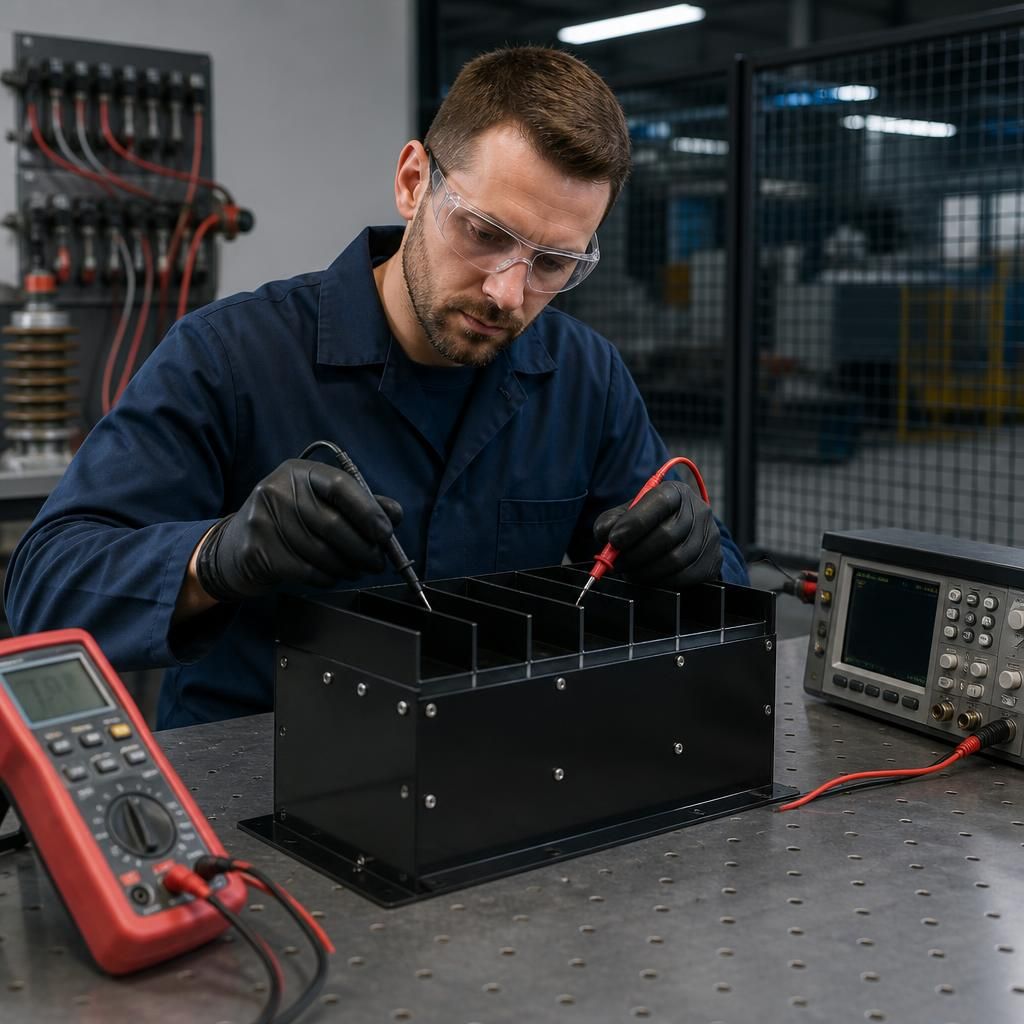
The main benefit of powder coating for electrical insulation is that its performance can be linked to a controlled coating specification rather than relying solely on the condition or placement of a separate insulating material. This makes process verification an important part of comparing it with tapes, sleeves or fitted barriers.
For suitable components, verification can include checking film coverage at critical features, confirming that masked contact areas remain usable and recording the powder and curing conditions used for the batch. Representative electrical testing can then help establish whether the finished coating provides the required separation. This documented approach supports repeatable production and makes it easier to investigate a coating defect than when insulation has been applied through several manual assembly stages.
Discuss your electrical insulation coating requirements
Discuss your electrical insulation coating requirements with the powder-coating team, including the component design, operating conditions and areas that must remain conductive. This allows the proposed coating specification and process controls to be assessed before production.